

Cerebras shares decline as a construction shortage impacts operations.
Cerebras nearly doubled its revenue and projected 2026 sales above Wall Street's expectations, yet its stock still fell by approximately 10%. The decline stemmed from a margin squeeze, not due to a chip shortage, but rather a lack of facilities.
Cerebras recently experienced the challenges of hitting the market amidst hype. On Tuesday, the AI chipmaker shared its first results since a strong listing in May, showing that revenue had nearly doubled. The full-year outlook surpassed analysts' expectations, yet the stock still dropped by around 10%.
The financial figures were solid. First-quarter revenue reached $193.4 million, a 92% increase from the previous year, according to CNBC. The net loss decreased to $14 million from $23.9 million, with both metrics exceeding Wall Street's predictions. Cerebras also predicted full-year revenue to fall between $855 million and $865 million, well above the $824.8 million anticipated by analysts.
So, what caused the sell-off? Investors focused not on demand but on margins. The reason behind the margin issues is particularly illustrative.
A notable irony
Cerebras cautioned that its core gross margin will drop to between 36% and 38% this quarter, a significant decrease from 46.5% in the first quarter. This sharp decline is surprising for a company marketed to investors as a high-margin chip manufacturer. The irony lies in the fact that, despite its technological advancements, the limitation is now building space. “It’s a grand irony that after all this technology that we’ve invented, and Nvidia’s invented, buildings are the limiting factor,” said chief executive Andrew Feldman. Cerebras is struggling to find sufficient data-center space for its chips.
As a workaround, the company is renting back some of its systems from a customer and rapidly expanding its own capacity. According to finance chief Bob Komin, these expenses could cut margins by 10 to 15 points this year.
This bottleneck is something few had anticipated. The constraints in AI are shifting from silicon to infrastructure and power. Even the world's largest chip manufacturer cannot secure enough operational space to utilize their technology. U.S. utilities plan to invest $1.4 trillion by 2030 to meet this growing demand, and the delays in power availability are directly impacting Cerebras' margins.
Why Wall Street reacted harshly
A disappointing earnings report, despite beating predictions, highlights the prevailing sentiment. Cerebras debuted in May at $185 a share, opened at $350, and closed its first trading day above $311. However, it has seen a significant decline, finishing Tuesday at $226.72, down about 28% from its peak.
The IPO itself was momentous, raising over $6 billion and marking the largest semiconductor IPO in history, along with being the biggest tech debut in the U.S. since Uber in 2019.
The timing of the report was unfortunate, coinciding with a tough day for chip stocks. The Philadelphia Semiconductor Index fell 7.9%, which one analyst described as a “chip-wreck,” led by losses at Micron. When negative sentiment affects the entire sector, even a solid quarterly performance struggles to gain traction.
There is also a deeper issue with expectations. Investors have become accustomed to Nvidia and a few other companies consistently exceeding forecasts each quarter, establishing a challenging benchmark. For a newly public competitor like Cerebras, merely achieving estimates isn’t enough; anything less than exceptional is perceived as a letdown.
The business behind the stock price
If we look beyond the market turbulence, Cerebras remains an impressive company. It produces the Wafer Scale Engine, a chip the size of a dinner plate, promising the fastest AI inference capabilities globally.
Inference involves executing models for users rather than training them. This is the niche Cerebras has chosen, and it aims to collaborate with everyone except Nvidia.
The clientele reflects this ambition.
In January, Cerebras entered into an agreement with OpenAI to provide 750 megawatts of inference capacity, potentially worth over $20 billion at full scale, along with a $1 billion working-capital loan. It is also partnering with Amazon Web Services for a split approach, where AWS chips manage one part of a query while Cerebras handles the rapid segment.
Group 42 and an AI university in Abu Dhabi complete a concentrated list of notable clients. The mix is evolving as well, with revenue from cloud and services, which runs models for customers, increasing by 178% year-over-year, indicating a shift toward the inference work for which Cerebras is designed.
The product narrative is compelling too. Cerebras co-launched Codex-Spark, a coding model optimized for near-instantaneous responses, which reportedly operates at over 1,000 tokens per second. Speed is the main selling point. Fast AI, according to Feldman, is significantly more valuable than slow AI and justifies the cost.
The
Other articles
 OpenAI's Jalapeño chip: an alternative to Nvidia
OpenAI has introduced Jalapeño, its inaugural AI chip developed in collaboration with Broadcom for inference purposes, as it seeks to reduce its significant dependence on Nvidia.
OpenAI's Jalapeño chip: an alternative to Nvidia
OpenAI has introduced Jalapeño, its inaugural AI chip developed in collaboration with Broadcom for inference purposes, as it seeks to reduce its significant dependence on Nvidia.
 Tecno's EllaClaw AI assistant aims to organize your phone and manage your tasks.
Tecno's EllaClaw agent goes beyond typical chatbot responses and begins performing actual tasks, such as clearing RAM and conserving battery, as well as booking rides and making purchases within your apps, all while ensuring you maintain control.
Tecno's EllaClaw AI assistant aims to organize your phone and manage your tasks.
Tecno's EllaClaw agent goes beyond typical chatbot responses and begins performing actual tasks, such as clearing RAM and conserving battery, as well as booking rides and making purchases within your apps, all while ensuring you maintain control.
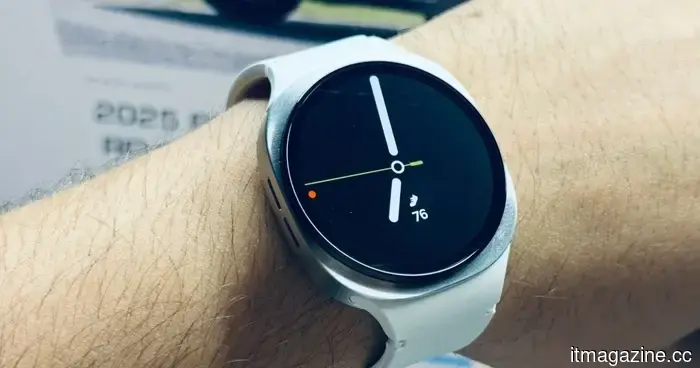 I would suggest the Galaxy Watch 8 priced at $218 as the top smartwatch deal for Prime Day for the majority of individuals.
The Galaxy Watch 8 is now available for an all-time low price of $218.49 during Prime Day, giving you a discount of over $130 on Samsung's newest smartwatch.
I would suggest the Galaxy Watch 8 priced at $218 as the top smartwatch deal for Prime Day for the majority of individuals.
The Galaxy Watch 8 is now available for an all-time low price of $218.49 during Prime Day, giving you a discount of over $130 on Samsung's newest smartwatch.
 Apple suppliers rush to Hong Kong: $4 billion in a week
Apple suppliers Luxshare and Lingyi are competing to secure billions in funding to shift their focus from smartphone components to AI hardware and humanoid robots in Hong Kong.
Apple suppliers rush to Hong Kong: $4 billion in a week
Apple suppliers Luxshare and Lingyi are competing to secure billions in funding to shift their focus from smartphone components to AI hardware and humanoid robots in Hong Kong.
 LastPass experiences another data breach, but your password vault is secure this time.
LastPass has stated that customer names, contact information, and support case records were compromised in a breach at Klue, although the company assures that password vaults are still secure.
LastPass experiences another data breach, but your password vault is secure this time.
LastPass has stated that customer names, contact information, and support case records were compromised in a breach at Klue, although the company assures that password vaults are still secure.
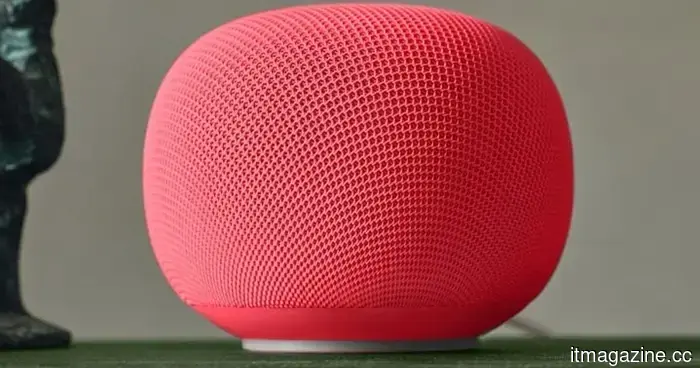 The Google Home Speaker is quite remarkable, but that impression changes when you examine the power cable.
A buyer managed to get the new Google Home Speaker ahead of time and shared their initial thoughts. The sound quality is impressive, the setup is fast, but the non-removable power cable is a significant drawback for repairability.
The Google Home Speaker is quite remarkable, but that impression changes when you examine the power cable.
A buyer managed to get the new Google Home Speaker ahead of time and shared their initial thoughts. The sound quality is impressive, the setup is fast, but the non-removable power cable is a significant drawback for repairability.
Cerebras shares decline as a construction shortage impacts operations.
Cerebras nearly doubled its revenue and surpassed 2026 sales forecasts, yet its stock dropped by 10% due to margin pressure from a shortage in the data-center sector.