

Luminvera focuses on immersive software solutions for robotics.
For much of Luminvera's brief existence, its pitch included an AR wearable. Founded in March 2026 and based in Silicon Valley, the company began with the belief that the right device could elevate an industrial engineer from what its founder, Lu Yang, refers to as the “2D Stone Age.” A flat monitor displays a machine as lines on a surface. The machine itself isn’t a flat object. The wearable aimed to bridge that gap, allowing engineers to visualize machines in three dimensions, hands-free, on the factory floor. Yang would demonstrate it like Tony Stark from Iron Man: presenting a flat diagram alongside the same component hovering in the air in front of you.
Recently, she decided to abandon that approach. “After our pivot, we will concentrate solely on software for B2B clients in the robotics sector,” Yang states. The sentence lacks emotion, but the reasoning behind it stretches back nearly a decade, highlighting an ongoing issue she has consistently articulated.
Yang developed her career in the automotive sector at Bosch, the German industrial and electronics giant, and Mercedes-Benz. Trained as an IT project manager, she was in charge of overseeing digital transformation in engineering and quality management at Bosch. Essentially, her job revolved around observing high-cost engineers performing tasks that didn’t require their specialized skills.
She often revisits this notion. “Picture assembling an enormous, impressive 3D LEGO set, but with the instructions spread across 30,000 dull sheets of paper in tiny print,” she explains. “It would be utterly frustrating. You’d waste more time feeling annoyed than actually constructing anything.” A customer's specifications arrive as thousands of pages of text. A senior employee manually translates that into a design. Manufacturing plants and engineering centers coordinate by using physical printouts. Compliance reports are generated by hand, distilling three-dimensional systems into flat text and 2D visuals.
Her critique was never truly about the tools themselves. “Technology is generally designed in a way that forces people to adapt their work habits rather than evolving to assist them,” she remarks. This principle remained intact through the pivot and likely contributed to it.
Luminvera initially responded with hardware supplemented by an AI layer, representing a comprehensive effort to retain the spatial context typically lost when using a desktop screen. The revamped Luminvera retains the core concept but discards the wearable. What it now offers is software, which Yang describes as “a magical, video-game-like workspace where flat instructions quickly transform into tangible 3D objects you can manipulate with your hands.” An AI component interprets the lengthy specifications and converts them into structured guidelines for engineers to design against. A spatial component presents the outcome as something resembling an object rather than a mere drawing, allowing engineers to think in three dimensions without reconstructing images in their minds from a flat display.
Specifically, the focus is on robotics. The shift from “industrial engineering” to “the robotics industry” is a critical aspect of the pivot. Robotics is where new investments in manufacturing are directed, reflecting the greatest gap between a CAD file and a completed machine, which also incurs the highest costs to bridge. A company offering an immersive design environment can present a clearer narrative to businesses developing humanoid robots than attempting to address the entire spectrum of heavy engineering simultaneously.
The decision to drop hardware follows similar reasoning, with practical timing involved. Software can be integrated into a customer’s existing systems. However, an AR wearable requires development, certification, support, and user adoption, and the market for such devices became precarious in late 2024 when Microsoft ceased production of its HoloLens 2, leaving a gap for a generation of factory AR built upon it. Relying a fledgling enterprise on hardware from a manufacturer that may discontinue it is a challenging way to begin.
The challenge now is that the software market Yang is entering is already crowded. PTC, a Boston-based industrial software provider, offers Vuforia Expert Capture, an AR tool that converts 3D CAD into guided work instructions and AI-validated inspections; one industry analyst has named PTC the leading AR vendor for four consecutive years. Scope AR, a San Francisco enterprise-AR company, recently acquired by Flatirons Solutions, has a platform that overlays CAD files onto real equipment, showcasing the difficulties faced by standalone ventures. Augmentir leads with generative AI, offering an assistant named Augie that turns existing materials into digital procedures. All three are more established, better funded, and already integrated into the factories Yang targets. However, none are specifically tailored around what Luminvera focuses on: the engineer during the design phase rather than the technician on the production floor, particularly concerning robotics as opposed to manufacturing in a broader sense. Whether this distinction provides a genuine advantage or is merely a narrow one remains an open question.
Yang presented her case publicly last week. On June 11, she participated in the Founder Institute’s Silicon Valley Spring 2026 graduation, an online showcase for the accelerator’s latest startups.
Other articles
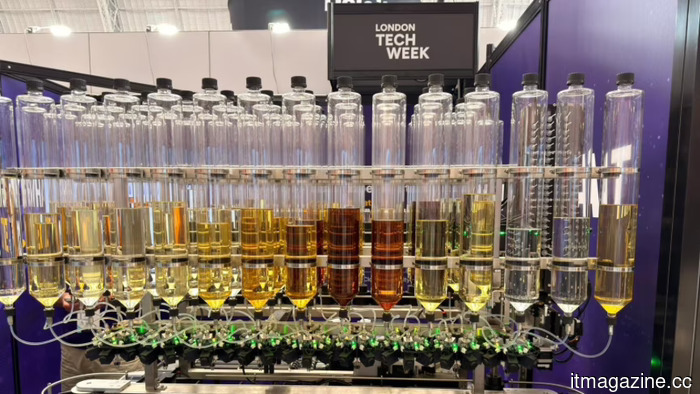 The algorithm now has a sense of smell, and the fragrance has improved as a result.
From a living lab in Breda to major fragrance companies, software is expanding the opportunities for scent creation. This is something to celebrate.
The algorithm now has a sense of smell, and the fragrance has improved as a result.
From a living lab in Breda to major fragrance companies, software is expanding the opportunities for scent creation. This is something to celebrate.
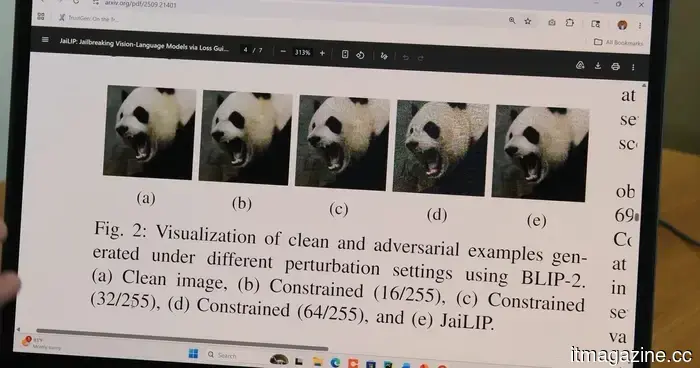 This clever photo technique causes AI chatbots to bypass their safety protocols.
A recent exploit from Florida International University demonstrates how undetectable pixel-level alterations in an image can deceive AI chatbots into producing responses they typically prohibit.
This clever photo technique causes AI chatbots to bypass their safety protocols.
A recent exploit from Florida International University demonstrates how undetectable pixel-level alterations in an image can deceive AI chatbots into producing responses they typically prohibit.
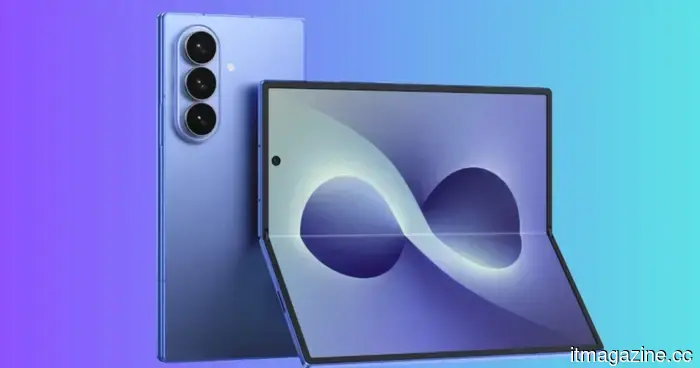 A Samsung leak suggests a variety of stylish colors for the forthcoming Galaxy Z Fold 8 and Flip 8.
According to a recent leak, Samsung's upcoming foldables might be available in a variety of colors, such as Mint, Pink, Pistachio, Green Shadow, and Violet Shadow.
A Samsung leak suggests a variety of stylish colors for the forthcoming Galaxy Z Fold 8 and Flip 8.
According to a recent leak, Samsung's upcoming foldables might be available in a variety of colors, such as Mint, Pink, Pistachio, Green Shadow, and Violet Shadow.
 The competition to create smart glasses that appear less cumbersome has started, and I'm excited about the progress.
An Italian startup named Lorika has just introduced Ontop, vibrant clip-on covers that enhance the appearance of your Ray-Ban Meta glasses.
The competition to create smart glasses that appear less cumbersome has started, and I'm excited about the progress.
An Italian startup named Lorika has just introduced Ontop, vibrant clip-on covers that enhance the appearance of your Ray-Ban Meta glasses.
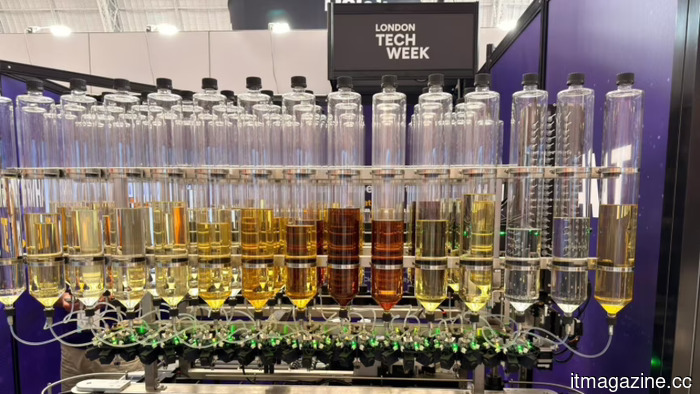 The algorithm now has a sense of smell, and the fragrance has improved because of it.
From a living lab in Breda to major fragrance companies, software is expanding access to scent creation. This is something to celebrate.
The algorithm now has a sense of smell, and the fragrance has improved because of it.
From a living lab in Breda to major fragrance companies, software is expanding access to scent creation. This is something to celebrate.
 Luminvera focuses on immersive software for robotics.
Luminvera launched its AR wearable and shifted focus from industrial engineering to robotics software right after graduating from the Founder Institute, wagering that an AI-powered spatial design tool can compete with better-financed rivals.
Luminvera focuses on immersive software for robotics.
Luminvera launched its AR wearable and shifted focus from industrial engineering to robotics software right after graduating from the Founder Institute, wagering that an AI-powered spatial design tool can compete with better-financed rivals.
Luminvera focuses on immersive software solutions for robotics.
Luminvera launched its AR wearable and shifted its focus from industrial engineering to robotics software right after graduating from the Founder Institute, believing that an AI-powered spatial design tool can compete with more well-financed competitors.