

Luminvera focuses on immersive software for robotics.
For much of Luminvera's brief existence, its pitch included an AR wearable. Founded in March 2026 and based in Silicon Valley, the company began with the belief that the right device could help industrial engineers escape what its founder, Lu Yang, refers to as the “2D Stone Age.” A flat display represents a machine as lines on a two-dimensional surface, but the machine itself isn't flat. The wearable was intended to bridge that divide, enabling engineers to view the object in three dimensions, hands-free, on the factory floor. Yang would showcase it like Tony Stark in Iron Man: showing the flat drawing next to the same part floating in space before you. Recently, she decided to abandon it.
“Post-pivot, we will concentrate solely on software for B2B clients in the robotics sector,” Yang states. The remark is straightforward, but the rationale behind it spans nearly a decade and addresses an ongoing issue she has consistently highlighted.
Yang's background is in the automotive sector, having worked at Bosch, the German industrial and electronics giant, and at Mercedes-Benz. As an IT project manager at Bosch, she oversaw digital transformation in engineering and quality management, essentially monitoring highly skilled engineers handling tasks that didn’t require their expertise.
The imagery she conjures up is striking. “Imagine you're assembling a gigantic, incredibly cool 3D LEGO set, but the instructions are printed on 30,000 monotonous sheets of paper with tiny text,” she illustrates. “It would be a complete disaster. You would spend more time feeling frustrated than actually assembling.” Customer specifications arrive as thousands of pages of text, which a senior person translates manually into a design. Factories and engineering centers synchronize their efforts using physical printouts. Compliance reports are manually compiled from three-dimensional systems into flat text and 2D visuals.
However, her criticism has never solely focused on the tools themselves. “Technology is generally developed in a way that compels humans to modify how they work, rather than having technology adapt to assist humans,” she explains. That principle persisted through the pivot, and likely contributed to it.
The initial version of Luminvera featured hardware and an AI layer aimed at preserving the spatial context lost with desktop screens. The reimagined Luminvera retains the core idea but abandons the wearable device. Now, it offers software that Yang describes as “a magical workspace resembling a video game where flat instructions morph instantly into tangible 3D objects you can manipulate with your hands.” An AI layer interprets the extensive specifications and converts them into organized constraints that an engineer can design against. A spatial layer presents the outcome as an object rather than a drawing, allowing engineers to think in three dimensions instead of reconstructing them in their minds from a flat screen.
Specifically, the focus narrows to robotics. The shift from "industrial engineering" to "the robotics industry" is crucial. Robotics is where new manufacturing investments are headed and where the gap between a CAD file and a finished product is widest—and thus most costly to bridge. A company that offers an immersive design platform has a clearer narrative to convey to firms creating humanoid robots than if it addressed the entire landscape of heavy engineering at once.
Eliminating the hardware aligns with this logic and the timing is practical. Software can be deployed on a customer's existing systems, while an AR wearable needs to be produced, certified, supported, and worn. The market for those devices became precarious in late 2024 when Microsoft discontinued its HoloLens 2 without a successor and set a 2027 end-of-support date, leaving many factory-floor AR initiatives dependent on it in a lurch. Relying on hardware that another entity could cease production on is a challenging strategy for a fledgling company.
The challenge now is that the software market Yang is entering is already crowded. PTC, a Boston-based industrial software firm, offers Vuforia Expert Capture, an AR tool that converts 3D CAD into guided work instructions and AI-verified inspections, and has been named the top AR vendor by an industry analyst for four consecutive years. Scope AR, a San Francisco AR enterprise firm whose WorkLink platform overlays CAD files onto real equipment, was recently acquired by Flatirons Solutions and integrated into a larger content company, underscoring the difficulties faced by independent companies in this field. Augmentir is known for its generative AI, with its Augie assistant converting existing manuals and videos into digital processes. All three companies have more established footholds, greater funding, and are already present in the factories Yang targets. However, none of them is centered around what Luminvera focuses on: the engineer during the design phase, rather than the technician on the factory floor, with a specific emphasis on robots rather than manufacturing as a whole. Whether this distinction is a significant advantage or merely a narrow one remains to be seen.
Last week, Yang publicly presented this case. On June 11, she participated in a pitch
Other articles
 EU intensifies investigation into Meta's addictive design practices.
The EU is readying initial conclusions in its investigation into Meta's addictive design, which may result in a penalty of up to 6% of global revenue.
EU intensifies investigation into Meta's addictive design practices.
The EU is readying initial conclusions in its investigation into Meta's addictive design, which may result in a penalty of up to 6% of global revenue.
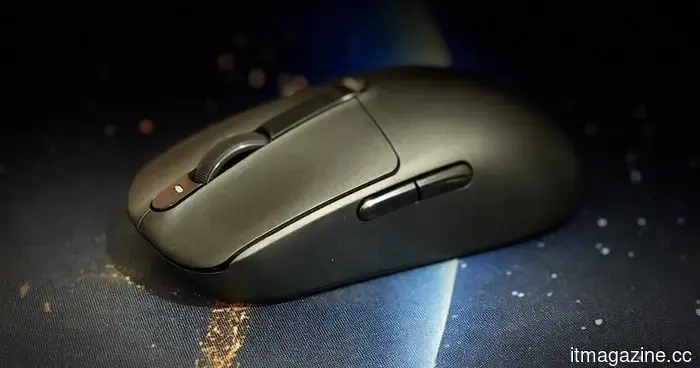 Akko Dash V9 Ultra review: I tried out this extremely lightweight gaming mouse, and it also made my work easier.
Akko's lightweight mouse features a top-tier sensor and offers 8K wireless polling all within a stylish design, and it doesn't come with an exorbitant price tag.
Akko Dash V9 Ultra review: I tried out this extremely lightweight gaming mouse, and it also made my work easier.
Akko's lightweight mouse features a top-tier sensor and offers 8K wireless polling all within a stylish design, and it doesn't come with an exorbitant price tag.
 Meta was secretly monitoring its employees, but promptly halted the practice following an internal leak.
Meta suspended its employee tracking initiative, which gathered keystroke data, screen activity, and mouse movements, following an internal leak of sensitive information.
Meta was secretly monitoring its employees, but promptly halted the practice following an internal leak.
Meta suspended its employee tracking initiative, which gathered keystroke data, screen activity, and mouse movements, following an internal leak of sensitive information.
 A Samsung leak suggests a variety of stylish colors for the forthcoming Galaxy Z Fold 8 and Flip 8.
According to a recent leak, Samsung's upcoming foldables might be available in a variety of colors, such as Mint, Pink, Pistachio, Green Shadow, and Violet Shadow.
Claude's outage: A recent stumble for Anthropic
Claude outage: Anthropic's recent instability follows model suspensions and multiple error reports from the company.
A Samsung leak suggests a variety of stylish colors for the forthcoming Galaxy Z Fold 8 and Flip 8.
According to a recent leak, Samsung's upcoming foldables might be available in a variety of colors, such as Mint, Pink, Pistachio, Green Shadow, and Violet Shadow.
Claude's outage: A recent stumble for Anthropic
Claude outage: Anthropic's recent instability follows model suspensions and multiple error reports from the company.
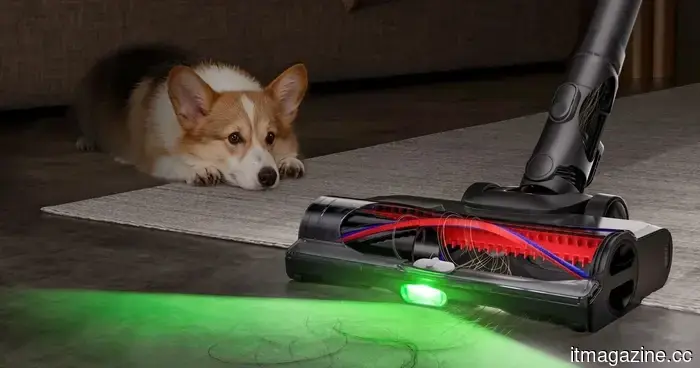 The Top Tineco Prime Day Offers to Enhance Your Cleaning Routine
Prime Day frequently represents the ideal opportunity to purchase high-quality home appliances, and Tineco’s 2026 Prime Day sale is poised to be one of the largest so far. Renowned for its cutting-edge floor-care technology, Tineco has established itself as a preferred brand for families seeking to make cleaning easier through smart, multi-functional solutions aimed at saving time and […]
The Top Tineco Prime Day Offers to Enhance Your Cleaning Routine
Prime Day frequently represents the ideal opportunity to purchase high-quality home appliances, and Tineco’s 2026 Prime Day sale is poised to be one of the largest so far. Renowned for its cutting-edge floor-care technology, Tineco has established itself as a preferred brand for families seeking to make cleaning easier through smart, multi-functional solutions aimed at saving time and […]
Luminvera focuses on immersive software for robotics.
Luminvera launched its AR wearable and shifted focus from industrial engineering to robotics software right after graduating from the Founder Institute, wagering that an AI-powered spatial design tool can compete with better-financed rivals.