
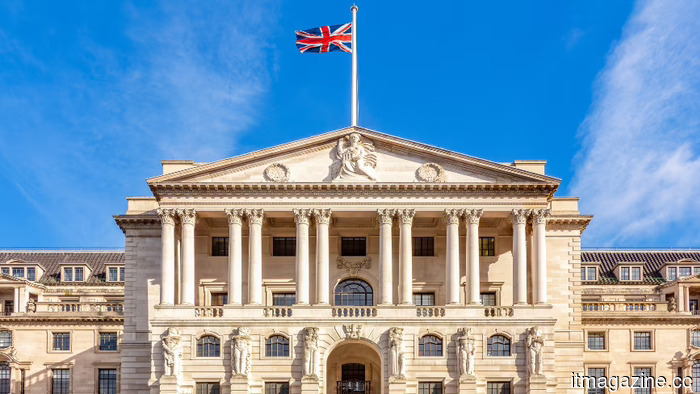
The Bank of England relaxes its strict regulations on stablecoins.
When the Bank of England initially outlined its approach to regulating stablecoins, the industry responded negatively to the draft. The proposals included limits on how much any single individual could hold and strict guidelines on the assets that could back the coins. Critics argued that such regulations would hinder real-world usage and send a poor message regarding Britain's intent to support the sector.
The most notable concession pertains to holding limits. The Bank had suggested a cap on individual holdings of any systemic sterling stablecoin at approximately £20,000, with a £10 million limit for businesses. This measure aimed to prevent a rapid outflow of money from bank deposits into tokens, which could disrupt lending to the real economy. However, that personal holding cap has been removed. Instead, the Bank will implement a temporary issuance limit for each systemic stablecoin, establishing a maximum amount any single issuer can circulate, rather than monitoring every wallet.
The reserve requirements have also been relaxed. The original proposal leaned towards mandating that issuers keep backing assets as non-interest-bearing deposits at the Bank, a decision influenced by the liquidity stress experienced during the 2023 bank runs, including the downfall of Silicon Valley Bank. Issuers argued that holding reserves without any returns made the economics of regulated stablecoins hardly viable. The updated rules provide more flexibility, permitting a greater proportion of backing to be held in short-term UK government debt that yields interest.
The Bank has acknowledged that this shift was not arbitrary. Deputy Governor Sarah Breeden conceded that the initial proposals might have been “overly conservative,” marking an unusually frank admission from a central bank. The restructured framework emphasizes protecting financial stability while also nurturing a market that the government hopes will thrive in London.
Sasha Mills, the Bank's executive director for financial market infrastructure, oversees this project and has spent the past year advocating for innovation in stablecoins and tokenized money rather than resisting it. The political context is also significant, as ministers have openly expressed their desire for the UK to become a center for digital assets. A regime that is noticeably stricter than that of Washington, where a federal stablecoin law has provided issuers with clearer guidance, could push companies to operate across the Atlantic.
However, the underlying concern remains. The intensive scrutiny of systemic stablecoins stems from the fact that a widely accepted token for payments begins to resemble money, and tokens that can be redeemed in a crisis might move faster than the banking system can handle. The Bank’s worry about deposits exiting lenders is legitimate; it has simply concluded that an issuance limit is a more refined approach than restricting individual holdings. Whether this proves effective will only be determined by a market under stress.
This ongoing debate has been followed by TNW as significant investments have been made, such as Mastercard’s $1.8 billion foray into stablecoin infrastructure and JPMorgan’s tokenized funds on Ethereum, amidst concerns that the sector could disrupt the financial system if it expands without appropriate safeguards. The Bank's updated position seeks to balance both perspectives.
The framework is still in progress. The Bank is accepting feedback until September 22, 2026, and plans to finalize its Code of Practice by year-end, with regulated stablecoins anticipated to operate in the UK starting in 2027. For the moment, the industry has received the reassurance it sought.
The true test of whether a more lenient regime can withstand the pressure when a token akin to a small bank begins to falter is yet to come.
Other articles
 Epic is enhancing its game launcher with a much-needed speed increase and a variety of new features.
Epic is revamping its Games Store launcher entirely, aiming for quicker startup times, enhancements in download speeds in the future, player reviews, profiles, and additional features for the store.
Epic is enhancing its game launcher with a much-needed speed increase and a variety of new features.
Epic is revamping its Games Store launcher entirely, aiming for quicker startup times, enhancements in download speeds in the future, player reviews, profiles, and additional features for the store.
 Spiro secures $55 million from China's NewTrails as it approaches a valuation of $1 billion.
Spiro has secured $55 million from the Chinese investor NewTrails Capital, bringing its total disclosed funding to over $550 million as it approaches a $1 billion valuation.
Spiro secures $55 million from China's NewTrails as it approaches a valuation of $1 billion.
Spiro has secured $55 million from the Chinese investor NewTrails Capital, bringing its total disclosed funding to over $550 million as it approaches a $1 billion valuation.
 Baden Bower monitors 12,040 AI citations across six different engines to rank the leading publications for AI visibility.
A recent index scoring 12,040 citations from ChatGPT, Perplexity, Claude, Gemini, Google AI Overviews, and Copilot reveals that editorial sources lead in AI responses, with Forbes at the top and press release services ranked lower.
Baden Bower monitors 12,040 AI citations across six different engines to rank the leading publications for AI visibility.
A recent index scoring 12,040 citations from ChatGPT, Perplexity, Claude, Gemini, Google AI Overviews, and Copilot reveals that editorial sources lead in AI responses, with Forbes at the top and press release services ranked lower.
 Spiro secures $55 million from China's NewTrails as it approaches a $1 billion valuation.
Spiro has secured $55 million from the Chinese investor NewTrails Capital, bringing its total disclosed funding to over $550 million as it approaches a $1 billion valuation.
Spiro secures $55 million from China's NewTrails as it approaches a $1 billion valuation.
Spiro has secured $55 million from the Chinese investor NewTrails Capital, bringing its total disclosed funding to over $550 million as it approaches a $1 billion valuation.
 Baden Bower monitors 12,040 AI citations across six platforms to rank leading publications for AI prominence.
A recent index, which tallied 12,040 citations from ChatGPT, Perplexity, Claude, Gemini, Google AI Overviews, and Copilot, reveals that editorial sources lead in AI responses, with Forbes taking the top spot and press release wires ranking towards the bottom.
Baden Bower monitors 12,040 AI citations across six platforms to rank leading publications for AI prominence.
A recent index, which tallied 12,040 citations from ChatGPT, Perplexity, Claude, Gemini, Google AI Overviews, and Copilot, reveals that editorial sources lead in AI responses, with Forbes taking the top spot and press release wires ranking towards the bottom.
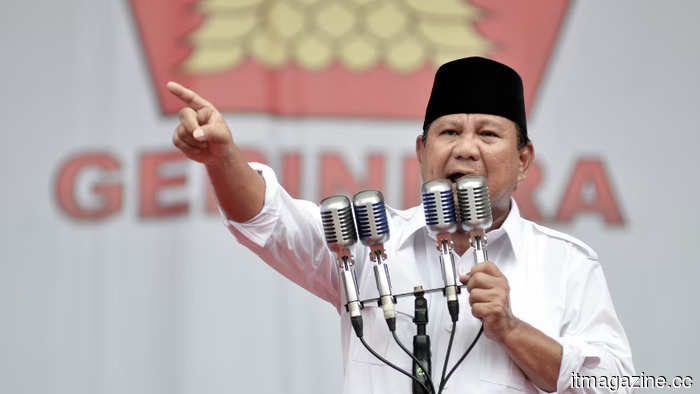 Indonesia is utilizing AI to fulfill Prabowo's key promises.
Jakarta intends to integrate AI into its national initiatives, including the $15 billion free-meal program that is central to Prabowo's agenda.
Indonesia is utilizing AI to fulfill Prabowo's key promises.
Jakarta intends to integrate AI into its national initiatives, including the $15 billion free-meal program that is central to Prabowo's agenda.
The Bank of England relaxes its strict regulations on stablecoins.
In response to feedback from the industry, the Bank of England has abandoned its initial plan for individual holding limits on stablecoins and has opted for limits on issuance based on the issuer instead.