
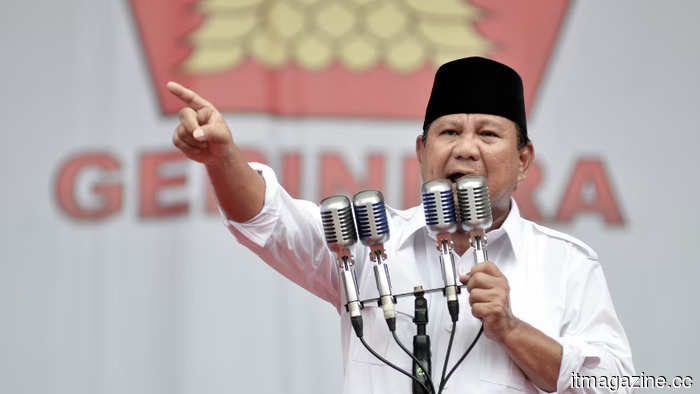
Indonesia is utilizing AI to fulfill Prabowo's key promises.
The most costly commitment Prabowo Subianto made while pursuing the presidency of Indonesia was a lunch program. His initiative to provide free meals, estimated at around $15 billion to nourish approximately 83 million children and pregnant women throughout the vast archipelago, relies heavily on efficient logistics.
Jakarta is now aiming to apply artificial intelligence to tackle this challenge, integrating the technology into the meal program and several other key initiatives as part of its effort to enhance governmental operations, according to an exclusive report by Reuters.
The strategy views AI not as a groundbreaking innovation but as essential infrastructure. Indonesia's national AI roadmap outlines various immediate and practical applications: tools to oversee the nutritious meal program, predictive models for crop yields to bolster the nation’s food self-sufficiency effort, and systems to monitor financial reporting within the Red-White cooperative initiative, one of Prabowo’s key projects.
The common thread is that these tools are not consumer-focused; instead, they serve as administrative instruments designed to tackle issues of waste, leakage, and the disparity between program promises and actual delivery.
Focusing on a single, extensive meal program is significant. A program of this scale, administered in remote areas, is exactly where funds can go missing and food may spoil before delivery. The government has already taken steps to concentrate efforts on more isolated regions while slowing down the pace of constructing new kitchens.
An AI component that can identify a kitchen that is falling behind or a delivery that fails to arrive may not seem glamorous, but it is a practical application that a finance ministry can effectively track.
This ambition fits within a broader context. Indonesia published a National AI Roadmap White Paper in 2025 and established a presidential regulation aimed at implementing AI across public services. This initiative is part of the government's goal to enhance bureaucratic efficiency and address a persistent fiscal deficit.
The entire endeavor aligns with Prabowo’s main economic goal of achieving 8% annual growth by the end of his term in 2029, as well as the long-term vision known as “Golden Indonesia 2045,” which aims for high-income status by the country’s centenary.
However, there are challenges that the roadmap cannot simply overlook. Indonesia's AI regulation has been delayed, with mandatory rules postponed to 2026 after the government missed a prior deadline. This means the technology is being incorporated into active programs before the legal framework intended to regulate it is in place.
This sequence of deploying technology first and regulating afterward contrasts with the preferred approach claimed by most governments, raising significant concerns about data protection and accountability, especially in systems that impact welfare payments and food deliveries to millions.
Moreover, the country must develop the necessary infrastructure, including data centers, computing power, and skilled personnel, in a region where AI infrastructure is becoming increasingly competitive. Indonesia is vying for the same resources, including chips, engineers, and cloud capacity, as its wealthier neighbors.
This competition has been evident across Southeast Asia, with Thailand approving $29 billion in data center projects and Kazakhstan signing a $10 billion agreement with an Nvidia-backed builder, as governments aim to avoid total reliance on a few US and Chinese cloud services.
Indonesia's unique approach focuses on applications rather than infrastructure, utilizing AI within existing programs before the supporting data centers are fully established. This strategy could encounter similar sovereignty issues that others are facing.
What Jakarta is attempting is, in many ways, the least futuristic incarnation of an AI strategy: not chatbots or cutting-edge models, but a government endeavoring to utilize software to reliably provide meals to 83 million people.
If successful, the validation will not come from a demonstration; rather, it will be a meal that successfully reaches a village far from the capital on a day it might have otherwise been missed.
Other articles
 Is it possible for an ice machine to cool an Nvidia RTX GPU during gaming? A bold modification demonstrates that it can.
A YouTuber transformed a countertop ice machine into a personalized cooler for an Nvidia RTX 3060, reducing the temperatures of Cyberpunk 2077 from approximately 60 degrees to between 22 and 23 degrees Celsius.
Is it possible for an ice machine to cool an Nvidia RTX GPU during gaming? A bold modification demonstrates that it can.
A YouTuber transformed a countertop ice machine into a personalized cooler for an Nvidia RTX 3060, reducing the temperatures of Cyberpunk 2077 from approximately 60 degrees to between 22 and 23 degrees Celsius.
 SpaceX shares decline once more as the post-IPO surge continues to diminish.
SpaceX's stock has declined to approximately $185 from a peak of $225, as a limited float, new short-selling instruments, and a $60 billion Cursor agreement dampen the excitement.
SpaceX shares decline once more as the post-IPO surge continues to diminish.
SpaceX's stock has declined to approximately $185 from a peak of $225, as a limited float, new short-selling instruments, and a $60 billion Cursor agreement dampen the excitement.
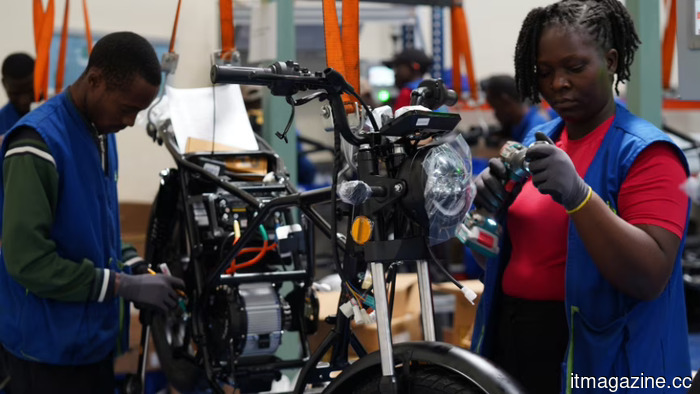 Spiro secures $55 million from China's NewTrails as it approaches a $1 billion valuation.
Spiro has secured $55 million from the Chinese investor NewTrails Capital, bringing its total disclosed funding to over $550 million as it approaches a $1 billion valuation.
Spiro secures $55 million from China's NewTrails as it approaches a $1 billion valuation.
Spiro has secured $55 million from the Chinese investor NewTrails Capital, bringing its total disclosed funding to over $550 million as it approaches a $1 billion valuation.
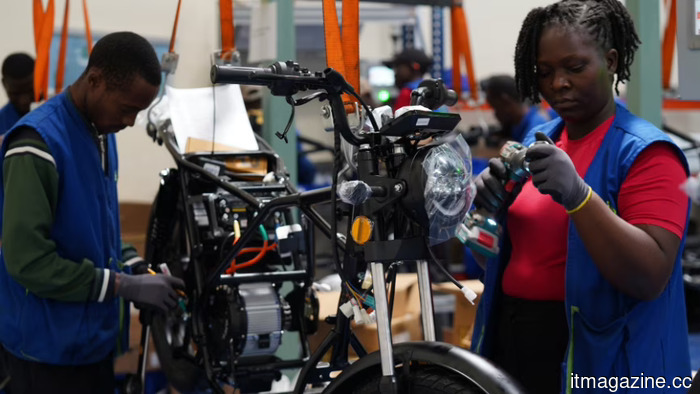 Spiro secures $55 million from China's NewTrails as it approaches a valuation of $1 billion.
Spiro has secured $55 million from the Chinese investor NewTrails Capital, bringing its total disclosed funding to over $550 million as it approaches a $1 billion valuation.
Spiro secures $55 million from China's NewTrails as it approaches a valuation of $1 billion.
Spiro has secured $55 million from the Chinese investor NewTrails Capital, bringing its total disclosed funding to over $550 million as it approaches a $1 billion valuation.
 Baden Bower monitors 12,040 AI citations across six different engines to rank the leading publications for AI visibility.
A recent index scoring 12,040 citations from ChatGPT, Perplexity, Claude, Gemini, Google AI Overviews, and Copilot reveals that editorial sources lead in AI responses, with Forbes at the top and press release services ranked lower.
Baden Bower monitors 12,040 AI citations across six different engines to rank the leading publications for AI visibility.
A recent index scoring 12,040 citations from ChatGPT, Perplexity, Claude, Gemini, Google AI Overviews, and Copilot reveals that editorial sources lead in AI responses, with Forbes at the top and press release services ranked lower.
 Baden Bower monitors 12,040 AI citations across six platforms to rank leading publications for AI prominence.
A recent index, which tallied 12,040 citations from ChatGPT, Perplexity, Claude, Gemini, Google AI Overviews, and Copilot, reveals that editorial sources lead in AI responses, with Forbes taking the top spot and press release wires ranking towards the bottom.
Baden Bower monitors 12,040 AI citations across six platforms to rank leading publications for AI prominence.
A recent index, which tallied 12,040 citations from ChatGPT, Perplexity, Claude, Gemini, Google AI Overviews, and Copilot, reveals that editorial sources lead in AI responses, with Forbes taking the top spot and press release wires ranking towards the bottom.
Indonesia is utilizing AI to fulfill Prabowo's key promises.
Jakarta intends to integrate AI into its national initiatives, including the $15 billion free-meal program that is central to Prabowo's agenda.