
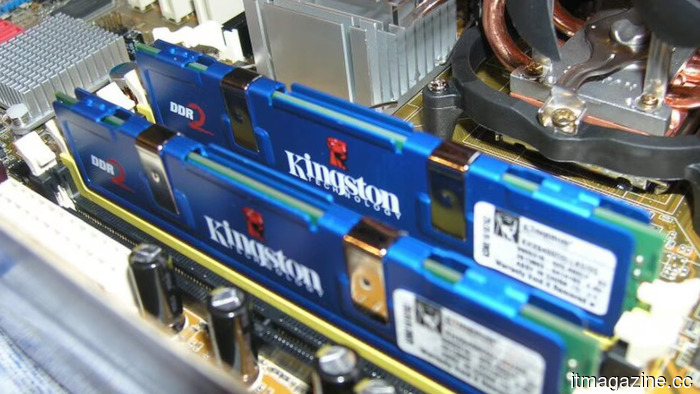
The AI memory crisis has now impacted DDR2, a standard established in 2003, causing prices to rise by 60%.
In Q2 2026, DDR2 prices surged by 55-60% due to an AI-induced DRAM shortage compelling hardware manufacturers to revert to older memory generations. The memory shortage has now impacted the oldest DRAM standard still in production. According to Taiwanese market intelligence firm TrendForce, DDR2 contract prices increased by 55 to 60 percent in the second quarter, with an additional forecasted rise of 35 to 40 percent in the third quarter.
This price increase is attributed to hardware manufacturers lowering their memory specifications to ensure a stable supply. TrendForce reports that some producers are switching from DDR4 designs to DDR3, while others are moving from DDR3 to DDR2, which has been around since 2003. These changes are a response to ongoing shortages in mainstream DRAM and the steep rise in contract prices across all memory generations.
The Register, which first highlighted TrendForce's analysis, mentioned that it is hard to envision modern PC processors supporting such outdated memory types. The downgrades are more likely affecting embedded systems, industrial equipment, networking hardware, and other devices that still utilize older memory standards.
The underlying issue has been affecting the memory market since late 2025. Major companies like Samsung, SK Hynix, and Micron have shifted their wafer production from consumer and commodity DRAM to high-bandwidth memory for AI data centers, where profit margins exceed 70 percent. Each wafer dedicated to an HBM stack for Nvidia GPUs means one less wafer available for consumer laptops, smartphones, or industrial controllers.
The shortage has cascaded through various memory generations, with DDR5 and DDR4 prices rising first. As those components became scarce, buyers turned their attention to DDR3. With DDR3 supply now tightening, pressure is reaching DDR2, a product that many in the industry considered an outdated low-margin option.
The supply situation for DDR2 is particularly fragile, with only a few manufacturers still producing it. Key suppliers include Taiwan's Winbond and ESMT. According to TrendForce, Winbond is gradually phasing out DDR2 production in favor of higher-margin products such as DDR3, DDR4, and LPDDR4.
Conversely, ESMT is increasing its DDR2 output within its existing wafer allocation at its foundry partner Powerchip Semiconductor Manufacturing Corporation, aiming to capitalize on the demand being left by Winbond. This divergence means Winbond is reducing DDR2 supply faster than ESMT can compensate.
The wider memory crisis is already impacting consumer electronics. GoPro issued a warning about its future viability after memory prices skyrocketed by 80 to 115 percent, and PC prices have also risen significantly. IDC forecasts that smartphones, PCs, and tablets could see a price increase of 10 to 20 percent by the end of 2026.
Efforts to alleviate the situation are underway, but relief will come slowly. SK Hynix plans to double its silicon wafer output over the next five years, a timeline announced by its chairman at Computex in June. Micron also expects significant new capacity to be available at its Virginia fabrication plant in 2027 and 2028; however, these plans do not address the current shortage.
Chinese manufacturer CXMT has begun supplying DDR5 to Western brands, including Corsair, presenting a possible alternative for mainstream memory. However, CXMT is also converting about 20 percent of its capacity to HBM due to attractive margins, limiting the relief it can offer to consumers.
The fact that memory components from 2003 are experiencing quarterly price increases of 60 percent underscores the extent to which AI-related reallocations have distorted the semiconductor supply chain. The shortage is not limited to advanced products; it has also impacted lower-tier components that the industry expected to remain inexpensive and plentiful indefinitely.
Other articles
 I really like Apple, but this decision regarding watchOS could be the tipping point for me.
My Apple Watch SE 2 is still functioning flawlessly. So why does it seem outdated already? Why, Apple, why?
I really like Apple, but this decision regarding watchOS could be the tipping point for me.
My Apple Watch SE 2 is still functioning flawlessly. So why does it seem outdated already? Why, Apple, why?
 This modular robotic lawn mower can manage up to 6 acres and is available for $1,000 less during Prime Day.
Amazon Prime Day This article is included in the Digital Trends Prime Day 2026 coverage Updated less than 4 hours ago This content is provided in a paid collaboration with YARBO. If you’ve been evaluating options for a robot mower for an expansive property, Prime Day has simplified the calculations. The YARBO Robot […]
This modular robotic lawn mower can manage up to 6 acres and is available for $1,000 less during Prime Day.
Amazon Prime Day This article is included in the Digital Trends Prime Day 2026 coverage Updated less than 4 hours ago This content is provided in a paid collaboration with YARBO. If you’ve been evaluating options for a robot mower for an expansive property, Prime Day has simplified the calculations. The YARBO Robot […]
 I have a deep appreciation for Apple, but this choice regarding watchOS could be the tipping point for me.
My Apple Watch SE 2 is still functioning well. So why does it seem outdated already? Why, Apple, why?
I have a deep appreciation for Apple, but this choice regarding watchOS could be the tipping point for me.
My Apple Watch SE 2 is still functioning well. So why does it seem outdated already? Why, Apple, why?
 Instagram is making its way into your living room with episodic series and live TV on Samsung devices.
Instagram for TV is broadening its reach to Samsung smart TVs and is experimenting with episodic series, live broadcasts, and horizontal video as Meta aims to enter the living room market.
Instagram is making its way into your living room with episodic series and live TV on Samsung devices.
Instagram for TV is broadening its reach to Samsung smart TVs and is experimenting with episodic series, live broadcasts, and horizontal video as Meta aims to enter the living room market.
 AirPods Max 2 are currently available for $399 ahead of Prime Day, and I strongly suggest you take advantage of this deal.
The AirPods Max 2 are discounted by $150 ahead of Prime Day, bringing the price down to $399 for the first time since their launch in March.
AirPods Max 2 are currently available for $399 ahead of Prime Day, and I strongly suggest you take advantage of this deal.
The AirPods Max 2 are discounted by $150 ahead of Prime Day, bringing the price down to $399 for the first time since their launch in March.
 Kodak Charmera is launching a new $30 keychain camera that features a flip screen for taking selfies.
The Funtastic Keychain Camera from Yashica is a small digital camera featuring a 180-degree flip screen, a 1MP sensor, USB-C charging, and a variety of character-themed designs.
Kodak Charmera is launching a new $30 keychain camera that features a flip screen for taking selfies.
The Funtastic Keychain Camera from Yashica is a small digital camera featuring a 180-degree flip screen, a 1MP sensor, USB-C charging, and a variety of character-themed designs.
The AI memory crisis has now impacted DDR2, a standard established in 2003, causing prices to rise by 60%.
According to TrendForce, DDR2 contract prices increased by 55-60% in the second quarter as hardware manufacturers shifted to older memory generations in response to AI-driven DRAM shortages.