
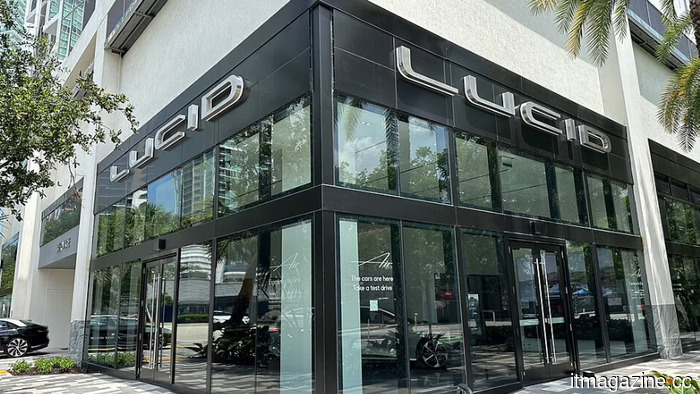
Lucid Motors reduces its workforce by 18% as the new CEO eliminates the second production shift.
Lucid Motors is laying off 1,500 employees, representing 18% of its workforce, just four months after a previous reduction of 12%. The company announced on Monday that it has also removed its second production shift at the Casa Grande factory in Arizona and has entirely eliminated the chief operating officer position.
These layoffs mark the initial significant action taken by Silvio Napoli, who became CEO in April following the unexpected resignation of founder Peter Rawlinson in February 2025. Napoli, who has a background in the Swiss elevator industry and no automotive experience, indicated that the restructuring aims to make the company more straightforward, enhance execution, and improve competitiveness over time.
Marc Winterhoff, who served as interim CEO until Napoli's appointment, has departed, despite earlier assurances he would continue as COO. The recent regulatory filing confirms the COO position has been abolished. Winterhoff will receive a severance package and retain his company vehicle.
The job cuts affect full-time staff, contractors, and hourly production workers. At the end of 2025, Lucid reported having 9,000 employees globally, which decreased to around 6,400 following this latest round of layoffs. This workforce is significantly below what would be needed to fulfill its original production goals.
Lucid expects these changes to yield yearly savings of approximately $158 million, with the restructuring anticipated to be completed by the third quarter. The company will allocate about $32 million for severance payouts.
This restructuring occurs as Lucid readies itself to launch its first mass-market vehicle, the Cosmos SUV, priced below $50,000. This model is expected to help the company reach profitability by appealing to consumers who cannot afford the more expensive Lucid Air sedan or Gravity SUV. Production is set for Lucid’s facility in Saudi Arabia.
The Public Investment Fund of Saudi Arabia holds nearly 57% of Lucid and has continually provided financial support. A recent $550 million capital injection was completed in April, which includes a nine percent compounding dividend, indicating the costly conditions necessary to keep operations going.
The departure of numerous senior executives exacerbates the instability within the company, with over a dozen leaders leaving in the past two years, including Chief Engineer Eric Bach, who was dismissed in late 2025 and subsequently filed a wrongful termination lawsuit that is currently in arbitration. Emad Dlala, who was promoted earlier this year, resigned in June.
Lucid is also striving to enter the autonomous vehicle sector by partnering with Uber and Nuro for a luxury robotaxi service using the Gravity SUV, with employee tests already taking place in San Francisco and a public launch expected later this year. Uber has agreed to purchase at least 20,000 Gravity SUVs over the next six years.
The company has not commented on whether any programs are being halted amid the restructuring. This lack of clarity suggests that both the autonomy program and the Cosmos launch may carry more risk than indicated in the announcement.
In contrast, Rivian recently let go of hundreds of employees—less than 2% of its workforce—just after beginning deliveries of its R2 model. The difference is evident: Rivian is cutting back on the edges while entering mass-market production, while Lucid is implementing significant structural reductions while still seeking to stabilize production.
The overall EV market in the U.S. has significantly slowed down, with at least a dozen electric vehicle models being discontinued or put on hold in 2026 due to tariffs, the elimination of the federal tax credit, and rising import costs affecting the competitive environment. Many major automakers have scrapped electric models from their strategies, and the surviving EV startups are urgently trying to reduce costs before their financial reserves diminish.
Lucid delivered only 10,241 vehicles in 2025 and has not provided updated production expectations for 2026 under Napoli’s leadership. The elimination of the second shift at Casa Grande implies that near-term production is likely to decrease rather than increase. The factory was designed for a capacity of up to 90,000 vehicles annually, a number that now seems unrealistic.
Lucid faces the challenge of whether Napoli can achieve a turnaround before the company exhausts its funding. The Cosmos SUV presents the clearest opportunity for volume that could validate the Saudi investment, but launching a mass-market vehicle while simultaneously downsizing the workforce and production capacity is a unique approach. Typically, automakers scale up before cutting back, but Lucid is adopting the opposite strategy, hoping that a smaller, more cost-efficient operation can accomplish what a larger, more expensive one could not.
Other articles
 Robinhood is securing $2 billion through zero-coupon convertible bonds to repurchase shares.
Robinhood is issuing $2 billion in convertible notes that will mature in 2029, offering no interest and a premium of 60-65%. A portion of the funds raised will be allocated for share buybacks and capped calls.
Robinhood is securing $2 billion through zero-coupon convertible bonds to repurchase shares.
Robinhood is issuing $2 billion in convertible notes that will mature in 2029, offering no interest and a premium of 60-65%. A portion of the funds raised will be allocated for share buybacks and capped calls.
 Two cordless massagers designed for those who spend long hours at their desks: Available at a discount for Prime Day.
This post is sponsored by SKG. If you’ve ever purchased a device that was ultimately left unused in a drawer, these two products are designed to prevent that from happening. The SKG W9 Ultra 2.0 Lower Back Massager and the G7 Pro Fold 3.0 Neck Massager are currently available on sale on Amazon, and both are intended to […]
Two cordless massagers designed for those who spend long hours at their desks: Available at a discount for Prime Day.
This post is sponsored by SKG. If you’ve ever purchased a device that was ultimately left unused in a drawer, these two products are designed to prevent that from happening. The SKG W9 Ultra 2.0 Lower Back Massager and the G7 Pro Fold 3.0 Neck Massager are currently available on sale on Amazon, and both are intended to […]
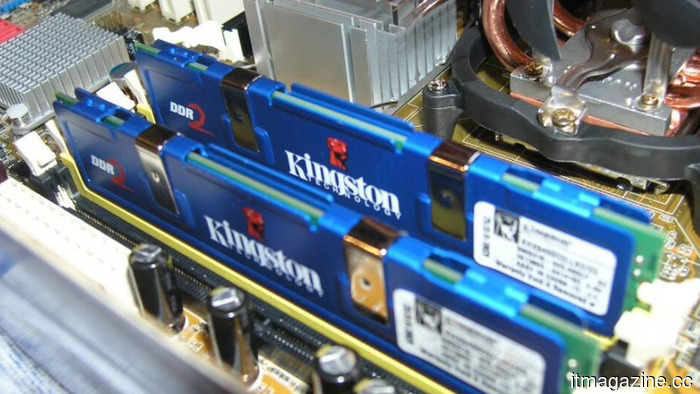 The AI memory crisis has now affected DDR2, a standard introduced in 2003, resulting in a 60% increase in prices.
According to TrendForce, DDR2 contract prices increased by 55-60% in the second quarter as hardware manufacturers shifted to older memory generations to manage DRAM shortages driven by AI demand.
The AI memory crisis has now affected DDR2, a standard introduced in 2003, resulting in a 60% increase in prices.
According to TrendForce, DDR2 contract prices increased by 55-60% in the second quarter as hardware manufacturers shifted to older memory generations to manage DRAM shortages driven by AI demand.
 Instagram is making its way into your living room with episodic series and live TV on Samsung devices.
Instagram for TV is broadening its reach to Samsung smart TVs and is experimenting with episodic series, live broadcasts, and horizontal video as Meta aims to enter the living room market.
Instagram is making its way into your living room with episodic series and live TV on Samsung devices.
Instagram for TV is broadening its reach to Samsung smart TVs and is experimenting with episodic series, live broadcasts, and horizontal video as Meta aims to enter the living room market.
 Instagram is making its way into your living room with episodic series and live television on Samsung.
Instagram for TV is growing to include Samsung smart TVs and is experimenting with episodic series, live broadcasts on television, and horizontal video as Meta ventures into the living room space.
Instagram is making its way into your living room with episodic series and live television on Samsung.
Instagram for TV is growing to include Samsung smart TVs and is experimenting with episodic series, live broadcasts on television, and horizontal video as Meta ventures into the living room space.
 Two wireless massagers designed for those who work at a desk: Available at a discount for Prime Day.
This post is sponsored by SKG. If you’ve ever purchased a gadget that was ultimately neglected in a drawer, these two items are designed to prevent that outcome. The SKG W9 Ultra 2.0 Lower Back Massager and G7 Pro Fold 3.0 Neck Massager are currently available on sale on Amazon, and both are crafted to […]
Two wireless massagers designed for those who work at a desk: Available at a discount for Prime Day.
This post is sponsored by SKG. If you’ve ever purchased a gadget that was ultimately neglected in a drawer, these two items are designed to prevent that outcome. The SKG W9 Ultra 2.0 Lower Back Massager and G7 Pro Fold 3.0 Neck Massager are currently available on sale on Amazon, and both are crafted to […]
Lucid Motors reduces its workforce by 18% as the new CEO eliminates the second production shift.
Lucid is laying off 1,500 employees and removing its second factory shift, just four months after a previous 12% reduction, as new CEO Silvio Napoli undertakes a restructuring of the electric vehicle manufacturer.