

Instagram is making its way into your living room with episodic series and live television on Samsung.
Instagram for TV is set to expand its availability to Samsung smart TVs across the United States, thus providing access on most connected TV devices nationwide. Meta announced this development on Monday, highlighting new features such as interest-based channels, the ability to cast from phone to TV, and the option to watch Stories on a larger screen.
The rollout of Instagram for TV to Samsung encompasses smart TVs from the 2020 model year onward. The app originally launched on Amazon Fire TV devices in December 2025, then extended its reach to Google TV in February 2026. With Samsung joining the list, the app now covers the three largest connected TV platforms in the U.S.
Beyond the expansion to more devices, Meta is focused on new developments for the platform. The company revealed that it is looking into longer video formats for the TV app, which includes episodic series that span multiple episodes and a feature called Live on TV that would allow live creator broadcasts on larger screens for the first time.
The episodic series concept builds on a feature that Meta began testing on mobile earlier this month. On June 2, the company rolled out “Series” for select creators on Instagram and Facebook, enabling them to group Reels into sequential episodes with a specific hub on their profile. Viewers discovering an episode in their feed can navigate to the full series, save it, or follow for future updates.
Meta informed TechCrunch that it is considering monetization options for the Series feature but did not provide further details. The company is also testing a separate space for horizontal videos within the TV app, recognizing that content meant for mobile may not always be ideal for a 55-inch screen.
The new channels feature organizes Reels into categories based on viewer interests, such as comedy, sports, music, and trending topics, making it easier to browse without a specific creator in mind. The casting feature allows users to send Reels from their phones to the TV with just a few taps, including videos from the Saved tab, a feature already available on Fire TV and Google TV.
The context surrounding this initiative is quite significant. According to Nielsen’s Media Distributor Gauge, YouTube captured a 13 percent share of all TV viewership in the U.S., marking the highest proportion since tracking began in late 2023. YouTube’s connected TV sector is experiencing faster growth than any traditional streaming service, meaning that any time a viewer spends watching Reels on a TV is time not spent on YouTube or Netflix.
TikTok is currently grappling with issues concerning content quality. A recent study by Kapwing found that nearly 60 percent of videos shown to new accounts are AI-generated and of low quality. Instagram’s movement into the living room coincides with TikTok facing credibility concerns over its content, potentially allowing Meta to position Reels as a higher-quality option.
Meta has been significantly investing in creators to enhance its content offerings. In March, the company introduced Creator Fast Track, incentivizing well-known TikTok and YouTube creators with payments of up to three thousand dollars per month to share Reels on Facebook. In 2025, Facebook disbursed nearly three billion dollars to creators through its monetization programs, representing a 35 percent year-over-year increase, with 60 percent of that amount allocated to Reels.
This push into the living room marks Meta’s second serious effort to position Instagram on television screens. IGTV launched in 2018 as Instagram's competitor to YouTube, allowing videos of up to one hour, but it ultimately failed to gain traction, with only seven million downloads of the standalone app. Instagram removed the IGTV button from its homepage within 18 months, and the feature was quietly substituted in favor of Reels.
The significant difference this time is that Instagram is opting not to compete with YouTube on its own terms. Instead of coaxing creators to produce hour-long videos aimed at a mobile audience, the TV app utilizes existing short-form Reels and presents them on a larger screen. The episodic series and longer formats are being gradually introduced rather than launched as standalone products.
Connected TV advertising also represents an expanding revenue potential for Meta. Advertisers have shown strong intent to increase spending on connected TV, with net intent at 82 percent according to industry surveys, compared to 56 percent for paid social. By bringing Instagram’s ad-supported Reels to television, Meta can tap into a fresh pool of advertising budgets historically allocated to streaming services and broadcast networks.
However, there are some notable limitations. The TV app is currently only available in the U.S., with no announced timeline for international expansion, and the episodic series and Live on TV formats remain in exploratory stages rather than confirmed rollouts. Meta has not provided a timeline for either feature, and the horizontal video hub is still under testing.
Streaming accounted for nearly 48 percent of total television viewing time in the U.S. in December 2025 according to Nielsen, the highest recorded share. That percentage has continued to increase in
Other articles
 Google puts $75 million into A24 as DeepMind initiates a research partnership focused on AI filmmaking.
Google is investing about $75 million in A24, the independent studio responsible for Backrooms, as part of a new collaboration with its DeepMind AI laboratory.
Google puts $75 million into A24 as DeepMind initiates a research partnership focused on AI filmmaking.
Google is investing about $75 million in A24, the independent studio responsible for Backrooms, as part of a new collaboration with its DeepMind AI laboratory.
 The AI memory crisis has now impacted DDR2, a standard established in 2003, causing prices to rise by 60%.
According to TrendForce, DDR2 contract prices increased by 55-60% in the second quarter as hardware manufacturers shifted to older memory generations in response to AI-driven DRAM shortages.
The AI memory crisis has now impacted DDR2, a standard established in 2003, causing prices to rise by 60%.
According to TrendForce, DDR2 contract prices increased by 55-60% in the second quarter as hardware manufacturers shifted to older memory generations in response to AI-driven DRAM shortages.
 Kodak Charmera is launching a new $30 keychain camera that features a flip screen for taking selfies.
The Funtastic Keychain Camera from Yashica is a small digital camera featuring a 180-degree flip screen, a 1MP sensor, USB-C charging, and a variety of character-themed designs.
Kodak Charmera is launching a new $30 keychain camera that features a flip screen for taking selfies.
The Funtastic Keychain Camera from Yashica is a small digital camera featuring a 180-degree flip screen, a 1MP sensor, USB-C charging, and a variety of character-themed designs.
 Researchers caution that almost 7,000 counterfeit Amazon domains have been registered in anticipation of Prime Day 2026.
Check Point Research identified 6,843 new domains related to Amazon since December, with one out of every 13 being marked as malicious in just the first week of June.
Researchers caution that almost 7,000 counterfeit Amazon domains have been registered in anticipation of Prime Day 2026.
Check Point Research identified 6,843 new domains related to Amazon since December, with one out of every 13 being marked as malicious in just the first week of June.
 Lucid Motors reduces its workforce by 18% as the new CEO eliminates the second production shift.
Lucid is laying off 1,500 employees and discontinuing its second factory shift just four months after a previous 12% reduction, as new CEO Silvio Napoli reorganizes the electric vehicle manufacturer.
Lucid Motors reduces its workforce by 18% as the new CEO eliminates the second production shift.
Lucid is laying off 1,500 employees and discontinuing its second factory shift just four months after a previous 12% reduction, as new CEO Silvio Napoli reorganizes the electric vehicle manufacturer.
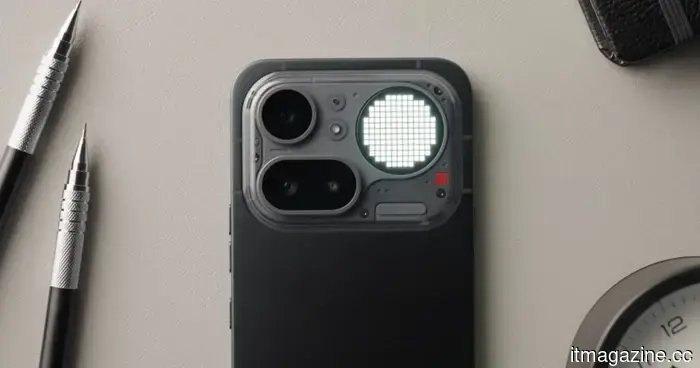 Nothing's most recent teaser implies that its budget lineup isn't finished; it's merely undergoing a rebranding.
Soon after putting a CMF budget phone on hold, Nothing has hinted at a possible successor named the Nothing Phone 4b.
Nothing's most recent teaser implies that its budget lineup isn't finished; it's merely undergoing a rebranding.
Soon after putting a CMF budget phone on hold, Nothing has hinted at a possible successor named the Nothing Phone 4b.
Instagram is making its way into your living room with episodic series and live television on Samsung.
Instagram for TV is growing to include Samsung smart TVs and is experimenting with episodic series, live broadcasts on television, and horizontal video as Meta ventures into the living room space.