

Robinhood is securing $2 billion through zero-coupon convertible bonds to repurchase shares.
TL;DR: Robinhood intends to sell $2 billion in zero-coupon convertible notes due in 2029, using the proceeds for stock buybacks and capped calls to minimize dilution.
Robinhood Markets is set to raise $2 billion through the sale of convertible senior notes maturing in October 2029, part of a larger trend among technology firms issuing zero-coupon convertibles as they anticipate that investors will forgo interest for potential equity gains. Bloomberg reports that Goldman Sachs and JPMorgan are managing the offering, which includes a greenshoe option that could increase the total to $2.2 billion.
These notes come with no interest payments throughout their term, as they carry a zero percent coupon. The anticipated conversion premium will likely be between 60 and 65 percent above the stock’s reference price, indicating both confidence in the share price growth and favorable conditions for issuers within the convertible market.
A portion of the funds will be allocated to approximately $300 million in stock buybacks aimed at mitigating the dilution from future conversions. Additionally, Robinhood is acquiring capped call options with a cap premium around 125 percent, which is a hedging strategy that limits how many shares the company will need to deliver if the stock surpasses the conversion price. This dual approach of buybacks and capped calls is a common strategy among convertible issuers seeking to raise funds without immediately increasing the share count.
Following the announcement, Robinhood's stock dropped about four percent, a typical market response to the issuance of equity-linked debt, reflecting investor concerns about potential future dilution despite the hedging measures. At their core, convertible bonds represent a mutual bet between the issuer and the buyer that the stock's value will significantly increase by maturity.
The timing is strategic, as the convertible bond market is currently experiencing its most robust activity in years, with $34 billion in issuances recorded in the first four months of 2026 and projections to exceed the previous record of $120 billion set in 2025. Around $65 billion of convertible notes from the pandemic period are maturing this year, recycling funds back into new offerings and sustaining investor interest.
Zero-coupon convertibles have gained particular traction with tech companies. Recently, firms like Rubrik, GameStop, and Tempus AI have issued similar instruments, capitalizing on a market willing to accept no immediate returns in exchange for future equity opportunities. Lenovo also raised $2 billion using zero-coupon convertible bonds last week to refinance existing debt and support stock buybacks in a nearly identical structure.
Robinhood’s bond offering comes at a complex time. The company reported first-quarter 2026 revenue of $1.07 billion, reflecting a 15 percent year-over-year increase, although it missed Wall Street’s expectation of $1.14 billion. Revenue from crypto trading plummeted by 47 percent to $134 million, impacted by declining digital asset volumes and token prices.
This revenue shortfall is notable, especially as Robinhood had been experiencing growth, achieving over 27 million funded accounts and increasing its Gold subscriber base by 36 percent to over four million. However, the headline revenue figure fell short, and the weakness in crypto trading highlighted the company's reliance on volatile trading activities for a significant portion of its earnings.
Additionally, the bond sale follows closely on the heels of Robinhood's recent decision to reduce its workforce by about 10 percent, cutting approximately 300 positions. CEO Vlad Tenev described the layoffs as an effort to maintain a more efficient and disciplined operation, estimating annual savings of about $120 million against one-time restructuring expenses of $20 million in cash and $8 million in equity compensation. Unlike Coinbase, which linked its own layoffs to an AI restructuring event, Tenev did not mention AI as the reasoning, a point that garnered attention in an industry where such justifications have become commonplace.
The concurrent layoffs and the decision to raise $2 billion in debt within the same week illustrate a significant narrative. The job cuts aim to reduce operational costs, while the bond sale secures growth capital at zero interest, and the buybacks are intended to bolster the stock price. Collectively, these actions suggest that the company is working to optimize its balance sheet for expansion while also tightening its cost structure.
Robinhood is actively diversifying beyond its traditional stock trading platform. In May, the company introduced an AI-driven trading platform, enabling users to connect AI agents to their brokerage accounts for autonomous trading. It also rolled out a virtual credit card designed for AI agents, alongside a Gold Card offering three percent cashback and a $695-per-year Platinum Card, expanding its product offerings to include securities trading, crypto, derivatives, credit cards, and AI-based investing.
This expansion necessitates capital, and zero-coupon convertibles represent one of the most cost-effective methods to secure it. With the issuance, Robinhood is borrowing $2 billion without interest payments until 2029, when the notes will either convert to equity at a significant premium or be repaid
Other articles
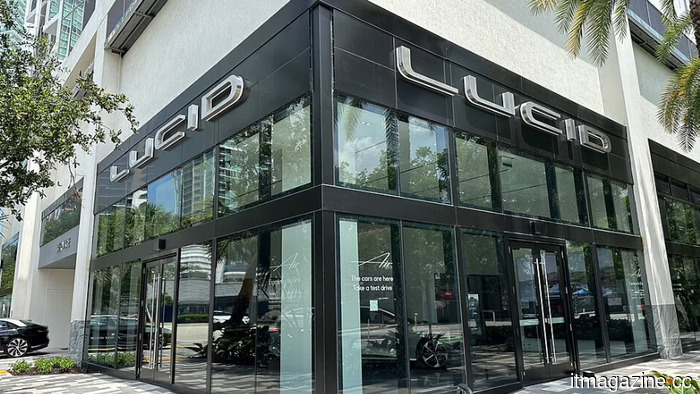 Lucid Motors reduces its workforce by 18% as the new CEO eliminates the second production shift.
Lucid is laying off 1,500 employees and removing its second factory shift, just four months after a previous 12% reduction, as new CEO Silvio Napoli undertakes a restructuring of the electric vehicle manufacturer.
Lucid Motors reduces its workforce by 18% as the new CEO eliminates the second production shift.
Lucid is laying off 1,500 employees and removing its second factory shift, just four months after a previous 12% reduction, as new CEO Silvio Napoli undertakes a restructuring of the electric vehicle manufacturer.
 Researchers have warned that almost 7,000 counterfeit Amazon domains have been registered in anticipation of Prime Day 2026.
Check Point Research observed 6,843 newly registered Amazon-themed domains since December, with one out of every 13 identified as malicious in just the first week of June.
Researchers have warned that almost 7,000 counterfeit Amazon domains have been registered in anticipation of Prime Day 2026.
Check Point Research observed 6,843 newly registered Amazon-themed domains since December, with one out of every 13 identified as malicious in just the first week of June.
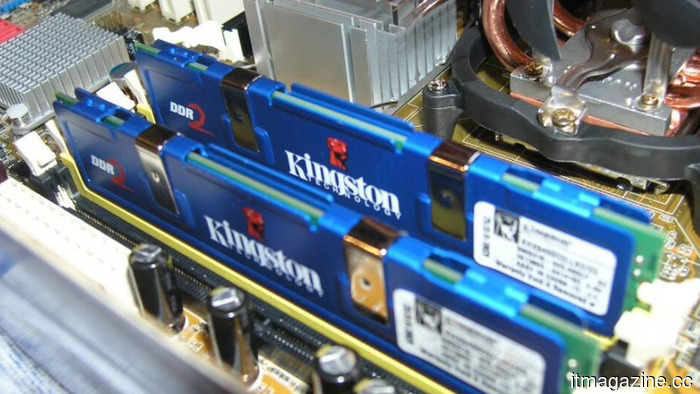 The AI memory crisis has now affected DDR2, a standard introduced in 2003, resulting in a 60% increase in prices.
According to TrendForce, DDR2 contract prices increased by 55-60% in the second quarter as hardware manufacturers shifted to older memory generations to manage DRAM shortages driven by AI demand.
The AI memory crisis has now affected DDR2, a standard introduced in 2003, resulting in a 60% increase in prices.
According to TrendForce, DDR2 contract prices increased by 55-60% in the second quarter as hardware manufacturers shifted to older memory generations to manage DRAM shortages driven by AI demand.
 Bending Spoons sets its IPO price at as much as $1.62 billion, aiming for a valuation of $19 billion on the Nasdaq.
Bending Spoons plans to offer 58 million shares priced between $26 and $28 each, aiming for a Nasdaq launch in early July with a valuation of $19 billion, according to reports from Reuters.
Bending Spoons sets its IPO price at as much as $1.62 billion, aiming for a valuation of $19 billion on the Nasdaq.
Bending Spoons plans to offer 58 million shares priced between $26 and $28 each, aiming for a Nasdaq launch in early July with a valuation of $19 billion, according to reports from Reuters.
 Google puts $75 million into A24 as DeepMind initiates a research partnership focused on AI filmmaking.
Google is investing about $75 million in A24, the independent studio responsible for Backrooms, as part of a new collaboration with its DeepMind AI laboratory.
Google puts $75 million into A24 as DeepMind initiates a research partnership focused on AI filmmaking.
Google is investing about $75 million in A24, the independent studio responsible for Backrooms, as part of a new collaboration with its DeepMind AI laboratory.
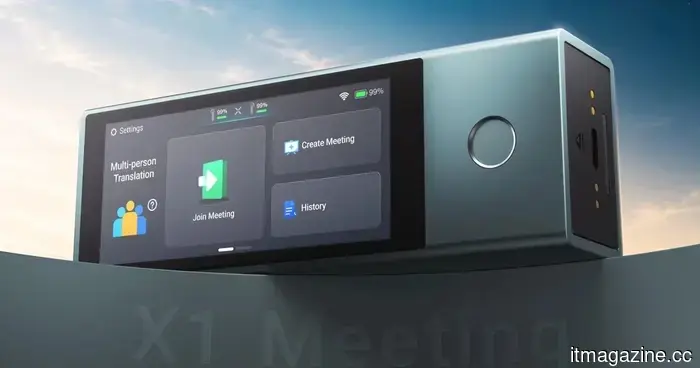 Timekettle's latest X1 Meeting Hub offers real-time translation for up to 50 individuals and is compact enough to fit in your pocket.
Priced at $849 and weighing 199 grams, the Timekettle X1 Meeting Hub aims to serve as a substitute for traditional professional interpretation systems in your upcoming multilingual meetings.
Timekettle's latest X1 Meeting Hub offers real-time translation for up to 50 individuals and is compact enough to fit in your pocket.
Priced at $849 and weighing 199 grams, the Timekettle X1 Meeting Hub aims to serve as a substitute for traditional professional interpretation systems in your upcoming multilingual meetings.
Robinhood is securing $2 billion through zero-coupon convertible bonds to repurchase shares.
Robinhood is issuing $2 billion in convertible notes that will mature in 2029, offering no interest and a premium of 60-65%. A portion of the funds raised will be allocated for share buybacks and capped calls.