
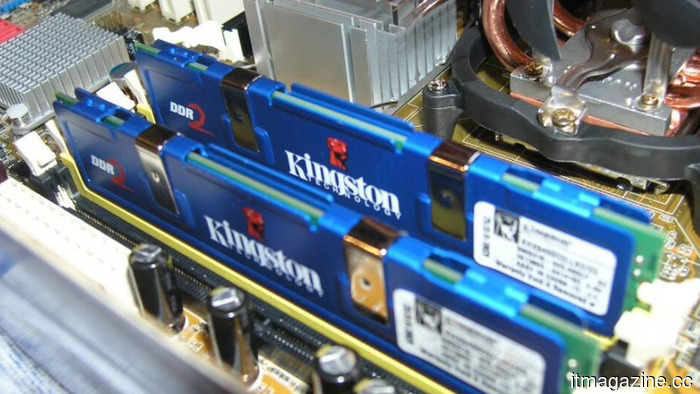
The AI memory crisis has now affected DDR2, a standard introduced in 2003, resulting in a 60% increase in prices.
In the second quarter of 2026, DDR2 prices surged by 55-60% due to an AI-driven DRAM shortage that is prompting hardware manufacturers to downgrade to older memory generations. The shortages have affected the oldest DRAM standard still in production, with contract prices for DDR2 seeing this notable increase, as reported by Taiwanese market research firm TrendForce. A further price hike of 35-40% is anticipated for the third quarter.
This increase is fueled by hardware producers lowering their memory specifications to ensure they can secure supply. According to TrendForce, some companies are opting for DDR3 instead of DDR4, while others are switching from DDR3 to DDR2, a standard introduced in 2003. These changes are in response to ongoing shortages in mainstream DRAM and the sharp rise in contract prices across all memory generations.
The Register, which first highlighted TrendForce’s findings, pointed out that it is hard to envision modern PC processors supporting such outdated memory types. The downgrades are more likely impacting embedded systems, industrial machinery, networking hardware, and various devices that still utilize older memory standards.
The underlying cause of this situation has been reshaping the memory market since late 2025. Major manufacturers like Samsung, SK Hynix, and Micron have shifted wafer capacity from consumer and commodity DRAM to high-bandwidth memory for AI data centres, which offer profit margins of 70% or more. Each wafer designated for a high-bandwidth memory stack for Nvidia GPUs translates to a wafer unavailable for consumer devices like laptops or smartphones, or industrial controllers.
As a result, the shortage has cascaded through different memory generations. Initially, DDR5 and DDR4 prices rose, leading buyers to DDR3. Now, as DDR3 supply becomes scarce, the pressure has reached DDR2—a product considered old enough that much of the industry had dismissed it as a low-margin option.
DDR2's supply situation is particularly delicate since only a few companies produce it. The main suppliers in Taiwan are Winbond and ESMT. Winbond is gradually reducing its DDR2 output to shift towards higher-margin products such as DDR3, DDR4, and LPDDR4, according to TrendForce.
Conversely, ESMT plans to maximize DDR2 production using its existing wafer capacity at its foundry partner, Powerchip Semiconductor Manufacturing Corporation, focusing on this segment to capture the demand that Winbond is leaving. This divergence results in Winbond reducing DDR2 supply more quickly than ESMT can compensate.
The broader memory crisis is already impacting consumer electronics. GoPro issued a warning about its financial stability following an 80 to 115 percent rise in memory prices, and PC prices have increased by double-digit percentages. IDC forecasts that smartphones, PCs, and tablets could see price hikes of 10 to 20 percent by the end of 2026.
Although some relief is on the horizon, it is expected to arrive slowly. SK Hynix aims to double its silicon wafer output capacity over the next five years, a plan announced by its chairman at Computex in June, while Micron anticipates gaining meaningful new capacity at its Virginia fabrication facility in 2027 and 2028. However, these measures do not directly address the immediate shortage.
Additionally, Chinese manufacturer CXMT has started supplying DDR5 to Western brands such as Corsair, presenting a potential alternative for mainstream memory. Nevertheless, CXMT is also converting about 20 percent of its production capacity to high-bandwidth memory due to its enticing margins, thereby limiting the consumer relief it can provide.
The rise in prices, with DDR2 components experiencing a jump of 60% in just one quarter, highlights the significant distortion in the semiconductor supply chain caused by AI reallocations. This shortage extends beyond high-end products, affecting low-end components that the industry previously believed would remain cheap and readily available indefinitely.
Other articles
 Robinhood is securing $2 billion through zero-coupon convertible bonds to repurchase shares.
Robinhood is issuing $2 billion in convertible notes that will mature in 2029, offering no interest and a premium of 60-65%. A portion of the funds raised will be allocated for share buybacks and capped calls.
Robinhood is securing $2 billion through zero-coupon convertible bonds to repurchase shares.
Robinhood is issuing $2 billion in convertible notes that will mature in 2029, offering no interest and a premium of 60-65%. A portion of the funds raised will be allocated for share buybacks and capped calls.
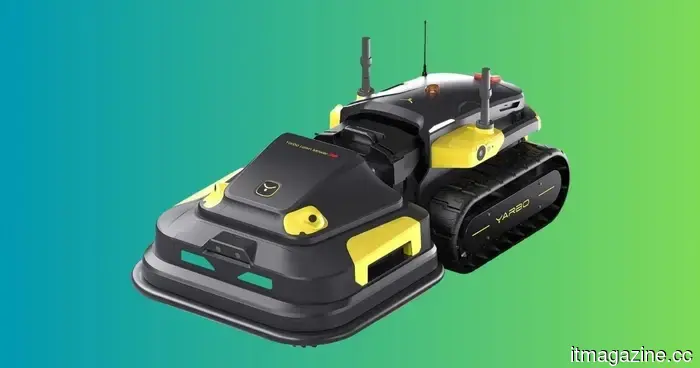 This modular robot lawn mower can manage up to 6 acres and is currently $1,000 discounted for Prime Day.
Amazon Prime Day This article is part of the Digital Trends Prime Day 2026 coverage Updated less than 4 hours ago This content is created in collaboration with YARBO. If you have been considering the cost of a robot mower for a truly expansive property, Prime Day has simplified your calculations. The YARBO Robot […]
This modular robot lawn mower can manage up to 6 acres and is currently $1,000 discounted for Prime Day.
Amazon Prime Day This article is part of the Digital Trends Prime Day 2026 coverage Updated less than 4 hours ago This content is created in collaboration with YARBO. If you have been considering the cost of a robot mower for a truly expansive property, Prime Day has simplified your calculations. The YARBO Robot […]
 Google allocates $75 million to A24 as DeepMind initiates a research partnership focused on AI filmmaking.
Google is investing about $75 million in A24, the independent studio responsible for Backrooms, as part of a new collaboration with its DeepMind AI laboratory.
Google allocates $75 million to A24 as DeepMind initiates a research partnership focused on AI filmmaking.
Google is investing about $75 million in A24, the independent studio responsible for Backrooms, as part of a new collaboration with its DeepMind AI laboratory.
 A Kazakh fund-of-funds has made its inaugural public investment in the startup surge occurring in Central Asia.
Alem Capital Management led the $25M final closing of Sturgeon's SEO II fund, marking its first publicly announced regional VC investment as tech investments in Central Asia rise sharply.
A Kazakh fund-of-funds has made its inaugural public investment in the startup surge occurring in Central Asia.
Alem Capital Management led the $25M final closing of Sturgeon's SEO II fund, marking its first publicly announced regional VC investment as tech investments in Central Asia rise sharply.
 Bending Spoons sets its IPO price at a maximum of $1.62 billion, aiming for a Nasdaq valuation of $19 billion.
Bending Spoons plans to sell 58 million shares priced between $26 and $28 each, aiming for a debut on the Nasdaq in early July with a valuation of $19 billion, according to Reuters.
Bending Spoons sets its IPO price at a maximum of $1.62 billion, aiming for a Nasdaq valuation of $19 billion.
Bending Spoons plans to sell 58 million shares priced between $26 and $28 each, aiming for a debut on the Nasdaq in early July with a valuation of $19 billion, according to Reuters.
 I really like Apple, but this decision regarding watchOS could be the tipping point for me.
My Apple Watch SE 2 is still functioning well. So why does it seem outdated already? Why, Apple, why?
I really like Apple, but this decision regarding watchOS could be the tipping point for me.
My Apple Watch SE 2 is still functioning well. So why does it seem outdated already? Why, Apple, why?
The AI memory crisis has now affected DDR2, a standard introduced in 2003, resulting in a 60% increase in prices.
According to TrendForce, DDR2 contract prices increased by 55-60% in the second quarter as hardware manufacturers shifted to older memory generations to manage DRAM shortages driven by AI demand.