
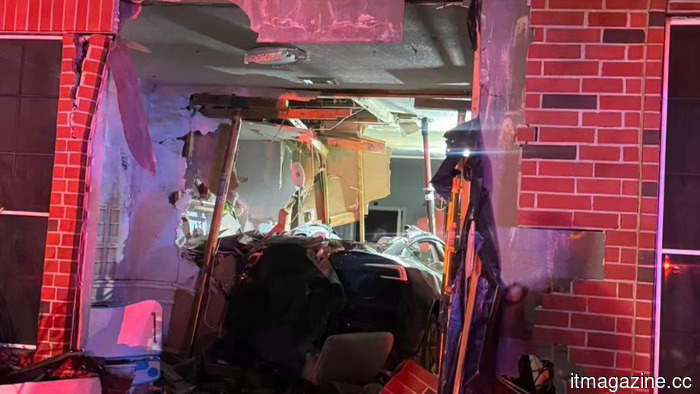
A Tesla operating on Autopilot crashed into a house in Texas. Unfortunately, the woman inside did not make it.
TL;DRA A Tesla Model 3 using Autopilot crashed into a Texas house, resulting in the death of a 76-year-old woman. The NHTSA is initiating a special investigation into the incident.
On Friday, a 76-year-old woman in Texas died after a Tesla Model 3 driver informed authorities that he lost control while employing the car's Autopilot feature, leading to a high-speed crash into her family's home. The Harris County Sheriff’s Office reported that Michael Butler claimed the automated driving assistance system was active during the crash in Katy, a suburb of Houston. Law enforcement stated that Butler "failed to drive in a single lane, left the roadway, and hit the house," confirming he was not under the influence and is cooperating with the probe.
Martha Avila was inside her home, where she resided with her daughter, son-in-law, and three young grandchildren. Thankfully, no one else sustained injuries. Her daughter, Jennifer Barbour, shared with local media that Avila was in good health without any medications prior to her sudden death, expressing her hope that her mother would reach 100 years old.
The National Highway Traffic Safety Administration (NHTSA) informed Ars Technica that it will begin a special crash investigation. This incident falls within the parameters of NHTSA’s ongoing engineering analysis regarding over three million Tesla vehicles with Full Self-Driving software, which the agency had intensified in March 2026 after documenting instances of vehicles entering opposing lanes, ignoring red lights, and hitting pedestrians.
Interestingly, the same agency had recently certified the Tesla Model Y as the first vehicle to pass its new driver-assistance safety tests, creating a scenario where NHTSA is both celebrating and scrutinizing the same company's technology. Investigators have yet to verify whether Autopilot was indeed active during the crash, as the driver's claim is currently the only evidence.
A doorbell camera video shared by The New York Times depicted the Tesla crashing through the front wall of the brick house. A neighbor who witnessed the incident estimated the vehicle was traveling at speeds of 60 to 70 miles per hour in the residential area, according to local news outlet Click2Houston.
This tragic event comes as Tesla lobbies the Trump administration to ease safety regulations for automated vehicles. The company has submitted comments supporting two proposed rule changes by NHTSA: one that permits automated vehicle manufacturers to eliminate transmission shift position displays, and another to remove the requirement for windshield wipers and defogging controls in vehicles with automated driving systems. Tesla argues in its regulatory filings that cameras eliminate the need for human-oriented controls since the automated system does not depend on windshield visibility.
Advocates for Highway and Auto Safety have opposed both proposals, cautioning that passengers must still be able to see their surroundings for safe entry and exit, especially in emergencies. The group characterized Tesla’s Autopilot as “unproven” and underscored that even a single death like Avila’s has a “horrific ripple effect forever changing the lives of children, parents, friends, and communities.”
Criticism has also been directed at Tesla's promotion of Autopilot for conveying mixed messages about the system's capabilities. The owner's manual advises drivers to keep their hands on the wheel and remain vigilant, yet as recently as May, Tesla’s official X account shared an advertisement featuring drivers with their hands off the wheel. Tesla’s Austin robotaxi service reported 14 crashes over approximately 800,000 miles of operations, a rate about four times worse than the average claimed by Tesla on its safety page.
On a broader regulatory scale, Tesla appears to have an advantage. NHTSA Administrator Jonathan Morrison confirmed in a January address that 2026 would be a significant year for autonomous vehicle regulations, criticizing the Biden administration for emphasizing enforcement too heavily. He stated that the Trump administration prioritizes the removal of what it views as unnecessary regulatory obstacles, facilitating the commercial deployment of autonomous vehicles without steering wheels or brake pedals.
In 2023, Tesla recalled more than two million vehicles after regulators identified that the company had not implemented Autopilot in a manner that ensured drivers stayed attentive. Following this, Elon Musk’s Department of Government Efficiency reduced staffing at NHTSA related to evaluating autonomous vehicle safety, with the agency’s self-driving division particularly impacted. In October 2025, a new NHTSA inquiry into Tesla’s Full Self-Driving was launched due to troubling reports of the system ignoring red lights and veering into oncoming lanes, and Tesla delayed responding to federal data requests on two occasions.
For Avila’s family, the ongoing policy discussions are secondary. Barbour stated she is unsure whether to blame the driver or the vehicle, remarking that she had never witnessed a car traveling that fast through a neighborhood.
Other articles
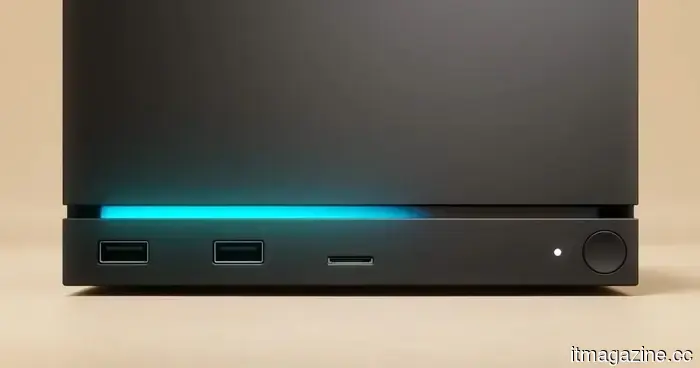 Valve discloses the pricing for Steam Machines, and it's certainly not an inexpensive gaming console.
Valve has formally announced the pricing for Steam Machines, with the new gaming PC running on SteamOS starting at $1,049, just before reservations begin this week.
Valve discloses the pricing for Steam Machines, and it's certainly not an inexpensive gaming console.
Valve has formally announced the pricing for Steam Machines, with the new gaming PC running on SteamOS starting at $1,049, just before reservations begin this week.
 Kodak Charmera is launching a new $30 keychain camera that features a flip screen for taking selfies.
Yashica’s Funtastic Keychain Camera is a compact digital camera featuring a 180-degree flip screen, a 1MP sensor, USB-C charging, and a variety of character-themed designs.
Kodak Charmera is launching a new $30 keychain camera that features a flip screen for taking selfies.
Yashica’s Funtastic Keychain Camera is a compact digital camera featuring a 180-degree flip screen, a 1MP sensor, USB-C charging, and a variety of character-themed designs.
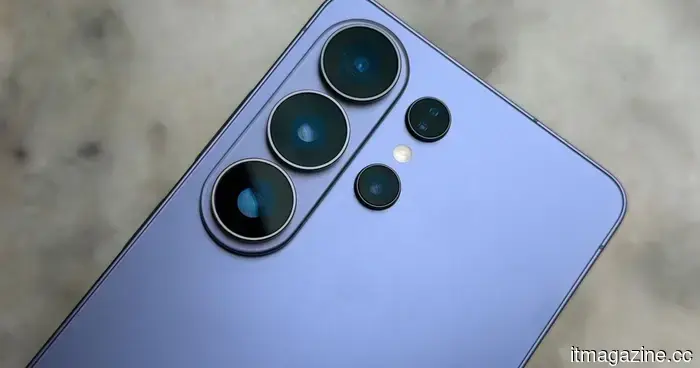 A leak regarding the Galaxy S27 indicates that Samsung might reuse the same cameras once more.
A recent leak regarding the Galaxy S27 indicates that Samsung may continue using the same camera sensors previously seen in recent Galaxy S models. Although AI and image processing are advancing, some enthusiasts might be questioning how much longer software can manage the burden by itself.
A leak regarding the Galaxy S27 indicates that Samsung might reuse the same cameras once more.
A recent leak regarding the Galaxy S27 indicates that Samsung may continue using the same camera sensors previously seen in recent Galaxy S models. Although AI and image processing are advancing, some enthusiasts might be questioning how much longer software can manage the burden by itself.
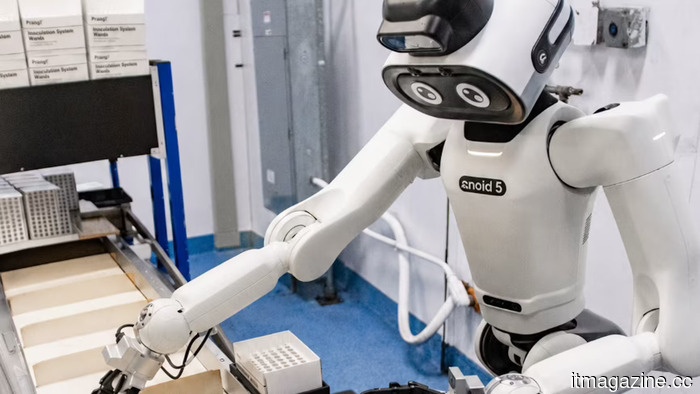 Delivery robot startup Robot.com is placing its future on wheeled humanoid robots designed for use in kitchens and warehouses.
Robot.com, previously known as Kiwibot, has introduced R-noid, a wheeled humanoid equipped with Physical Intelligence's AI that is capable of packing orders and loading boxes.
Delivery robot startup Robot.com is placing its future on wheeled humanoid robots designed for use in kitchens and warehouses.
Robot.com, previously known as Kiwibot, has introduced R-noid, a wheeled humanoid equipped with Physical Intelligence's AI that is capable of packing orders and loading boxes.
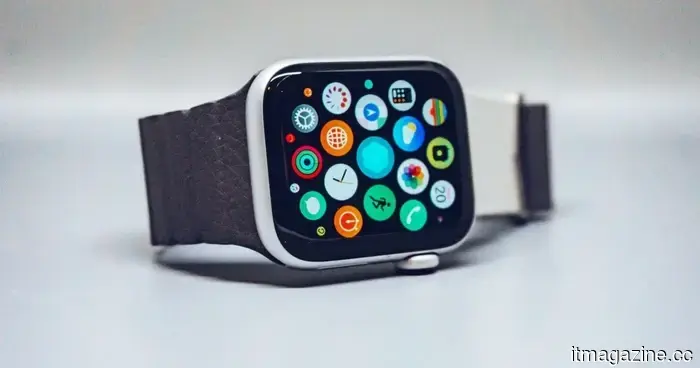 I have a deep appreciation for Apple, but this choice regarding watchOS could be the tipping point for me.
My Apple Watch SE 2 is still functioning well. So why does it seem outdated already? Why, Apple, why?
I have a deep appreciation for Apple, but this choice regarding watchOS could be the tipping point for me.
My Apple Watch SE 2 is still functioning well. So why does it seem outdated already? Why, Apple, why?
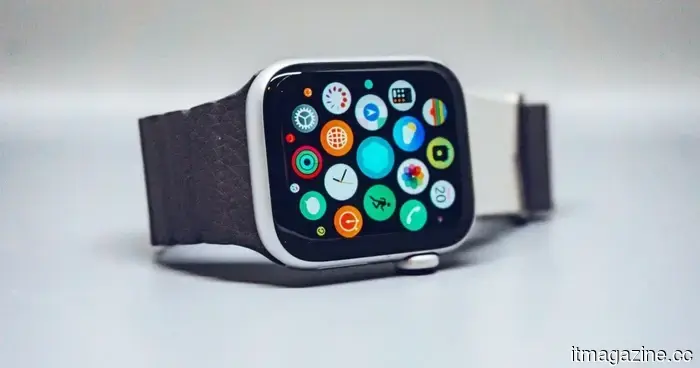 I really like Apple, but this decision regarding watchOS could be the tipping point for me.
My Apple Watch SE 2 is still functioning flawlessly. So why does it seem outdated already? Why, Apple, why?
I really like Apple, but this decision regarding watchOS could be the tipping point for me.
My Apple Watch SE 2 is still functioning flawlessly. So why does it seem outdated already? Why, Apple, why?
A Tesla operating on Autopilot crashed into a house in Texas. Unfortunately, the woman inside did not make it.
A 76-year-old woman from Texas passed away after a driver of a Tesla Model 3, operating on Autopilot, collided with her residence. The NHTSA is initiating a special investigation into the crash.