

A Kazakh fund-of-funds has made its inaugural public investment in the startup surge occurring in Central Asia.
Alem Capital has played a key role in the $25 million final closing of Sturgeon Capital's Central Asia VC fund, marking its first public investment in the regional startup space.
Kazakhstan-based Alem Capital Management has anchored a venture capital fund that supports tech startups across Central Asia and the Caucasus. This represents the fund-of-funds manager’s first publicly reported investment in the startup ecosystem of this region. Alem participated in the final closing of Sturgeon Capital's Emerging Opportunities II fund, amounting to $25 million, joining a mix of existing and new investors, including the International Finance Corporation, as noted in a statement from Sturgeon.
Alem operates a fund-of-funds targeting a total size of one billion dollars, positioning it as the largest fund of its kind in the region. The $5 million commitment to Sturgeon is relatively small compared to the overall target, but its significance lies in the message it conveys: a Kazakh institutional investor is backing the London-based manager chosen by the World Bank's private-sector arm to enter Central Asia’s venture capital.
The Sturgeon Emerging Opportunities II fund, referred to as SEO II, has made 11 investments and is on the verge of making a twelfth. The portfolio covers areas such as logistics, content infrastructure, and enterprise automation, with the latest investment being Geomotive, an analytics firm offering AI-driven solutions for sectors like advertising, retail, sports venues, and commercial real estate.
The IFC participated in SEO II’s first institutional close in 2024, committing up to $5 million through its Startup Catalyst program, aimed at addressing funding gaps in underserved venture ecosystems. Founded in London in 2006, Sturgeon Capital focuses on early-stage technology firms across Central Asia, the Caucasus, Bangladesh, and Pakistan, investing in sectors including fintech, business-to-business platforms, agritech, healthtech, and edtech.
This investment comes as Central Asia’s startup landscape is experiencing unprecedented growth. Total venture capital in the region reached $320 million in 2025, as indicated by a KPMG report, with Kazakhstan contributing $209 million, nearly three times its figure from the previous year. Between 2023 and 2025, artificial intelligence drew $73 million in Kazakh venture funding, reflecting over half of the country's total venture activity.
The broader picture shows a region working to establish a technology sector while still primarily reliant on hydrocarbon-based economies. Kazakhstan recently signed a $10 billion deal for an AI data center with Nvidia-backed startup Firebird, aiming to develop a computing hub potentially housing up to 100,000 GPUs. This deal pertains to infrastructure—the hardware enabling AI—while Alem’s investment in Sturgeon relates to the software aspect, supporting startups that create applications and services on top of this infrastructure.
Two significant deals drove much of the 2025 total: $130 million for Higgsfield and $65 million for Tencent-backed fintech Uzum. Excluding those, the market still saw a cumulative $125 million, marking a 31 percent increase over 2024 and indicating a diversification of the ecosystem beyond a few standout deals.
Uzbekistan has emerged as the region's fastest-growing ecosystem, with venture funding rising to nearly $34 million—an elevenfold increase from 2022. The country is home to over 750 active startups and 15 venture funds managing more than $180 million in total capital. Seven new venture funds were established in Uzbekistan in 2025 alone.
The fund-of-funds approach that Alem represents remains relatively rare in the region. Global venture capital has increasingly concentrated into mega-funds that invest billions into AI firms, a market that Central Asia has yet to reach. Alem is creating a structure akin to the institutional framework that more developed ecosystems take for granted: a fund that distributes capital among various fund managers, offering local and international investors diversified exposure to a region that many global allocators still overlook.
Separately, Qazaqstan Investment Corporation, a state-owned entity, committed $30 million to the Alem Ventures Fund and also invested directly in Sturgeon’s SEO II, establishing overlapping institutional support within the same ecosystem. The government intends to leverage public capital to attract private investments, a strategy reminiscent of Singapore’s Temasek or Israel’s Yozma initiative, tailored for a commodity-dependent economy seeking technological advancements to lessen its dependence on oil and gas.
The success of this model hinges on the flow of deals. While Central Asia’s startup pipeline is expanding, it remains limited compared to Southeast Asia or Latin America, both of which faced similar early-stage challenges a decade ago. Sturgeon’s 12 portfolio companies exemplify the necessary infrastructure and enterprise software that resource-rich, digitally underdeveloped economies typically require before scaling consumer and fintech startups.
Alem's statement emphasized its commitment to ensuring that founders in Kazakhstan and throughout Central Asia have access to capital comparable to their global counterparts. While this ambition exceeds the current reality, the trajectory is evident: a billion-dollar fund-of-funds,
Other articles
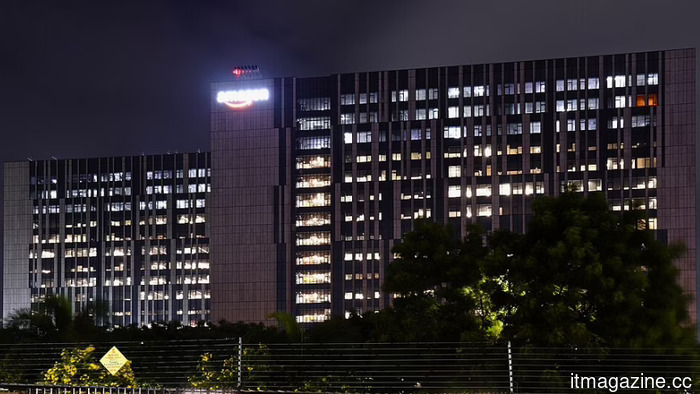 Researchers caution that almost 7,000 counterfeit Amazon domains have been registered in anticipation of Prime Day 2026.
Check Point Research identified 6,843 new domains themed around Amazon since December, with one out of every 13 marked as malicious during the first week of June alone.
Researchers caution that almost 7,000 counterfeit Amazon domains have been registered in anticipation of Prime Day 2026.
Check Point Research identified 6,843 new domains themed around Amazon since December, with one out of every 13 marked as malicious during the first week of June alone.
 Kodak Charmera is launching a new $30 keychain camera that features a flip screen for taking selfies.
The Funtastic Keychain Camera from Yashica is a small digital camera featuring a 180-degree flip screen, a 1MP sensor, USB-C charging, and a variety of character-themed designs.
Kodak Charmera is launching a new $30 keychain camera that features a flip screen for taking selfies.
The Funtastic Keychain Camera from Yashica is a small digital camera featuring a 180-degree flip screen, a 1MP sensor, USB-C charging, and a variety of character-themed designs.
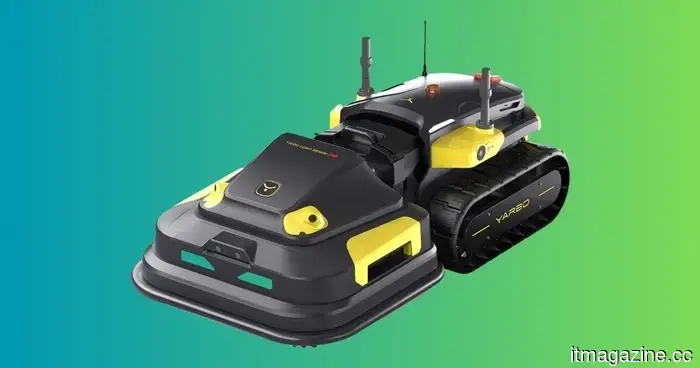 This modular robotic lawn mower can manage up to 6 acres and is available for $1,000 less during Prime Day.
Amazon Prime Day This article is included in the Digital Trends Prime Day 2026 coverage Updated less than 4 hours ago This content is provided in a paid collaboration with YARBO. If you’ve been evaluating options for a robot mower for an expansive property, Prime Day has simplified the calculations. The YARBO Robot […]
This modular robotic lawn mower can manage up to 6 acres and is available for $1,000 less during Prime Day.
Amazon Prime Day This article is included in the Digital Trends Prime Day 2026 coverage Updated less than 4 hours ago This content is provided in a paid collaboration with YARBO. If you’ve been evaluating options for a robot mower for an expansive property, Prime Day has simplified the calculations. The YARBO Robot […]
 Nothing’s most recent teaser indicates that its budget lineup isn’t finished; it’s simply being rebranded.
Shortly after putting a CMF budget phone on hold, Nothing has hinted at a probable successor named the Nothing Phone 4b.
Nothing’s most recent teaser indicates that its budget lineup isn’t finished; it’s simply being rebranded.
Shortly after putting a CMF budget phone on hold, Nothing has hinted at a probable successor named the Nothing Phone 4b.
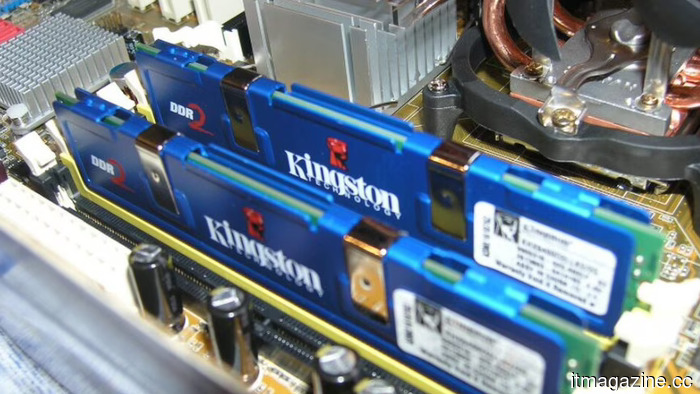 The AI memory crisis has now affected DDR2, a standard established in 2003, resulting in a 60% increase in prices.
TrendForce reports that in the second quarter, DDR2 contract prices increased by 55-60% as hardware manufacturers resorted to using older memory generations to address DRAM shortages driven by AI.
The AI memory crisis has now affected DDR2, a standard established in 2003, resulting in a 60% increase in prices.
TrendForce reports that in the second quarter, DDR2 contract prices increased by 55-60% as hardware manufacturers resorted to using older memory generations to address DRAM shortages driven by AI.
 Google puts $75 million into A24 as DeepMind initiates a research partnership focused on AI filmmaking.
Google is investing about $75 million in A24, the independent studio responsible for Backrooms, as part of a new collaboration with its DeepMind AI laboratory.
Google puts $75 million into A24 as DeepMind initiates a research partnership focused on AI filmmaking.
Google is investing about $75 million in A24, the independent studio responsible for Backrooms, as part of a new collaboration with its DeepMind AI laboratory.
A Kazakh fund-of-funds has made its inaugural public investment in the startup surge occurring in Central Asia.
Alem Capital Management led the $25M final closing of Sturgeon's SEO II fund, marking its first publicly announced regional VC investment as tech investments in Central Asia rise sharply.