

Instacart is experimenting with AI shopping carts equipped with camera capabilities that may seem convenient, yet also quite unsettling.
Instacart's AI shopping carts are being introduced in select Weis Markets locations in Pennsylvania, with plans for more stores to follow this year. The Caper Cart upgrade appears to be beneficial, allowing shoppers to view a running total, clip digital coupons, utilize loyalty rewards, weigh items, and complete payments directly from the cart.
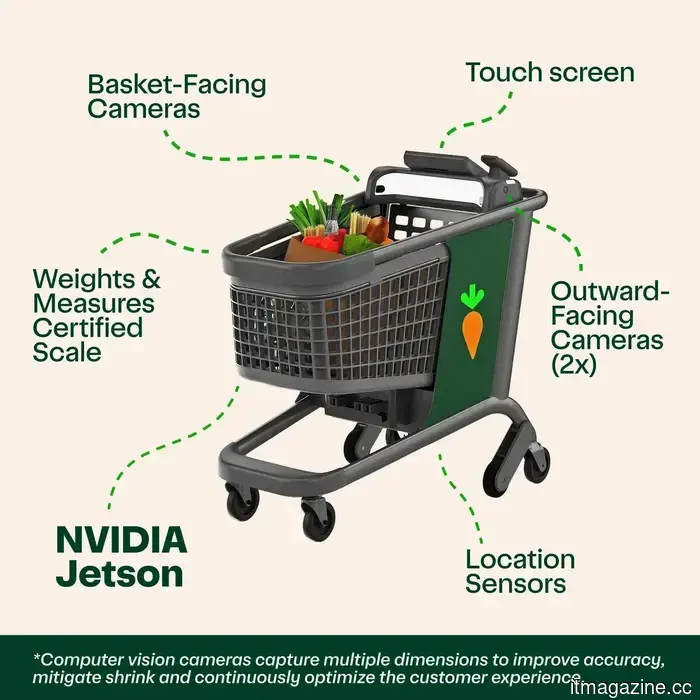
However, the need for specific hardware raises privacy concerns. The carts are equipped with cameras facing into the basket and outwards, location-tracking systems, scales, touchscreens, and payment terminals, effectively transforming an ordinary grocery cart into a mobile surveillance platform.
Instacart presents Caper as a means to customize the shopping experience, minimize out-of-stock scenarios, increase sales, and generate revenue from retail media. While shoppers enjoy the added convenience, they also create a more detailed record of their purchases, movements, loyalty activities, and responses to prompts encountered in the aisles.
How the cart tracks shoppers
Instacart
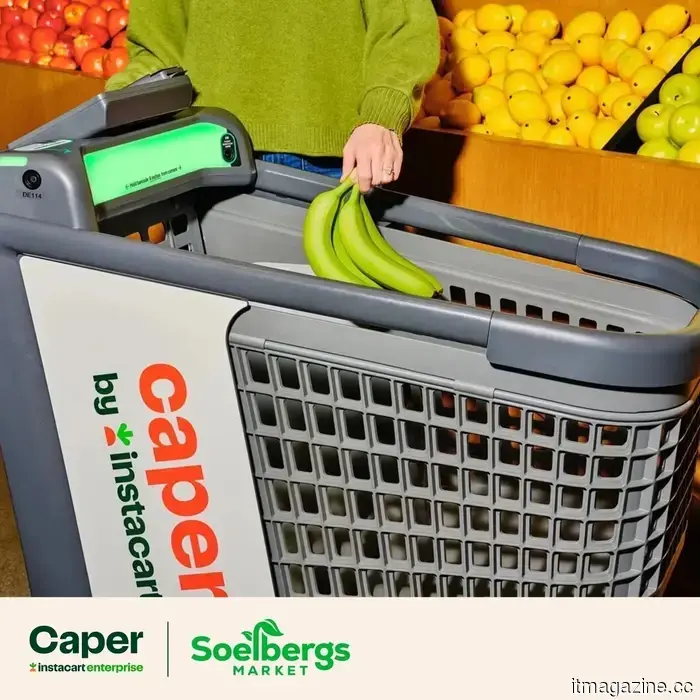
Caper Carts utilize computer vision, hardware sensors, certified scales, payment options, and location tracking to identify items as shoppers place them in the cart. The integrated scale also allows for easy handling of produce and other weight-dependent items, making the checkout process feel less reliant on cashiers.
This configuration provides retailers with a clearer understanding of customer behavior prior to checkout. The system can track what goes into the cart, monitor the cart's movement, link the shopping session to a loyalty account, and display offers while the shopping experience is ongoing.
Where advertising pressure starts
Weis intends to implement on-cart advertising, with Instacart's Caper materials outlining promotions that are aware of aisle location, real-time coupons, and retail media advertisements linked to the store's positioning. The screen becomes relevant at the critical moment when shoppers are making decisions between different brands, sizes, and impulse purchases.
Instacart reports that location-aware prompts have resulted in an average increase of nearly one percentage point in basket size. This detail succinctly explains the business model, as the cart simultaneously functions as a checkout tool and an advertisement display directed at consumers on the move.
Instacart
What shoppers should consider next
Caper Carts are already operational in over 100 cities across 15 states and more than a dozen retail banners, with Instacart claiming that deployments have increased threefold year over year. Weis is merely the most recent location to adopt this technology, not an isolated experimental project.
The carts can still provide significant assistance, particularly for those seeking price transparency and quicker checkout experiences. However, the presence of cameras, location tracking, targeted advertisements, and loyalty integration should be approached with the same caution that people apply to connected TVs, apps, and smart speakers.
Before engaging, shoppers should review the store's policies regarding cart data, loyalty connections, ad personalization, and location-based promotions. While using the cart may be optional, understanding the implications of this trade-off is important before utilizing it in-store.
Другие статьи
 VocabOwl is the trending vocabulary test that has word enthusiasts rethinking everything.
VocabOwl’s popular vocabulary assessment transforms 100 multiple-choice questions into a shareable approximation of your English language proficiency; however, the smart scoring method still allows for some guessing and ambiguity.
VocabOwl is the trending vocabulary test that has word enthusiasts rethinking everything.
VocabOwl’s popular vocabulary assessment transforms 100 multiple-choice questions into a shareable approximation of your English language proficiency; however, the smart scoring method still allows for some guessing and ambiguity.
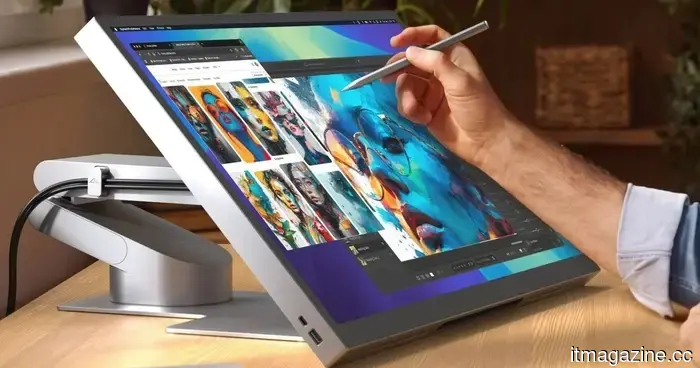 These new Alogic displays essentially serve as an alternative to a touchscreen Mac.
Mac users hoping for a touchscreen option now have additional third-party alternatives. Alogic's latest range of displays incorporates touch controls for desktop, portable, and wall-mounted screens.
These new Alogic displays essentially serve as an alternative to a touchscreen Mac.
Mac users hoping for a touchscreen option now have additional third-party alternatives. Alogic's latest range of displays incorporates touch controls for desktop, portable, and wall-mounted screens.
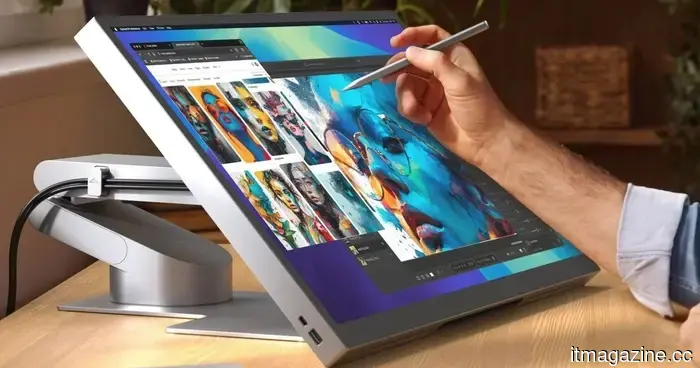 These new Alogic displays effectively serve as a touchscreen solution for Mac users.
Mac users anticipating a touchscreen Mac now have additional third-party alternatives. Alogic's latest display series incorporates touch controls for desktop, portable, and wall-mounted screens.
These new Alogic displays effectively serve as a touchscreen solution for Mac users.
Mac users anticipating a touchscreen Mac now have additional third-party alternatives. Alogic's latest display series incorporates touch controls for desktop, portable, and wall-mounted screens.
 Hackers are widely using a Gravity SMTP vulnerability to extract API keys from 100,000 WordPress websites.
Wordfence has prevented over 17 million exploit attempts aimed at a Gravity SMTP vulnerability that exposes API keys, OAuth tokens, and complete system reports without requiring authentication.
Hackers are widely using a Gravity SMTP vulnerability to extract API keys from 100,000 WordPress websites.
Wordfence has prevented over 17 million exploit attempts aimed at a Gravity SMTP vulnerability that exposes API keys, OAuth tokens, and complete system reports without requiring authentication.
 Ubisoft co-founder Claude Guillemot has passed away at the age of 69 in a plane crash near La Baule.
Claude Guillemot, a co-founder of Ubisoft in 1986 and former leader of Guillemot Corp, has passed away in a crash involving a Cessna 421 in western France.
Ubisoft co-founder Claude Guillemot has passed away at the age of 69 in a plane crash near La Baule.
Claude Guillemot, a co-founder of Ubisoft in 1986 and former leader of Guillemot Corp, has passed away in a crash involving a Cessna 421 in western France.
 OpenAI aims to create a comprehensive personal AI assistant for everyone around the globe.
OpenAI is positioning personal AGI as the ultimate goal in its AI competition, but it still needs to clarify details regarding pricing, accessibility, safety measures, and how a knowledgeable assistant would benefit everyone.
OpenAI aims to create a comprehensive personal AI assistant for everyone around the globe.
OpenAI is positioning personal AGI as the ultimate goal in its AI competition, but it still needs to clarify details regarding pricing, accessibility, safety measures, and how a knowledgeable assistant would benefit everyone.
Instacart is experimenting with AI shopping carts equipped with camera capabilities that may seem convenient, yet also quite unsettling.
Instacart's Caper Carts offer quick checkout, discounts, and loyalty benefits at Weis stores, yet their cameras, location tracking, and in-aisle advertisements give the grocery cart an impression of being a data collection device.