
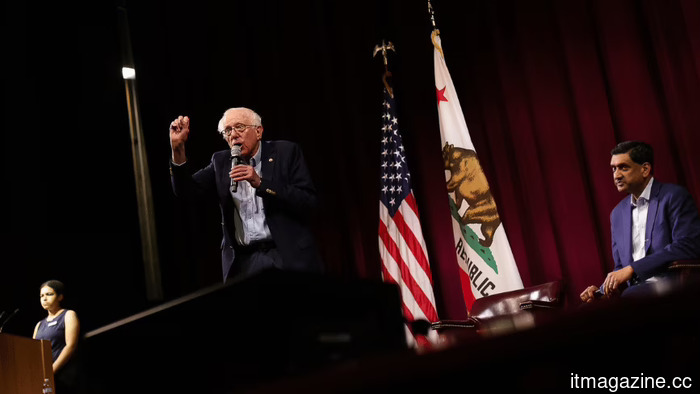
Sanders' AI legislation would give the public fifty percent ownership of OpenAI.
Bernie Sanders has transformed a talking point into legislative action, surpassing proposals from both Silicon Valley and the White House.
On Thursday, the senator from Vermont unveiled a bill that would impose a one-time 50 percent tax on stock from the largest AI companies, with payment made in shares rather than cash. This measure would grant the American public a significant stake in companies like OpenAI, Anthropic, and xAI and establish a sovereign wealth fund that Sanders estimates could be around $7 trillion. This proposal is a more formal and assertive version of an idea that has been gaining attention in Washington over the past few weeks.
This proposed fund would be mandated to distribute a 5 percent annual dividend, which Sanders claims would provide each American with over $1,000 annually, with any excess funds allocated to healthcare, education, and housing.
The tax would be applicable to any AI company with over $200 million in annual AI sales. An Independent Commission for Democratic AI, composed of seven members nominated by the president and confirmed by the Senate, would oversee the fund and utilize its voting shares to prevent any company decisions deemed detrimental to the public.
The rationale behind the bill combines moral and fiscal arguments. It states that AI’s economic worth stems from the collective intelligence of humanity, referencing the various creative works such as books, music, art, journalism, software, and research that the models have been trained on. It argues that a select few oligarchs have effectively appropriated the creative output of millions of individuals.
The proposal draws upon a model similar to that of oil and mineral extraction, asserting that if value is taken from a public resource, the public should receive a share of the profits.
Surprisingly, the concept has found unexpected supporters. Donald Trump has speculated about a governmental ownership stake, OpenAI suggested a voluntary "public wealth fund," and Anthropic’s Dario Amodei has proposed a basic income financed by taxes on AI companies. However, Sanders’ version is seen as a confiscation rather than a gift, and he has openly communicated this to Sam Altman.
During a meeting, he dismissed a proposal for a voluntary "5 percent of our profits" as an attempt to placate the public. Reports from those present indicate that the two remained significantly divided on the issue.
The likelihood of the bill passing appears slim, which may not be Sanders’ primary objective. The prospects are uncertain, as Congress is controlled by Republicans who generally favor industry interests, and former AI czar David Sacks has referred to the plan as "straight up confiscation of property." Additionally, a provision requiring companies to separate their AI and non-AI operations could complicate Elon Musk’s merger of xAI with SpaceX.
Conversely, Palantir’s Alex Karp posits that the proposed 50 percent tax is too cautious and anticipates that full nationalization is inevitable.
Sanders does not expect the bill to succeed but aims to establish a position for the midterms, where concerns regarding AI and employment are emerging as significant campaign topics; approximately 70 percent of U.S. college students already perceive the technology as a threat to their futures.
Regardless of the bill's progress, it has shifted the narrative. Washington is no longer discussing whether the public should benefit from AI’s financial success but rather how much they should receive.
Other articles
 Jio submits application for India's largest IPO and a competitor to Starlink.
Reliance Jio has submitted an application for what may become India's largest IPO in history, and at the same Annual General Meeting, it also introduced a $15 billion satellite network aiming to compete with Starlink.
Jio submits application for India's largest IPO and a competitor to Starlink.
Reliance Jio has submitted an application for what may become India's largest IPO in history, and at the same Annual General Meeting, it also introduced a $15 billion satellite network aiming to compete with Starlink.
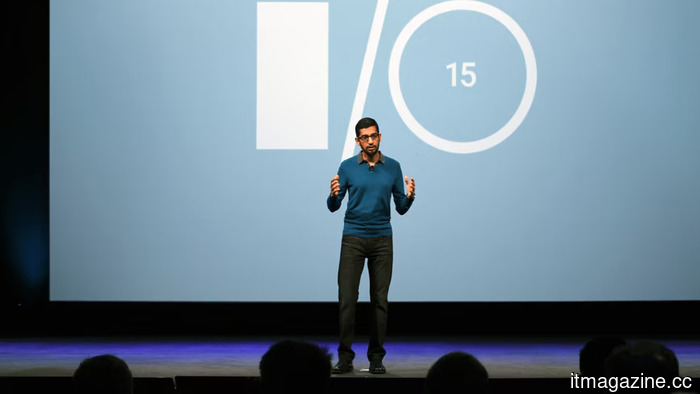 Google is following Nvidia's strategy to loosen its hold on AI chips.
Google is adopting Nvidia's strategy by employing financial assurances and circular financing to attract customers for its TPUs and to ease its control over AI chips.
Google is following Nvidia's strategy to loosen its hold on AI chips.
Google is adopting Nvidia's strategy by employing financial assurances and circular financing to attract customers for its TPUs and to ease its control over AI chips.
 The US claims that an ASML chip tool is located in China, while ASML refutes this.
Commerce Secretary Howard Lutnick indicates that one of ASML's leading chip manufacturing machines may have arrived in China. However, ASML maintains that it has never exported an EUV tool to the country.
A startup claims it has solved the bottleneck that has been hindering AI development.
Miami-based startup Subquadratic asserts that its SubQ model overcomes the 'quadratic attention' limitation. While independent evaluations support many of its claims, skepticism persists.
The US claims that an ASML chip tool is located in China, while ASML refutes this.
Commerce Secretary Howard Lutnick indicates that one of ASML's leading chip manufacturing machines may have arrived in China. However, ASML maintains that it has never exported an EUV tool to the country.
A startup claims it has solved the bottleneck that has been hindering AI development.
Miami-based startup Subquadratic asserts that its SubQ model overcomes the 'quadratic attention' limitation. While independent evaluations support many of its claims, skepticism persists.
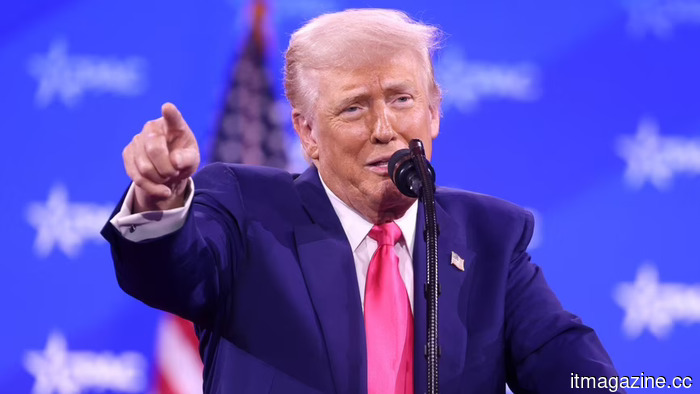 According to the book, Trump ridiculed Zuckerberg and Bezos for their subservient behavior.
A recent book by Haberman & Swan alleges that Trump privately mocked Zuckerberg and Bezos for seeking his approval, revealing Musk their messages as examples of "first-class groveling."
According to the book, Trump ridiculed Zuckerberg and Bezos for their subservient behavior.
A recent book by Haberman & Swan alleges that Trump privately mocked Zuckerberg and Bezos for seeking his approval, revealing Musk their messages as examples of "first-class groveling."
 macOS 27 Golden Gate: What we know about the upcoming features arriving on your Mac.
Apple's macOS Golden Gate update introduces Siri AI, Visual Intelligence, enhanced Apple Intelligence features, improvements to Liquid Glass, and a significant compatibility change for Mac users. Here's all the information you need.
macOS 27 Golden Gate: What we know about the upcoming features arriving on your Mac.
Apple's macOS Golden Gate update introduces Siri AI, Visual Intelligence, enhanced Apple Intelligence features, improvements to Liquid Glass, and a significant compatibility change for Mac users. Here's all the information you need.
Sanders' AI legislation would give the public fifty percent ownership of OpenAI.
Bernie Sanders has proposed legislation to impose a 50% tax on the largest AI companies, establish a $7 trillion public wealth fund, and provide over $1,000 annually to every American.