
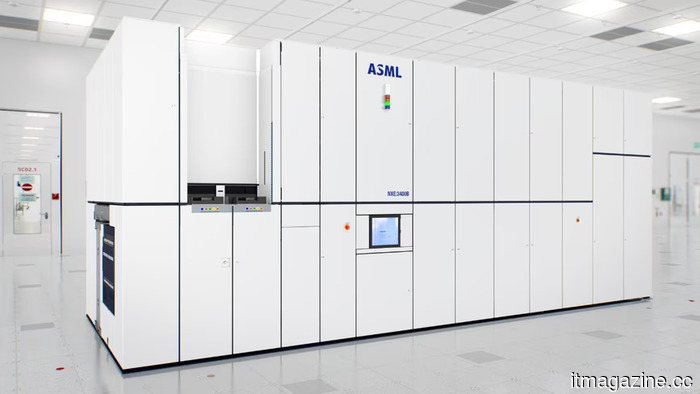
The US claims that an ASML chip tool is located in China, while ASML refutes this.
The United States has accused the only company in the world that manufactures the machines for advanced chips of allowing one to end up in China. The evidence supporting this claim has not been presented, and the company asserts that it did not occur.
In recent discussions, Commerce Secretary Howard Lutnick informed ASML's executives that Washington is convinced one of its premier lithography machines may have been sent to China, violating US-led export controls. ASML, the Dutch company that has a near-complete monopoly on this technology, firmly denies the accusation.
What the US asserts
As reported by Bloomberg, Lutnick’s team believes they have evidence indicating ASML sent EUV-related components and transport equipment to China, but they have repeatedly refused to disclose this evidence.
Extreme ultraviolet (EUV) machines are crucial for producing the most sophisticated semiconductors, and ASML is the sole manufacturer of these machines. Since around 2019, they have been prohibited from reaching China, and this issue represents the latest development in an ongoing chip conflict that has frequently involved the Dutch firm.
ASML's firm denial
ASML's response is notably forthright. The company has distributed a document in Washington titled “No indication of any ASML EUV system in China,” and its statement is unequivocal: it has “never shipped an EUV machine to China,” nor any “component, module, or equipment specifically designed for use in an EUV machine.”
The accusation lacks coherence
The business rationale also contradicts the accusation. ASML's export license is vital for its operations, and despite China's share of its revenue shrinking from about one-third to one-fifth, it remains the company's largest market.
Jeopardizing that license to benefit a single Chinese customer would be akin to corporate self-destruction. This presents a conundrum at the heart of the situation: a serious allegation without public evidence, and a defendant with every incentive to refrain from the alleged action.
The broader pressure
This clash coincides with increased pressure from Washington on its allies. A proposed US law would compel the Netherlands and Japan to align their export regulations with those of the US or face unilateral enforcement, and President Trump is reportedly exerting intense pressure on the Dutch government.
The situation is particularly delicate, as ASML’s future appears increasingly tied to American interests: it has recently agreed to assist in the construction of Elon Musk’s $55 billion “Terafab” chip plant in Texas, even as enforcement actions from Washington intensify.
For ASML, the implication is that mere compliance may no longer suffice. The company is now required to demonstrate a negative on Washington’s timeline, all while maintaining a valuation of around $700 billion and facing potential repercussions for its business in China.
Unless the US reveals the evidence it claims to possess, this situation remains a standoff regarding an absence: a machine that may or may not be improperly located, with the entire Western effort to prevent advanced chip manufacturing from reaching China hinging on this issue.
Other articles
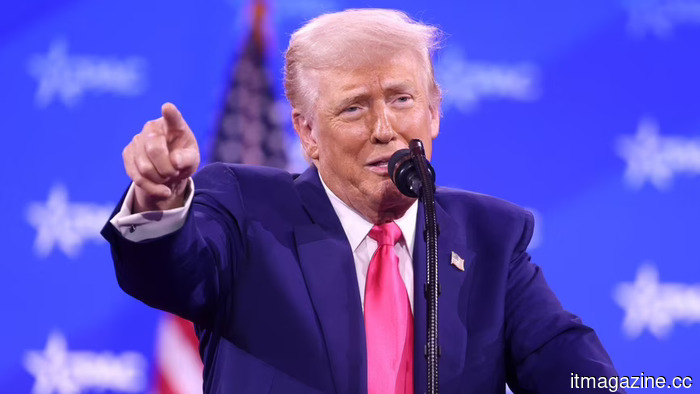 According to a book, Trump ridiculed Zuckerberg and Bezos for their subservient behavior.
A recent book by Haberman & Swan alleges that Trump privately ridiculed Zuckerberg and Bezos for seeking his approval, presenting Musk with their messages as examples of "first-class groveling."
A startup claims it has solved the bottleneck that has been hindering AI development.
Miami-based startup Subquadratic asserts that its SubQ model overcomes the 'quadratic attention' limitation. While independent evaluations support many of its claims, skepticism persists.
According to a book, Trump ridiculed Zuckerberg and Bezos for their subservient behavior.
A recent book by Haberman & Swan alleges that Trump privately ridiculed Zuckerberg and Bezos for seeking his approval, presenting Musk with their messages as examples of "first-class groveling."
A startup claims it has solved the bottleneck that has been hindering AI development.
Miami-based startup Subquadratic asserts that its SubQ model overcomes the 'quadratic attention' limitation. While independent evaluations support many of its claims, skepticism persists.
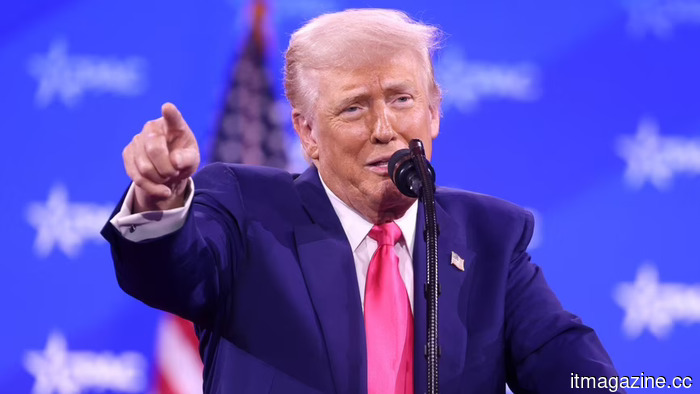 According to the book, Trump ridiculed Zuckerberg and Bezos for their subservient behavior.
A recent book by Haberman & Swan alleges that Trump privately mocked Zuckerberg and Bezos for seeking his approval, revealing Musk their messages as examples of "first-class groveling."
According to the book, Trump ridiculed Zuckerberg and Bezos for their subservient behavior.
A recent book by Haberman & Swan alleges that Trump privately mocked Zuckerberg and Bezos for seeking his approval, revealing Musk their messages as examples of "first-class groveling."
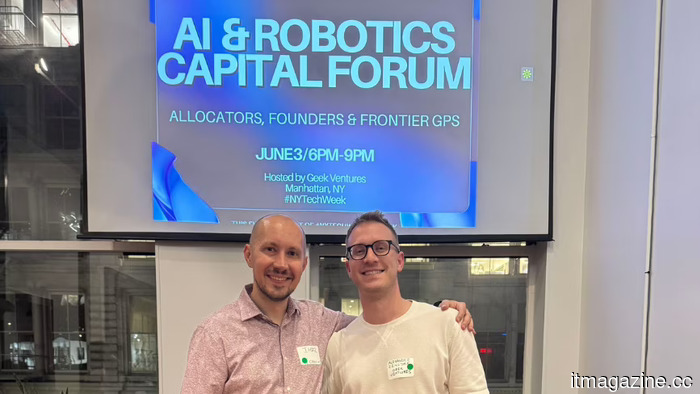 Immigrant-centered VC Geek Ventures is back with larger investments.
Geek Ventures is in the process of securing a second fund of as much as $40 million to issue larger pre-seed and seed investments for immigrant founders who are developing projects in AI, robotics, and deep tech throughout the US, Europe, and Israel.
Immigrant-centered VC Geek Ventures is back with larger investments.
Geek Ventures is in the process of securing a second fund of as much as $40 million to issue larger pre-seed and seed investments for immigrant founders who are developing projects in AI, robotics, and deep tech throughout the US, Europe, and Israel.
 This research uncovered an unexpected benefit for mental health lurking in your game collection.
A recent study discovered that adults who engage in open-world games or casual titles feel less lonely and exhibit greater emotional resilience compared to those who do not play games at all.
A startup claims it has solved the obstacle that was hindering AI progress.
Miami-based startup Subquadratic asserts that its SubQ model overcomes the limitations of 'quadratic attention.' Independent evaluations support many of its claims, though skepticism persists.
This research uncovered an unexpected benefit for mental health lurking in your game collection.
A recent study discovered that adults who engage in open-world games or casual titles feel less lonely and exhibit greater emotional resilience compared to those who do not play games at all.
A startup claims it has solved the obstacle that was hindering AI progress.
Miami-based startup Subquadratic asserts that its SubQ model overcomes the limitations of 'quadratic attention.' Independent evaluations support many of its claims, though skepticism persists.
The US claims that an ASML chip tool is located in China, while ASML refutes this.
Commerce Secretary Howard Lutnick indicates that one of ASML's leading chip manufacturing machines may have arrived in China. However, ASML maintains that it has never exported an EUV tool to the country.