
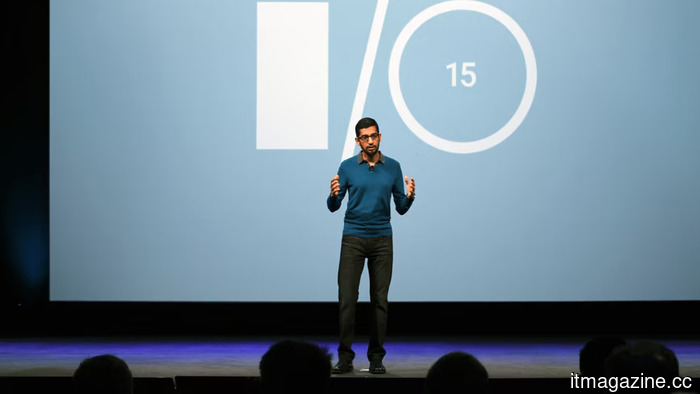
Google is following Nvidia's strategy to loosen its hold on AI chips.
To create a formidable competitor to Nvidia, Google has adopted Nvidia’s own strategies. A Wall Street Journal investigation details how Google is leveraging financial guarantees and what is referred to as “circular financing”—the same methodologies that drove relentless demand for Nvidia’s chips—to secure data center customers for its own hardware.
A prime example can be found on the southern bank of Lake Ontario, not far from Niagara Falls.
The $3.2 billion assurance from the falls
At an AI data center cluster in western New York, known as Lake Mariner, Google has issued a $3.2 billion financial guarantee, as reported by the WSJ. The site’s developers, TeraWulf and the Google-supported cloud provider FluidStack, plan to lease computing power from thousands of Google’s tensor processing units (TPUs) to Anthropic. This guarantee enables the data center to obtain lower-cost debt, mirroring the approach Nvidia has used to drive demand for its own chips. “They want to stay competitive; they don't want to fall behind,” TeraWulf co-founder Nazar Khan commented to the publication.
Circular financing, Nvidia's method
Another strategy being utilized is circular financing, where a portion of the funds invested by a chipmaker returns to it through chip purchases. Google is supporting several Anthropic initiatives on this principle: a $7 billion data center named River Bend near Baton Rouge and an additional $1.4 billion in commitments for a computing lease in Colorado City, Texas. This is layered upon an already extensive compute agreement between Google and Broadcom and integrates with a roughly $35 billion private-credit deal, arranged by Apollo and Blackstone, which purchases TPUs from Google and leases them to Anthropic.
Going direct, and going for the kill
Google has begun to directly sell its chips. In May, the company announced it would start marketing TPUs to customers and revealed its inaugural chip specifically designed for inference, the rapidly expanding task of processing AI queries rather than training models. Additionally, it formed a $5 billion partnership with Blackstone to launch a cloud venture targeting Nvidia-supported providers like CoreWeave and Nebius, and announced this month plans to raise $85 billion in equity predominantly for AI infrastructure.
The approach is resonating: Citadel Securities, an early adopter, claims it operates some workloads at a 30 percent lower cost and up to four times faster using TPUs.
Nvidia is not fazed
Jensen Huang has downplayed the competition. Nvidia’s “market reach is far broader than any TPU or ASIC could ever achieve,” he stated in April, noting that Anthropic is Google’s sole significant external TPU customer and challenging Google to demonstrate that its chips are more cost-effective. Nvidia still dominates over 90 percent of the AI-chip market, bolstered by its CUDA software and easily integrable hardware, while some smaller cloud providers express concerns about losing their Nvidia allocations, dubbed “Jensen jail,” if they deviate. Huang’s public comments have been more relaxed: “Nothing brings me more joy than when you buy everything from Nvidia. But it gives me immense satisfaction if you simply buy something from Nvidia.”
Why it matters
Google faces competition from other players, including AMD, Broadcom, and Cerebras, while Amazon is pursuing a similar path with its $50 billion Trainium initiative and expansive Anthropic clusters. However, none can rival Google’s financial strength, which is significant. Under Amin Vahdat, who was promoted in December to oversee its AI infrastructure, Google has become more aggressive in its competition, although he maintains that “it’s not zero-sum” since “there’s so much demand out there.” When the wealthiest contender adopts the precise financing strategy that established Nvidia’s dominance, Nvidia’s substantial market share is put to a genuine test, and the AI sector's expansion becomes increasingly dependent on debt-driven, circular risks.
Other articles
 This research uncovered an unexpected benefit for mental health lurking in your game collection.
A recent study discovered that adults who engage in open-world games or casual titles feel less lonely and exhibit greater emotional resilience compared to those who do not play games at all.
This research uncovered an unexpected benefit for mental health lurking in your game collection.
A recent study discovered that adults who engage in open-world games or casual titles feel less lonely and exhibit greater emotional resilience compared to those who do not play games at all.
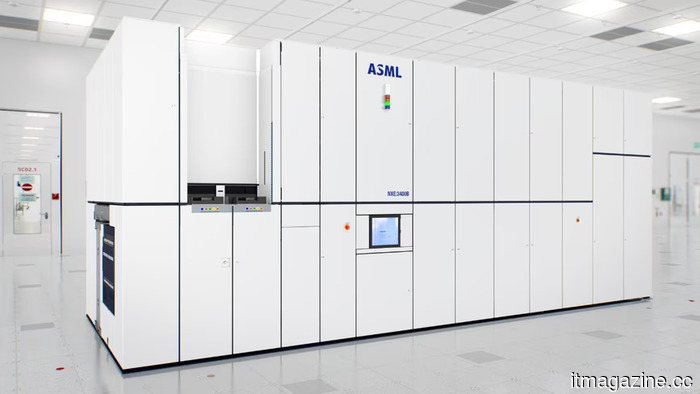 The US claims that an ASML chip tool is located in China, while ASML refutes this.
Commerce Secretary Howard Lutnick indicates that one of ASML's leading chip manufacturing machines may have arrived in China. However, ASML maintains that it has never exported an EUV tool to the country.
The US claims that an ASML chip tool is located in China, while ASML refutes this.
Commerce Secretary Howard Lutnick indicates that one of ASML's leading chip manufacturing machines may have arrived in China. However, ASML maintains that it has never exported an EUV tool to the country.
 Jio submits application for India's largest IPO and a competitor to Starlink.
Reliance Jio has submitted an application for what may become India's largest IPO in history, and at the same Annual General Meeting, it also introduced a $15 billion satellite network aiming to compete with Starlink.
Jio submits application for India's largest IPO and a competitor to Starlink.
Reliance Jio has submitted an application for what may become India's largest IPO in history, and at the same Annual General Meeting, it also introduced a $15 billion satellite network aiming to compete with Starlink.
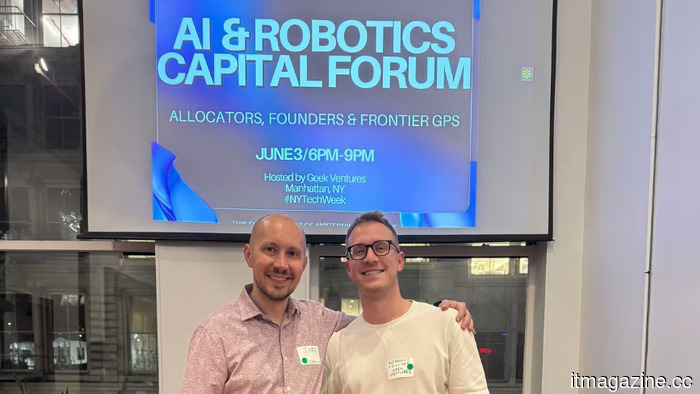 Immigrant-focused venture capital firm Geek Ventures is back with increased funding amounts.
Geek Ventures is in the process of raising a second fund of up to $40 million to provide larger pre-seed and seed investments for immigrant founders developing in AI, robotics, and deep tech throughout the US, Europe, and Israel.
Immigrant-focused venture capital firm Geek Ventures is back with increased funding amounts.
Geek Ventures is in the process of raising a second fund of up to $40 million to provide larger pre-seed and seed investments for immigrant founders developing in AI, robotics, and deep tech throughout the US, Europe, and Israel.
 Gemini Live can now retain information from previous conversations.
Gemini Live can now remember information from earlier conversations, bridging a gap that has existed since the introduction of memory in standard Gemini over a year ago.
A startup claims it has solved the bottleneck that has been hindering AI development.
Miami-based startup Subquadratic asserts that its SubQ model overcomes the 'quadratic attention' limitation. While independent evaluations support many of its claims, skepticism persists.
Gemini Live can now retain information from previous conversations.
Gemini Live can now remember information from earlier conversations, bridging a gap that has existed since the introduction of memory in standard Gemini over a year ago.
A startup claims it has solved the bottleneck that has been hindering AI development.
Miami-based startup Subquadratic asserts that its SubQ model overcomes the 'quadratic attention' limitation. While independent evaluations support many of its claims, skepticism persists.
Google is following Nvidia's strategy to loosen its hold on AI chips.
Google is adopting Nvidia's strategy by employing financial assurances and circular financing to attract customers for its TPUs and to ease its control over AI chips.