

Jio submits application for the largest IPO in India and a competitor to Starlink.
At its annual shareholder meeting on Friday, Reliance introduced two significant initiatives simultaneously: documentation for what might become the largest stock-market listing in India's history and a strategy to launch a competitor to Starlink into space.
Jio Platforms, the digital and telecommunications branch of Mukesh Ambani’s Reliance Industries, submitted initial draft papers for an initial public offering (IPO) that is widely anticipated to be the largest in the nation’s history. At the same meeting, Jio outlined plans for a sovereign low-orbit satellite network designed to provide broadband across India, directly challenging Musk’s Starlink.
**The Listing**
On Friday, Jio submitted its draft prospectus to the regulatory authority, proposing a new issuance of up to 270 million shares, with the majority of the estimated $3 billion to $4 billion raised designated for reducing debt. Reliance holds approximately 66 percent of Jio Platforms, while Google and Meta possess minority stakes from their investments in 2020. If it reaches the higher end of expectations, this listing would eclipse Hyundai Motor India's record, making it the biggest in the country.
Jio is not a small player going public: it boasts over 500 million subscribers, nearly half of India’s internet market share, an increase from the 331 million subscribers it had when it became the leading carrier in the country.
**The Starlink Challenge**
The growth narrative Jio is promoting alongside its IPO extends into space. According to Bloomberg, the company is planning a network of about 1,650 low-Earth-orbit satellites, projected to cost between $10 billion and $15 billion, to provide broadband and direct-to-device services throughout India. This plan has been submitted to India's space regulator, IN-SPACe.
Interestingly, just months ago, Jio and competitor Bharti Airtel entered into agreements to distribute Starlink in India. Now, Jio is pursuing its own satellite network, intensifying a rivalry that has become personal: Ambani and Musk have previously disagreed on the allocation of satellite spectrum in India.
**Why Pair Them**
The timing is intentional. SpaceX recently secured $75 billion in the largest IPO ever, fueled by Starlink's success, and Jio is crafting a similar narrative for itself. Establishing a comprehensive connectivity framework, from millions of mobile subscribers on the ground to a satellite constellation in orbit, is precisely the kind of strategy that enhances valuation, especially as investors are asked to evaluate it.
Jio is also rebranding itself as a deep-tech entity rather than just a telecom operator: it claims to have climbed into the global top 20 of the World Intellectual Property Organization’s patent rankings, bolstered by its advancements in 5G, 6G, AI, and satellite communications.
**Why It Matters**
For India, this initiative represents sovereignty: it promises high-speed connectivity to the most remote areas without reliance on a US operator that New Delhi cannot regulate.
For Starlink, the threat is significant. Its growth dynamics are already becoming more complex, and losing its position in the world's largest market would be detrimental.
The challenge is that building a satellite constellation is extremely difficult and requires substantial capital; currently, the satellite plan remains a proposal under review, and Jio is beginning this endeavor years behind schedule. However, few competitors can match Reliance's spending in its home market, and it has just demonstrated its capability to raise necessary funds to pursue this venture.
Other articles
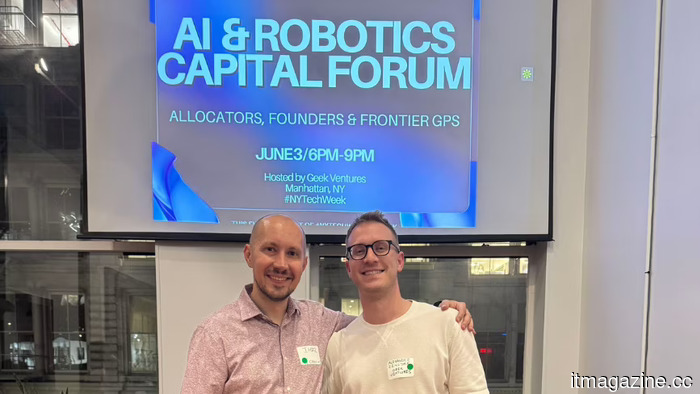 Immigrant-centered VC Geek Ventures is back with larger investments.
Geek Ventures is in the process of securing a second fund of as much as $40 million to issue larger pre-seed and seed investments for immigrant founders who are developing projects in AI, robotics, and deep tech throughout the US, Europe, and Israel.
Immigrant-centered VC Geek Ventures is back with larger investments.
Geek Ventures is in the process of securing a second fund of as much as $40 million to issue larger pre-seed and seed investments for immigrant founders who are developing projects in AI, robotics, and deep tech throughout the US, Europe, and Israel.
 Jio submits application for India's largest IPO and a competitor to Starlink.
Reliance Jio has submitted an application for what may become India's largest IPO in history, and at the same Annual General Meeting, it also introduced a $15 billion satellite network aiming to compete with Starlink.
Jio submits application for India's largest IPO and a competitor to Starlink.
Reliance Jio has submitted an application for what may become India's largest IPO in history, and at the same Annual General Meeting, it also introduced a $15 billion satellite network aiming to compete with Starlink.
 OpenAI recruits the AI architect behind Trump and Google's Shazeer.
Before its IPO, OpenAI appointed Dean Ball, the creator of Trump's AI Action Plan, to head a new policy team, shortly after acquiring Shazeer from Google.
OpenAI recruits the AI architect behind Trump and Google's Shazeer.
Before its IPO, OpenAI appointed Dean Ball, the creator of Trump's AI Action Plan, to head a new policy team, shortly after acquiring Shazeer from Google.
 OpenAI recruits Trump's AI architect and Google's Shazeer.
Prior to its IPO, OpenAI has brought on Dean Ball, the creator of Trump's AI Action Plan, to lead a newly formed policy team, just days after acquiring Shazeer from Google.
A startup claims it has solved the obstacle that was hindering AI progress.
Miami-based startup Subquadratic asserts that its SubQ model overcomes the limitations of 'quadratic attention.' Independent evaluations support many of its claims, though skepticism persists.
OpenAI recruits Trump's AI architect and Google's Shazeer.
Prior to its IPO, OpenAI has brought on Dean Ball, the creator of Trump's AI Action Plan, to lead a newly formed policy team, just days after acquiring Shazeer from Google.
A startup claims it has solved the obstacle that was hindering AI progress.
Miami-based startup Subquadratic asserts that its SubQ model overcomes the limitations of 'quadratic attention.' Independent evaluations support many of its claims, though skepticism persists.
 Geek Ventures, a venture capital firm focused on immigrants, is back with bigger investments.
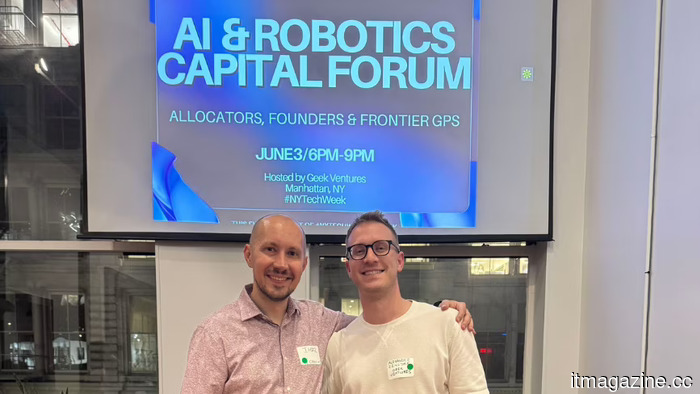
Geek Ventures is in the process of raising a second fund of up to $40 million to provide larger pre-seed and seed investments for immigrant founders working in AI, robotics, and deep tech in the US, Europe, and Israel.
Geek Ventures, a venture capital firm focused on immigrants, is back with bigger investments.
Geek Ventures is in the process of raising a second fund of up to $40 million to provide larger pre-seed and seed investments for immigrant founders working in AI, robotics, and deep tech in the US, Europe, and Israel.
Jio submits application for the largest IPO in India and a competitor to Starlink.
Reliance Jio has submitted an application for what might be the largest IPO in India’s history and utilized the same Annual General Meeting to introduce a $15 billion satellite network to compete with Starlink.