
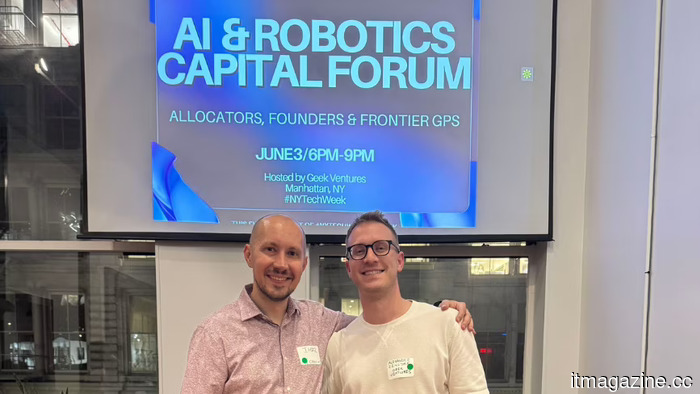
Immigrant-centered VC Geek Ventures is back with larger investments.
Immigrant founders have consistently been vital to the U.S. technology landscape, yet their access to early-stage funding often hinges on local networks, customer introductions, and closeness to established investors. This gap has led to the emergence of a handful of venture firms concentrating on immigrant, diaspora, and cross-border founders, a segment that has expanded in recent times.
Geek Ventures fits into this niche. The firm, which invests in the U.S., Europe, and Israel, is in the process of raising its second fund and intends to issue larger checks during the pre-seed and seed stages. Its inaugural fund closed at $23 million in 2023. Fund II aims for between $25 million and $30 million, with potential to reach $40 million, and has already garnered around $20 million in commitments.
Geek Ventures was founded by Ihar Mahaniok, who now operates the firm alongside partner Alexander Zemlyak, both of whom have backgrounds in the former Soviet Union. Mahaniok made over 60 angel investments prior to starting the firm, while Zemlyak joined in 2023 after working in Israel, London, and Eastern Europe, including a four-year tenure at LETA Capital.
Fund I was based on the belief that immigrant founders, especially those with technical skills, are frequently overlooked by investors, even though they possess the technical expertise and cross-market experience sought by early-stage investors. As time passed, this belief became more refined. The firm was not merely searching for immigrant founders but for those who had already navigated various markets, networks, and technical hurdles, and were creating companies where early access to U.S. capital and networks could have a significant impact.
However, the size of the fund is not the primary change. With Fund II, Geek Ventures is transitioning to a lead investor role, writing larger checks, acquiring bigger ownership stakes, and engaging in funding rounds at an earlier stage.
From intuition to structure, Geek Ventures’ first fund relied heavily on Mahaniok’s network and his past angel investments. After spending 20 years as an engineer at Google, Meta, and WeWork, his strategy centered around companies outside the conventional venture capital networks. The fund closed at $23 million and supported over 35 companies. By offering initial investments of $100,000 to $300,000, Geek Ventures could enter funding rounds early, but often lacked sufficient capital to lead them, increase ownership stakes, or secure board seats.
When Zemlyak joined in 2023, Geek Ventures began evolving from a founder-led network to a more formal venture firm. He contributed experience from Israel, London, and Eastern Europe, including four years at LETA Capital, where he worked on sourcing and early-stage investments.
At Geek Ventures, Zemlyak helped formalize the existing network and approach into a structured investment process. The firm now has a system in place to review hundreds of inbound proposals each month, a clearer guideline for issuing larger checks, and established criteria for determining when to lead or co-lead a funding round instead of following.
“Talent may be evenly distributed globally,” Zemlyak states, “but access to capital and networks is not. Founders who have successfully navigated that divide exhibit a level of adaptability that is rare and difficult to teach.”
Larger checks earlier
With Fund II, Geek Ventures gains greater flexibility during the initial investment phase. The firm plans to issue first checks ranging from $500,000 to $800,000, with up to $2 million set aside for subsequent investments. With these larger checks, the firm can lead or co-lead funding rounds, assume board seats, and increase its stakes in the companies it supports.
Backers include AppLovin founder Adam Foroughi and the founders of PandaDoc, alongside other operators and investors linked to immigrant-led tech companies. The team operates out of New York, Austin, Kyiv, and Tel Aviv.
Writing larger checks does not equate to a retreat from early-stage risk; rather, it means entering deals with better resources.
“At the pre-seed stage, investing isn't solely about data,” Zemlyak points out. “It's never enough. What you’re assessing is how a team manages uncertainty: whether they quickly test assumptions, adjust their thinking when things don't work out, and progress from ambiguity to something actionable.”
What the new portfolio reveals
The initial investments of Fund II are concentrated on AI infrastructure, specialized AI applications, robotics, deep tech, and data-intensive software. Cytronic and Spacer Robotics are examples on the hard-tech side. Spike aggregates health information from over 600 IoT devices, while Caremaze successfully completed a $3 million pre-seed funding round in March 2025, with Geek Ventures participating alongside early Palantir investors.
Across the portfolio, a common theme is immigrant founders developing technically challenging companies in markets where access to U.S. capital, early customers, and the right networks can significantly alter the course of their businesses.
Additionally, the firm
Other articles
 macOS 27 Golden Gate: What we know about the upcoming features arriving on your Mac.
Apple's macOS Golden Gate update introduces Siri AI, Visual Intelligence, enhanced Apple Intelligence features, improvements to Liquid Glass, and a significant compatibility change for Mac users. Here's all the information you need.
macOS 27 Golden Gate: What we know about the upcoming features arriving on your Mac.
Apple's macOS Golden Gate update introduces Siri AI, Visual Intelligence, enhanced Apple Intelligence features, improvements to Liquid Glass, and a significant compatibility change for Mac users. Here's all the information you need.
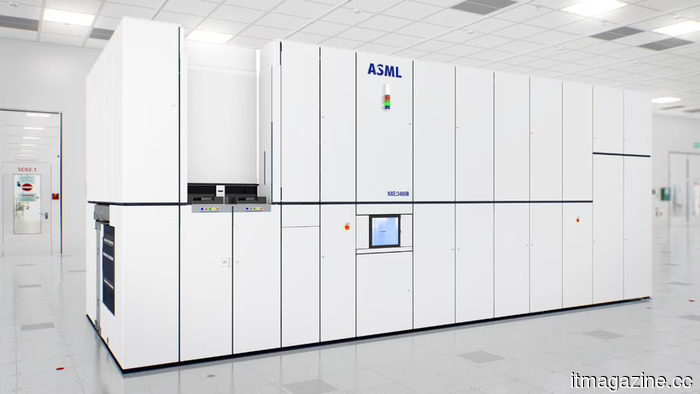 The United States claims that a chip tool from ASML is located in China, but ASML refutes this.
Commerce chief Howard Lutnick states that one of ASML's leading chip manufacturing machines might have arrived in China. However, ASML maintains that it has never delivered an EUV tool to the country.
The United States claims that a chip tool from ASML is located in China, but ASML refutes this.
Commerce chief Howard Lutnick states that one of ASML's leading chip manufacturing machines might have arrived in China. However, ASML maintains that it has never delivered an EUV tool to the country.
 Gemini Live can now retain information from previous conversations.
Gemini Live can now remember information from earlier conversations, bridging a gap that has existed since the introduction of memory in standard Gemini over a year ago.
Gemini Live can now retain information from previous conversations.
Gemini Live can now remember information from earlier conversations, bridging a gap that has existed since the introduction of memory in standard Gemini over a year ago.
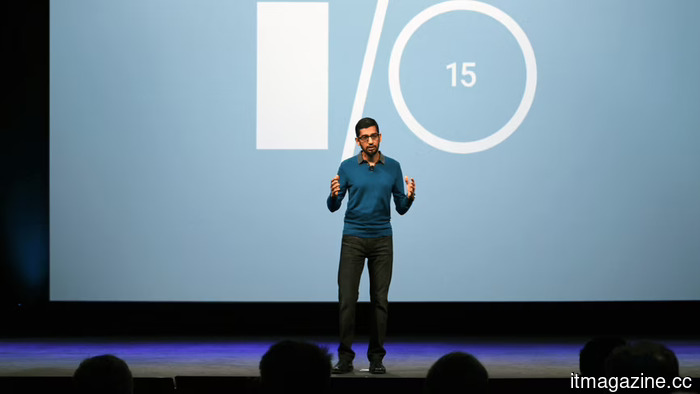 Google is adopting Nvidia's strategy to challenge its dominance in the AI chip market.
Google is adopting Nvidia's strategy by employing financial incentives and circular financing to attract customers for its TPUs and to reduce its dominance in the AI chip market.
Google is adopting Nvidia's strategy to challenge its dominance in the AI chip market.
Google is adopting Nvidia's strategy by employing financial incentives and circular financing to attract customers for its TPUs and to reduce its dominance in the AI chip market.
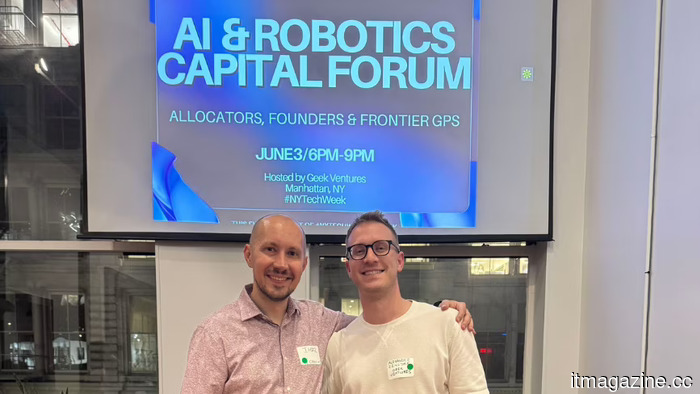 Geek Ventures, a venture capital firm focused on immigrants, is back with bigger investments.
Geek Ventures is in the process of raising a second fund of up to $40 million to provide larger pre-seed and seed investments for immigrant founders working in AI, robotics, and deep tech in the US, Europe, and Israel.
A startup claims it has solved the bottleneck that has been hindering AI development.
Miami-based startup Subquadratic asserts that its SubQ model overcomes the 'quadratic attention' limitation. While independent evaluations support many of its claims, skepticism persists.
Geek Ventures, a venture capital firm focused on immigrants, is back with bigger investments.
Geek Ventures is in the process of raising a second fund of up to $40 million to provide larger pre-seed and seed investments for immigrant founders working in AI, robotics, and deep tech in the US, Europe, and Israel.
A startup claims it has solved the bottleneck that has been hindering AI development.
Miami-based startup Subquadratic asserts that its SubQ model overcomes the 'quadratic attention' limitation. While independent evaluations support many of its claims, skepticism persists.
Immigrant-centered VC Geek Ventures is back with larger investments.
Geek Ventures is in the process of securing a second fund of as much as $40 million to issue larger pre-seed and seed investments for immigrant founders who are developing projects in AI, robotics, and deep tech throughout the US, Europe, and Israel.