
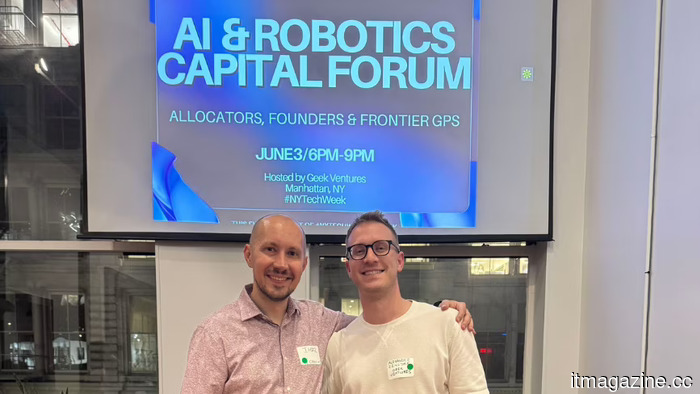
Geek Ventures, a venture capital firm focused on immigrants, is back with bigger investments.
Immigrant founders have historically played a crucial role in U.S. technology, but accessing early-stage capital often continues to rely on local networks, customer referrals, and closeness to established investors. This gap has allowed for the emergence of a few venture firms that focus on immigrant, diaspora, and cross-border founders, a segment that has expanded in recent years.
Geek Ventures is one such firm. Investing across the U.S., Europe, and Israel, it is currently raising its second fund and planning to issue larger checks at the pre-seed and seed stages. Its inaugural fund closed at $23 million in 2023, while Fund II aims for $25 million to $30 million, with the potential to reach $40 million and has already gathered around $20 million in commitments.
Founded by Ihar Mahaniok, who is now at the helm alongside partner Alexander Zemlyak, both hailing from the former Soviet Union, Geek Ventures has a strong focus on immigrant founders. Mahaniok made over 60 angel investments before establishing the firm, whereas Zemlyak joined in 2023 after gaining experience in Israel, London, and Eastern Europe, where he spent four years at LETA Capital.
The first fund was built on the belief that immigrant founders, especially those with technical expertise, are frequently overlooked by investors despite possessing the sought-after technical backgrounds and cross-market experience that early-stage investors favor. Over time, this belief evolved to specifically target founders who have crossed various markets, networks, and technical hurdles, and who are establishing companies where early access to U.S. capital and connections can significantly impact their success.
However, the primary shift with Fund II is not just its size; Geek Ventures is now aiming to take a lead investor role, making larger investments, increasing ownership stakes, and entering funding rounds earlier.
Transitioning from instinct to a structured approach, Geek Ventures’ first fund was initially based on Mahaniok’s existing network and his prior angel investments. With two decades of experience in engineering at Google, Meta, and WeWork, Mahaniok focused on opportunities outside the networks that typically attract venture capital.
The first fund, which closed at $23 million, supported over 35 companies. With initial investments ranging from $100,000 to $300,000, Geek Ventures could participate in early rounds, but often lacked the capital to lead, secure larger ownership, or attain board positions.
When Zemlyak joined in 2023, Geek Ventures started evolving from a founder-led network into a more formal venture firm structure. Bringing in experience from Israel, London, and Eastern Europe, including four years at LETA Capital, where he led sourcing and early-stage investments, Zemlyak has been instrumental in formalizing the firm’s investment process. They now have a system for evaluating hundreds of inbound companies monthly, clearer guidelines for larger investments, and specific criteria for leading or co-leading funding rounds. Zemlyak was promoted to Partner in May 2025.
“While talent may be evenly distributed globally,” Zemlyak remarks, “access to capital and networks is not. Founders who have successfully navigated that gap demonstrate adaptability that is rare to find or teach.”
Greater initial investment flexibility is a core feature of Fund II. Geek Ventures plans to make initial investments of $500,000 to $800,000, with up to $2 million earmarked for follow-on investments. This allows the firm to lead or co-lead funding rounds, secure board seats, and increase its stakes in its portfolio companies.
The backing comes from various sources, including AppLovin founder Adam Foroughi and the founders of PandaDoc, alongside other operators and investors tied to immigrant-led tech firms. The team operates from locations including New York, Austin, Kyiv, and Tel Aviv.
Making larger investments does not imply a withdrawal from early-stage risks; rather, it indicates entering deals with more resources.
“At the pre-seed level, investing isn't solely about data,” Zemlyak explains. “There's never enough available. Instead, you’re assessing how a team navigates uncertainty: whether they can quickly test assumptions, adapt their thinking when faced with setbacks, and progress from uncertainty to actionable insights.”
Early investments from Fund II are concentrating on AI infrastructure, vertical AI applications, robotics, deep tech, and data-intensive software. Companies like Cytronic and Spacer Robotics are on the hard-tech front. Spike consolidates health data from over 600 IoT devices, and Caremaze successfully closed a $3 million pre-seed round in March 2025, with Geek Ventures alongside early Palantir investors.
A shared theme across the portfolio is the emphasis on immigrant founders creating technically challenging companies in markets where access to U.S. capital, initial customers, and proper networks can materially influence their business trajectory.
The firm is also gearing up to launch an accelerator for founders who are close but not quite ready for a funding check, specifically those who need more customer validation, refined positioning, or
Other articles
 Gemini Live can now retain information from previous conversations.
Gemini Live can now remember information from earlier conversations, bridging a gap that has existed since the introduction of memory in standard Gemini over a year ago.
Gemini Live can now retain information from previous conversations.
Gemini Live can now remember information from earlier conversations, bridging a gap that has existed since the introduction of memory in standard Gemini over a year ago.
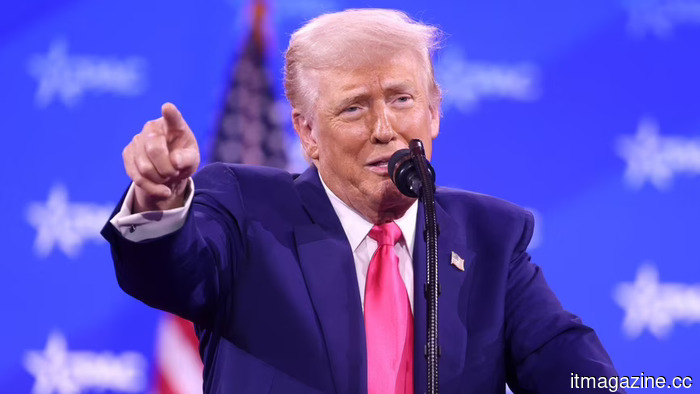 According to a book, Trump ridiculed Zuckerberg and Bezos for their subservient behavior.
A recent book by Haberman & Swan alleges that Trump privately ridiculed Zuckerberg and Bezos for seeking his approval, presenting Musk with their messages as examples of "first-class groveling."
According to a book, Trump ridiculed Zuckerberg and Bezos for their subservient behavior.
A recent book by Haberman & Swan alleges that Trump privately ridiculed Zuckerberg and Bezos for seeking his approval, presenting Musk with their messages as examples of "first-class groveling."
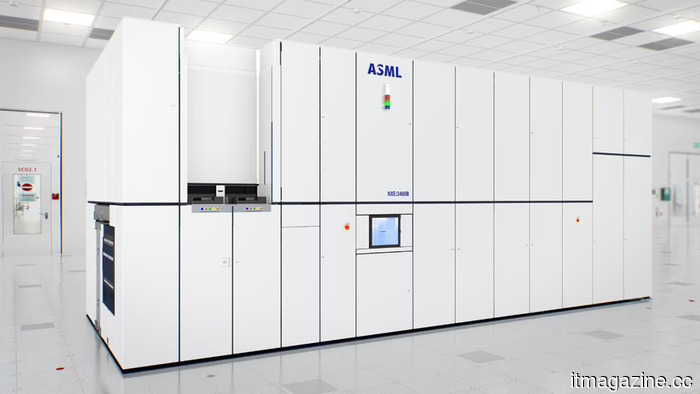 The United States claims that an ASML chip manufacturing tool is located in China, but ASML refutes this assertion.
Commerce Secretary Howard Lutnick states that one of ASML's leading chip manufacturing machines might have arrived in China. However, ASML maintains that it has never delivered an EUV tool to that location.
The United States claims that an ASML chip manufacturing tool is located in China, but ASML refutes this assertion.
Commerce Secretary Howard Lutnick states that one of ASML's leading chip manufacturing machines might have arrived in China. However, ASML maintains that it has never delivered an EUV tool to that location.
 macOS 27 Golden Gate: What we know about the upcoming features arriving on your Mac.
Apple's macOS Golden Gate update introduces Siri AI, Visual Intelligence, enhanced Apple Intelligence features, improvements to Liquid Glass, and a significant compatibility change for Mac users. Here's all the information you need.
macOS 27 Golden Gate: What we know about the upcoming features arriving on your Mac.
Apple's macOS Golden Gate update introduces Siri AI, Visual Intelligence, enhanced Apple Intelligence features, improvements to Liquid Glass, and a significant compatibility change for Mac users. Here's all the information you need.
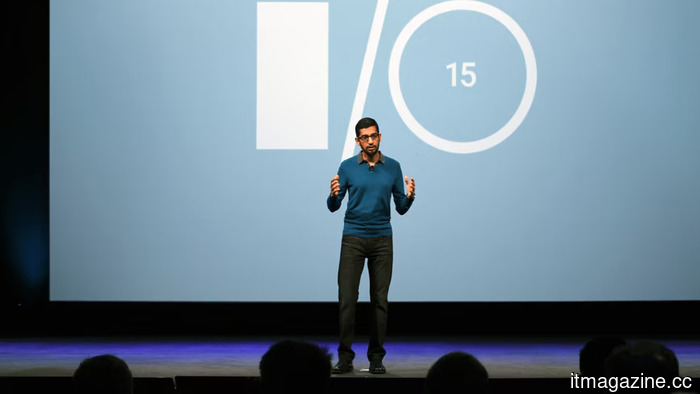 Google is following Nvidia's strategy to loosen its hold on AI chips.
Google is adopting Nvidia's strategy by employing financial assurances and circular financing to attract customers for its TPUs and to ease its control over AI chips.
Google is following Nvidia's strategy to loosen its hold on AI chips.
Google is adopting Nvidia's strategy by employing financial assurances and circular financing to attract customers for its TPUs and to ease its control over AI chips.
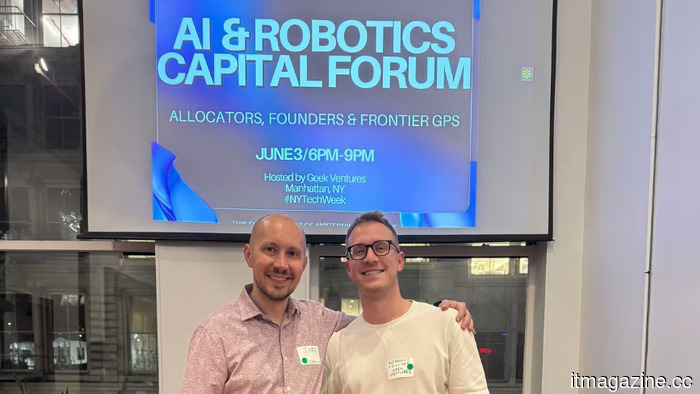 Immigrant-focused venture capital firm Geek Ventures is back with increased funding amounts.
Geek Ventures is in the process of raising a second fund of up to $40 million to provide larger pre-seed and seed investments for immigrant founders developing in AI, robotics, and deep tech throughout the US, Europe, and Israel.
Immigrant-focused venture capital firm Geek Ventures is back with increased funding amounts.
Geek Ventures is in the process of raising a second fund of up to $40 million to provide larger pre-seed and seed investments for immigrant founders developing in AI, robotics, and deep tech throughout the US, Europe, and Israel.
Geek Ventures, a venture capital firm focused on immigrants, is back with bigger investments.
Geek Ventures is in the process of raising a second fund of up to $40 million to provide larger pre-seed and seed investments for immigrant founders working in AI, robotics, and deep tech in the US, Europe, and Israel.