
OpenAI recruits the AI architect behind Trump and Google's Shazeer.
OpenAI is expanding its workforce in preparation for its stock-market entry, focusing on two distinct areas: its research lab and governmental affairs. This week, the company announced that Dean Ball will join on July 6 to head a newly formed team called Strategic Futures. Ball's background is not in research; he is a policy expert who recently played a role in developing the US government's AI regulations.
Who is Dean Ball?
Ball previously served as a senior AI adviser at the White House Office of Science and Technology Policy, where he was a key author of the “AI Action Plan” during the Trump administration. At OpenAI, he will report to chief strategy officer Jason Kwon. His team will have a wide-ranging focus, examining risks associated with frontier AI, impacts on employment, and the interplay between laboratories, government, and society. Essentially, the team will concentrate on the political aspects of advanced AI rather than its technical aspects.
Another key hire
This policy-related appointment follows shortly after another significant recruitment. Noam Shazeer, who co-leads Gemini and is a co-inventor of the transformer, is also leaving Google to join OpenAI. The combination of these two hires suggests a strategic approach: one focusing on the technological frontier, the other on regulatory matters.
Both individuals evoke some controversy. Shazeer co-founded Character.AI, a chatbot startup that has faced legal challenges concerning the safety of minors, while OpenAI has ongoing wrongful-death and safety lawsuits related to ChatGPT. The expertise that OpenAI is acquiring comes with its own set of complexities.
Why now?
The timing of these hires is likely related to the impending IPO. OpenAI is preparing to go public after a year marked by significant expenditures, totaling $34 billion last year alone. A market debut invites scrutiny, and OpenAI is already under considerable observation, having attracted an investigation by 42 state attorneys general just days after its filing.
The political climate is also important. OpenAI has navigated Washington more effectively than some rivals, particularly highlighted by the Trump administration's recent intervention that forced Anthropic to withdraw its latest models due to export rules. Thus, OpenAI is securing an insider precisely when a competitor finds itself under pressure.
Bringing on someone who has been involved in crafting federal AI policy seems to be a smart move. However, it raises a critical question: with the architect of the government’s AI strategy joining the leading AI company, the distinction between formulating regulations and profiting from them becomes less clear.
To be fair, Ball is not a straightforward advocate for the industry; he often criticizes both AI companies and the government. OpenAI positions him as someone to “pressure-test” its ideas. He will also maintain a role at the Foundation for American Innovation, a think tank. Nevertheless, the perception remains significant.
Why it matters
When you strip away the identities involved, the core message is straightforward. OpenAI believes that its next phase will hinge as much on legislative decisions as on technological advancements. As a result, it is staffing for both arenas. For a company poised to solicit public investment, this may be one of the most significant signals it could send.
Other articles
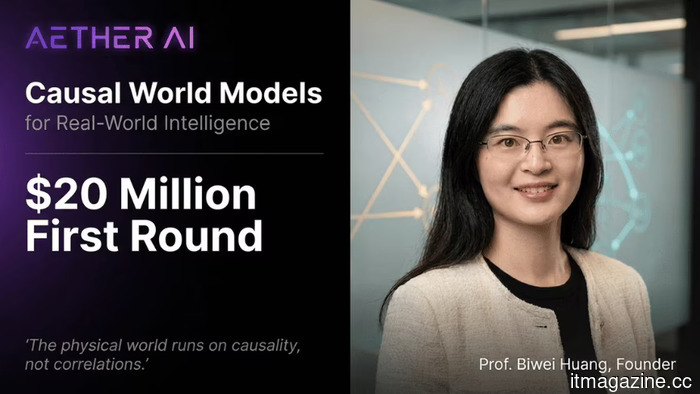 Aether AI secures $20 million to develop causal world models.
Aether AI, established by UCSD researcher Biwei Huang, has secured $20 million to develop causal world models for robots, directly challenging the conventional approach to AI scaling.
Aether AI secures $20 million to develop causal world models.
Aether AI, established by UCSD researcher Biwei Huang, has secured $20 million to develop causal world models for robots, directly challenging the conventional approach to AI scaling.
 HyperLight secures $80 million to expand TFLN photonics for artificial intelligence.
HyperLight has secured an $80 million Series C funding round led by MediaTek to expand its thin-film lithium niobate photonics for the optical interconnects required by AI data centers.
A startup claims it has solved the obstacle that was hindering AI progress.
Miami-based startup Subquadratic asserts that its SubQ model overcomes the limitations of 'quadratic attention.' Independent evaluations support many of its claims, though skepticism persists.
HyperLight secures $80 million to expand TFLN photonics for artificial intelligence.
HyperLight has secured an $80 million Series C funding round led by MediaTek to expand its thin-film lithium niobate photonics for the optical interconnects required by AI data centers.
A startup claims it has solved the obstacle that was hindering AI progress.
Miami-based startup Subquadratic asserts that its SubQ model overcomes the limitations of 'quadratic attention.' Independent evaluations support many of its claims, though skepticism persists.
 Google's AI Overviews are declaring fan-fiction creatures as real.
Futurism discovered that Google's AI Overviews has repeatedly presented SCP Foundation horror fan-fiction as reality in at least 20 instances, without any disclaimer indicating it was fiction.
Google's AI Overviews are declaring fan-fiction creatures as real.
Futurism discovered that Google's AI Overviews has repeatedly presented SCP Foundation horror fan-fiction as reality in at least 20 instances, without any disclaimer indicating it was fiction.
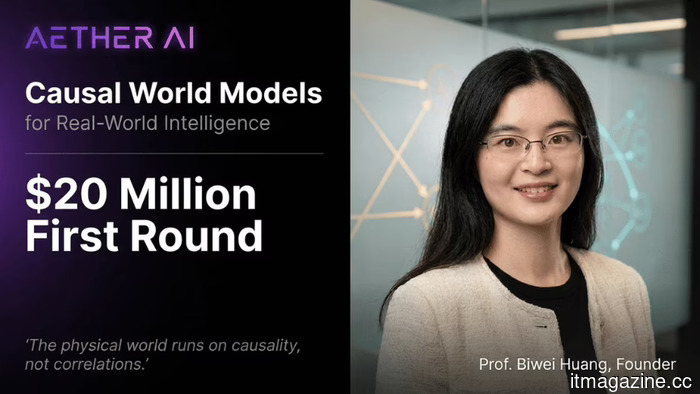 Aether AI secures $20 million to develop causal world models.
Aether AI, established by UCSD researcher Biwei Huang, has secured $20 million to develop causal world models for robots, posing a direct challenge to the prevailing AI scaling paradigm.
A startup claims it has solved the bottleneck that has been hindering AI development.
Miami-based startup Subquadratic asserts that its SubQ model overcomes the 'quadratic attention' limitation. While independent evaluations support many of its claims, skepticism persists.
Aether AI secures $20 million to develop causal world models.
Aether AI, established by UCSD researcher Biwei Huang, has secured $20 million to develop causal world models for robots, posing a direct challenge to the prevailing AI scaling paradigm.
A startup claims it has solved the bottleneck that has been hindering AI development.
Miami-based startup Subquadratic asserts that its SubQ model overcomes the 'quadratic attention' limitation. While independent evaluations support many of its claims, skepticism persists.
OpenAI recruits the AI architect behind Trump and Google's Shazeer.
Before its IPO, OpenAI appointed Dean Ball, the creator of Trump's AI Action Plan, to head a new policy team, shortly after acquiring Shazeer from Google.