
OpenAI recruits Trump's AI architect and Google's Shazeer.
OpenAI is expanding its team for its impending stock-market debut in two distinct areas: research and policy in Washington. This week, the company announced that Dean Ball would be joining on July 6 to lead a newly formed team called Strategic Futures. Ball’s background is not in research; he has experience in policy and recently contributed to developing AI regulations for the U.S. government.
Who is Dean Ball?
Ball previously served as a senior AI adviser at the White House Office of Science and Technology Policy, where he played a key role in authoring the Trump administration’s "AI Action Plan.” At OpenAI, he will report to Chief Strategy Officer Jason Kwon. His team will cover a wide range of topics, including risks associated with frontier AI, impacts on employment, and the interrelations among labs, governments, and society. In summary, it will focus on the political dimensions of advanced AI rather than the technical aspects.
The other hire
This policy addition follows the announcement of a more prominent hire. Noam Shazeer, a co-lead on the Gemini project and co-inventor of the transformer architecture, is also transitioning from Google to OpenAI. Together, these hires appear to be a strategic match: one focuses on the technological forefront while the other emphasizes regulatory boundaries.
Both individuals come with their own controversies. Shazeer co-founded Character.AI, which has faced lawsuits concerning the safety of minors, and OpenAI itself is currently dealing with wrongful-death and safety lawsuits related to ChatGPT. Thus, the talent OpenAI is acquiring carries its own complexities.
Why now
The timing suggests a link to the IPO. OpenAI is gearing up for a public offering after a year of substantial expenditures, totaling $34 billion last year. A market launch also brings added scrutiny, a circumstance OpenAI is already experiencing; just days after filing, it faced an investigation from 42 state attorneys general.
The political atmosphere is also significant. OpenAI has managed its relations with Washington more effectively than its competitors, as evidenced by a recent incident where the Trump administration compelled Anthropic to withdraw its latest models due to export regulations. Consequently, OpenAI is bringing on a seasoned insider just as a rival encounters difficulties.
This raises an intriguing issue: when a key figure in the formation of federal AI policy joins the leading AI company, the distinction between creating regulations and profiting from them becomes less clear.
To be fair, Ball is not an uncritical supporter of the industry. He has frequently critiqued both AI firms and government actions, and OpenAI presents him as someone who will "pressure-test" its viewpoints. He will also maintain a role at the Foundation for American Innovation. Nonetheless, the implications of this hiring are noticeable.
Why it matters
If you strip away the individual identities involved, the central message is straightforward: OpenAI believes its future will be shaped just as much by legislative actions as by technological advancements. Thus, it is strategically staffing for both dimensions. For a company about to solicit funds from public investors, this might be the most significant indication of its direction.
Other articles
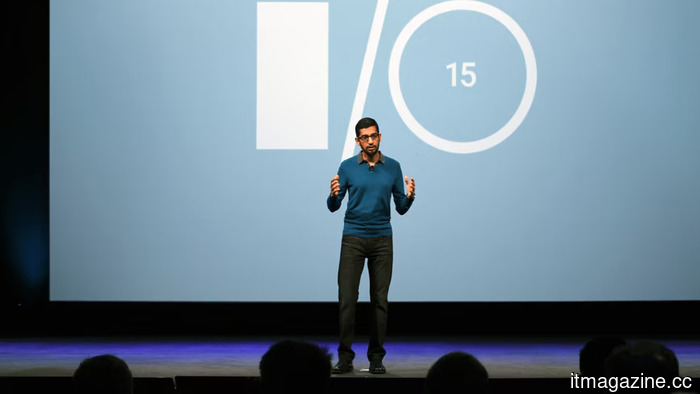 Google is following Nvidia's strategy to loosen its hold on AI chips.
Google is adopting Nvidia's strategy by employing financial assurances and circular financing to attract customers for its TPUs and to ease its control over AI chips.
Google is following Nvidia's strategy to loosen its hold on AI chips.
Google is adopting Nvidia's strategy by employing financial assurances and circular financing to attract customers for its TPUs and to ease its control over AI chips.
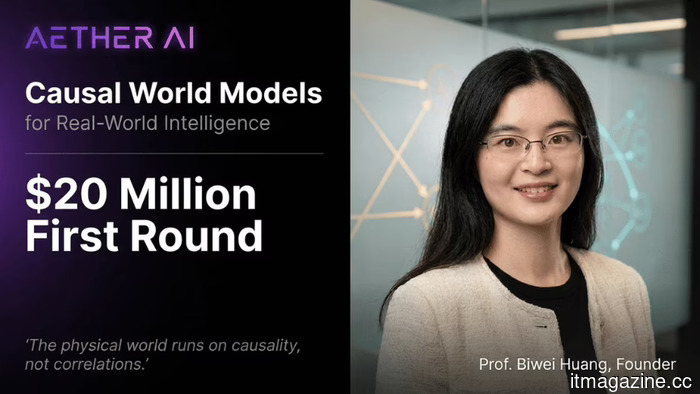 Aether AI secures $20 million to develop causal world models.
Aether AI, established by UCSD researcher Biwei Huang, has secured $20 million to develop causal world models for robots, posing a direct challenge to the prevailing AI scaling paradigm.
Aether AI secures $20 million to develop causal world models.
Aether AI, established by UCSD researcher Biwei Huang, has secured $20 million to develop causal world models for robots, posing a direct challenge to the prevailing AI scaling paradigm.
 OpenAI recruits the AI architect behind Trump and Google's Shazeer.
Before its IPO, OpenAI appointed Dean Ball, the creator of Trump's AI Action Plan, to head a new policy team, shortly after acquiring Shazeer from Google.
OpenAI recruits the AI architect behind Trump and Google's Shazeer.
Before its IPO, OpenAI appointed Dean Ball, the creator of Trump's AI Action Plan, to head a new policy team, shortly after acquiring Shazeer from Google.
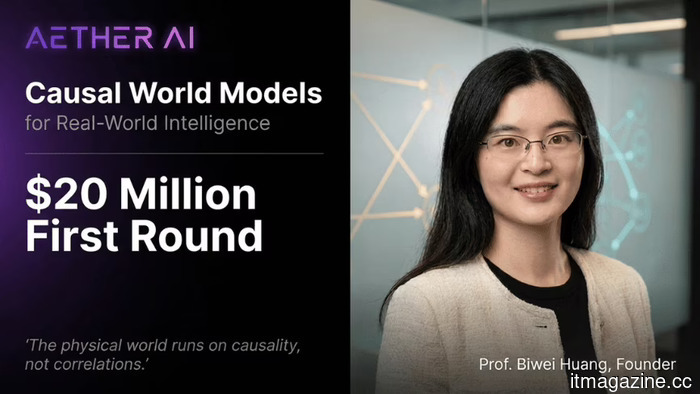 Aether AI secures $20 million to develop causal world models.
Aether AI, established by UCSD researcher Biwei Huang, has secured $20 million to develop causal world models for robots, directly opposing the prevailing scaling approach in AI.
Aether AI secures $20 million to develop causal world models.
Aether AI, established by UCSD researcher Biwei Huang, has secured $20 million to develop causal world models for robots, directly opposing the prevailing scaling approach in AI.
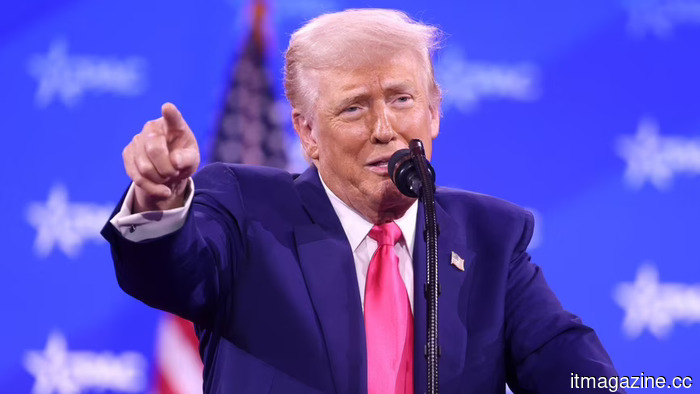 According to a book, Trump ridiculed Zuckerberg and Bezos for their subservient behavior.
A recent book by Haberman & Swan alleges that Trump privately ridiculed Zuckerberg and Bezos for seeking his approval, presenting Musk with their messages as examples of "first-class groveling."
A startup claims it has solved the bottleneck that has been hindering AI development.
Miami-based startup Subquadratic asserts that its SubQ model overcomes the 'quadratic attention' limitation. While independent evaluations support many of its claims, skepticism persists.
According to a book, Trump ridiculed Zuckerberg and Bezos for their subservient behavior.
A recent book by Haberman & Swan alleges that Trump privately ridiculed Zuckerberg and Bezos for seeking his approval, presenting Musk with their messages as examples of "first-class groveling."
A startup claims it has solved the bottleneck that has been hindering AI development.
Miami-based startup Subquadratic asserts that its SubQ model overcomes the 'quadratic attention' limitation. While independent evaluations support many of its claims, skepticism persists.
OpenAI recruits Trump's AI architect and Google's Shazeer.
Prior to its IPO, OpenAI has brought on Dean Ball, the creator of Trump's AI Action Plan, to lead a newly formed policy team, just days after acquiring Shazeer from Google.