
HyperLight secures $80 million to expand TFLN photonics for artificial intelligence.
The next hurdle for AI is not the chips themselves, but the connections between them. As clusters expand to encompass hundreds of thousands of GPUs, the copper connections that transmit data are becoming insufficient. Consequently, the industry is working swiftly to shift that data traffic to optical systems.
HyperLight, a startup that originated from Harvard, has recently secured $80 million to advance its approach to this challenge. The Massachusetts-based company focuses on thin-film lithium niobate (TFLN), a material valued for its ability to convert electrical signals into optical signals rapidly, while consuming less power and minimizing loss. This capability is essential for densely populated AI networks.
In contrast to most competitors who base their optics on silicon, HyperLight is wagering that TFLN can outperform these alternatives, especially as data transmission speeds increase. Its "Chiplet" platform aims to cover a range of applications, from short connections within data centers to extended telecommunications links, all within a single manufacturable design. They are already shipping products with 200G per lane, while parts with 400G per lane are currently in sampling.
The broader competition mirrors the one that prompted Nvidia to invest billions to address AI’s copper limitations.
The composition of the investor base provides more insight than the amount of funding itself. The round was spearheaded by MediaTek, the chip manufacturer. However, noteworthy participants include contract manufacturers Foxconn and Jabil, foundry group UMC, Singapore’s EDBI, Taiwan’s CDIB-TEN Capital, and the Qatar Investment Authority. This blend of investors reflects a segment of the AI-hardware supply chain, encompassing everything from silicon fabrication to assembly and investment. As Mian Zhang, the CEO, stated, “This financing is about more than capital. It is about ecosystem alignment.” In simpler terms, the companies likely to manufacture and purchase this technology are now financially involved.
The significance of this development lies in the optics sector, which is becoming increasingly crucial for AI advancements. Copper cannot continue to supply data to ever-expanding GPU clusters without excessive energy consumption, while light can efficiently do so. This is why Nvidia partnered with Marvell in silicon photonics and why startups continue to assert substantial efficiency improvements from photonic networks.
HyperLight argues that its material and its unified platform can be scaled for mass production where others may fall short. The newly acquired funds will be utilized to expand manufacturing capabilities, validate customer requirements, and strengthen relationships with foundry partners. Nevertheless, it is important to note that the company’s technical assertions are their own, and many of their backers could benefit if TFLN proves successful. Ultimately, the market—not just press releases—will determine whether lithium niobate is adopted as the standard optical solution for AI.
Other articles
 The UK's leading data and AI regulator resigns in an unprecedented move.
John Edwards has stepped down from his position as the UK's information commissioner after acknowledging the use of 'inappropriate' humor, marking the first resignation of its kind in the organization's 40-year history.
The UK's leading data and AI regulator resigns in an unprecedented move.
John Edwards has stepped down from his position as the UK's information commissioner after acknowledging the use of 'inappropriate' humor, marking the first resignation of its kind in the organization's 40-year history.
 HyperLight secures $80 million to expand TFLN photonics for artificial intelligence.
HyperLight has secured an $80 million Series C funding round led by MediaTek to expand its thin-film lithium niobate photonics for the optical interconnects required by AI data centers.
HyperLight secures $80 million to expand TFLN photonics for artificial intelligence.
HyperLight has secured an $80 million Series C funding round led by MediaTek to expand its thin-film lithium niobate photonics for the optical interconnects required by AI data centers.
 OpenAI recruits Trump's AI architect and Google's Shazeer.
Prior to its IPO, OpenAI has brought on Dean Ball, the creator of Trump's AI Action Plan, to lead a newly formed policy team, just days after acquiring Shazeer from Google.
OpenAI recruits Trump's AI architect and Google's Shazeer.
Prior to its IPO, OpenAI has brought on Dean Ball, the creator of Trump's AI Action Plan, to lead a newly formed policy team, just days after acquiring Shazeer from Google.
 The UK’s leading data and AI regulator resigns in a groundbreaking move.
John Edwards has stepped down as the UK's information commissioner after acknowledging the use of 'inappropriate' humor, marking the first resignation of its kind in the position's 40-year history.
The UK’s leading data and AI regulator resigns in a groundbreaking move.
John Edwards has stepped down as the UK's information commissioner after acknowledging the use of 'inappropriate' humor, marking the first resignation of its kind in the position's 40-year history.
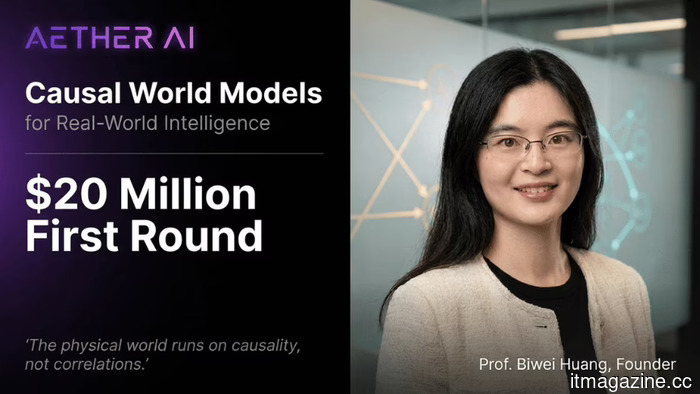 Aether AI secures $20 million to develop causal world models.
Aether AI, established by UCSD researcher Biwei Huang, has secured $20 million to develop causal world models for robots, posing a direct challenge to the prevailing AI scaling paradigm.
Aether AI secures $20 million to develop causal world models.
Aether AI, established by UCSD researcher Biwei Huang, has secured $20 million to develop causal world models for robots, posing a direct challenge to the prevailing AI scaling paradigm.
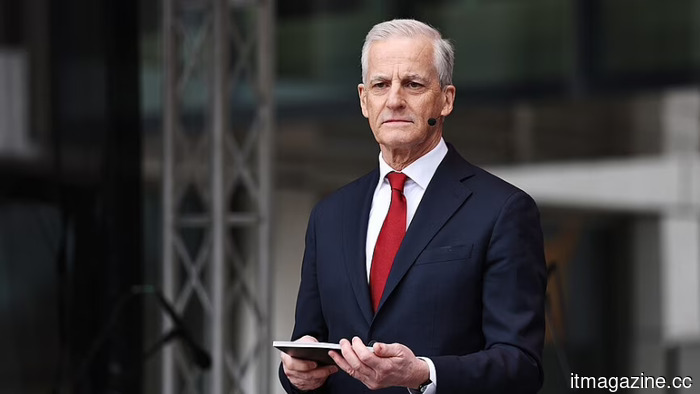 Norway is prohibiting generative AI in primary schools beginning this fall.
Norway will prohibit students aged 6 to 13 from utilizing generative AI tools in schools starting in late August. Teens aged 14 to 16 will only be allowed to use these tools with teacher supervision.
Norway is prohibiting generative AI in primary schools beginning this fall.
Norway will prohibit students aged 6 to 13 from utilizing generative AI tools in schools starting in late August. Teens aged 14 to 16 will only be allowed to use these tools with teacher supervision.
HyperLight secures $80 million to expand TFLN photonics for artificial intelligence.
HyperLight has secured $80 million in a Series C funding round, led by MediaTek, to expand its thin-film lithium niobate photonics for the optical interconnects necessary for AI data centers.