
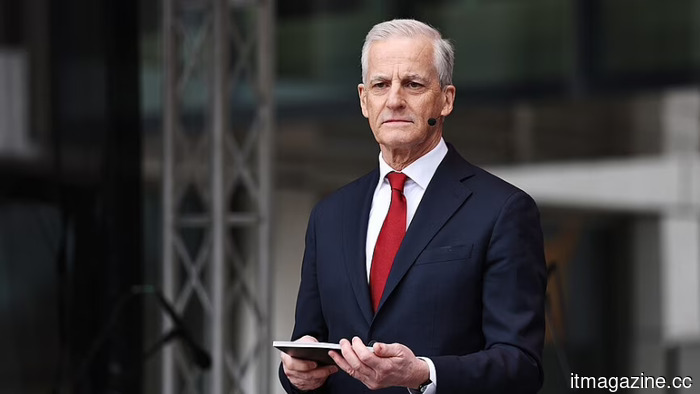
Norway is prohibiting generative AI in primary schools beginning this fall.
Norway will prohibit the use of generative AI tools by elementary school students starting in late August, as announced by Prime Minister Jonas Gahr Støre on Friday. This ban affects first through seventh graders, specifically ages six to 13, according to Reuters.
During a press conference, Støre expressed concerns that AI could hinder children from mastering essential educational skills. “The most crucial aspect of school is that our children learn to read, write, and perform mathematics,” he stated.
The restrictions will also apply to older students but in a modified manner. Those aged 14 to 16 can use generative AI only under teacher supervision. Students aged 17 and above are encouraged to use AI tools independently and responsibly.
Norway has previously taken steps to limit technology in educational settings, having banned smartphones in schools in 2024. This measure has shown positive outcomes, as a study by researcher Sara Abrahamsson involving over 400 Norwegian middle schools indicated that the ban reduced bullying, improved academic performance, and led to a roughly 60% decline in visits to psychology specialists, with noticeable effects among girls.
The AI restrictions align with the rationale behind the smartphone ban: protecting young students from technology that may disrupt foundational learning. Nevertheless, while the smartphone ban was implemented amid falling national test scores, it remains uncertain whether the use of generative AI in Norwegian schools has reached a level that would cause similar adverse effects.
Norway is also working on limiting children's access to social media. In April, the government announced plans to pass legislation to prohibit social media use for those under 16, aiming to present the bill to parliament by late 2026. This initiative is similar to Australia’s pioneering social media ban for under-16s, which took effect in December 2025.
This trend is not exclusive to Norway; the UK is considering its own social media ban for those under 16, while multiple EU nations are contemplating comparable actions. A broader question for governments is whether restricting technology access is more effective than regulating the products themselves, a debate playing out amid increasing lawsuits against AI companies concerning child safety.
In the US, the Senate Judiciary Committee unanimously moved forward with the GUARD Act in late April, a bill intending to prohibit AI companions for minors and necessitate age verification. Initially broader, the bill’s focus has since narrowed to “AI companions,” defined as chatbots that simulate prolonged interpersonal relationships, rather than encompassing all AI-powered chatbots. This can potentially exempt tools like ChatGPT, Gemini, and Copilot, although critics warn that companies might exploit this distinction.
Norway's approach is straightforward but distinct. Instead of attempting to classify harmful versus safe AI tools, it establishes an age limit and assigns enforcement duties to schools. The country’s experience with its smartphone ban suggests this method may be effective, particularly in a classroom setting.
However, questions remain about its sufficiency. Generative AI is available on any internet-connected device, and a ban during school hours does not restrict children's actions at home. Norway’s upcoming social media legislation, which would require platforms to enforce age verification, aims to address part of this issue.
Yet, no nation has successfully tackled the challenge of enforcing age restrictions on AI tools outside institutional environments. Norway is banking on the classroom as a strategic starting point.
Other articles
 HyperLight secures $80 million to expand TFLN photonics for artificial intelligence.
HyperLight has secured $80 million in a Series C funding round, led by MediaTek, to expand its thin-film lithium niobate photonics for the optical interconnects necessary for AI data centers.
HyperLight secures $80 million to expand TFLN photonics for artificial intelligence.
HyperLight has secured $80 million in a Series C funding round, led by MediaTek, to expand its thin-film lithium niobate photonics for the optical interconnects necessary for AI data centers.
 Trust is the objective: the emerging supply-chain attacks in the AI era.
This week’s two campaigns, involving TeamPCP's 1,000 compromised open-source packages and the misuse of Claude's chat feature, demonstrate that trust has become the latest target for attacks.
Trust is the objective: the emerging supply-chain attacks in the AI era.
This week’s two campaigns, involving TeamPCP's 1,000 compromised open-source packages and the misuse of Claude's chat feature, demonstrate that trust has become the latest target for attacks.
 Are you gearing up to watch season 3 of House of the Dragon? HBO Max is providing a substantial discount.
HBO Max is offering discounts on its annual subscriptions in anticipation of the third season of House of the Dragon, providing both new and returning subscribers a more affordable option to return to Westeros.
Are you gearing up to watch season 3 of House of the Dragon? HBO Max is providing a substantial discount.
HBO Max is offering discounts on its annual subscriptions in anticipation of the third season of House of the Dragon, providing both new and returning subscribers a more affordable option to return to Westeros.
 If you noticed that Hourly Activity and Naps were absent from Google Health, a recent update has reinstated them.
The 5.02 update for Google Health brings back two features that were lost during the redesign and introduces several genuinely beneficial enhancements.
If you noticed that Hourly Activity and Naps were absent from Google Health, a recent update has reinstated them.
The 5.02 update for Google Health brings back two features that were lost during the redesign and introduces several genuinely beneficial enhancements.
 This massive ASUS gaming laptop is priced equivalent to three new MacBook Pros.
The Asus ROG Strix SCAR 18 2026 is now globally released, featuring state-of-the-art hardware and a high price that makes MacBook Pros seem affordable.
This massive ASUS gaming laptop is priced equivalent to three new MacBook Pros.
The Asus ROG Strix SCAR 18 2026 is now globally released, featuring state-of-the-art hardware and a high price that makes MacBook Pros seem affordable.
 Seventeen fusion startups have now secured more than $100 million each, and the total continues to rise.
Private investment in fusion has exceeded $13 billion, with 17 startups securing more than $100 million each. However, no company has yet demonstrated that energy generation on a commercial scale is viable.
Seventeen fusion startups have now secured more than $100 million each, and the total continues to rise.
Private investment in fusion has exceeded $13 billion, with 17 startups securing more than $100 million each. However, no company has yet demonstrated that energy generation on a commercial scale is viable.
Norway is prohibiting generative AI in primary schools beginning this fall.
Norway will prohibit students aged 6 to 13 from utilizing generative AI tools in schools starting in late August. Teens aged 14 to 16 will only be allowed to use these tools with teacher supervision.