
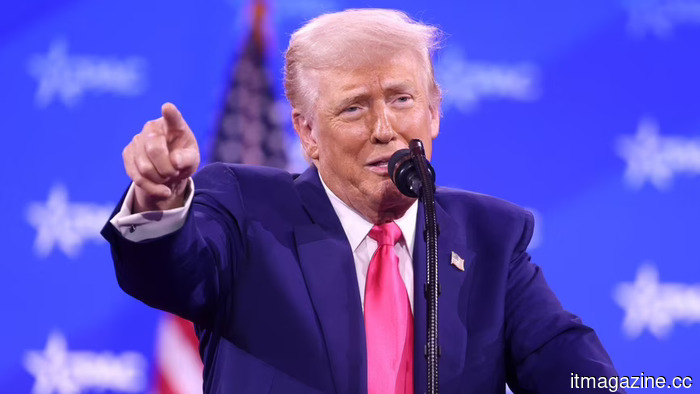
According to a book, Trump ridiculed Zuckerberg and Bezos for their subservient behavior.
A new book presents a critical view of how the most influential figures in Silicon Valley managed Donald Trump’s return to power. The authors claim that these leaders were submissive, while Trump allegedly ridiculed them behind their backs.
Titled “Regime Change: Inside the Imperial Presidency of Donald Trump,” the book is authored by New York Times journalists Maggie Haberman and Jonathan Swan. Wired acquired an advance copy prior to its release on June 23. The assertions regarding Big Tech are notable, although the White House has not validated them.
‘First-rate subservience’
Following the 2024 election, the book states that Mark Zuckerberg and Jeff Bezos hurriedly tried to win Trump’s favor. At Mar-a-Lago, Trump purportedly revealed to Elon Musk the messages they had sent him. "Consider where these guys were in 2016," he reportedly said. "They despised me … And look at them now."
Musk’s alleged response was straightforward: “first-rate subservience.” The authors further note that Trump later told associates the executives were “kissing my a–.” He also boasted, “You wouldn’t believe the texts I received from these tech guys.”
The letters and the anthem
Some details are particularly vivid. The book claims Zuckerberg sent Trump a text containing a picture of a letter from his young child, who expressed excitement about a “golden age of America,” mirroring a Trump campaign slogan.
During Zuckerberg's visit around Thanksgiving 2024, the authors state that Trump played the national anthem as performed by a choir of individuals jailed following the January 6 events.
Bezos, the Post, and a jab at SpaceX
Bezos is prominently featured as well. According to the book, he criticized his own newspaper, The Washington Post, during a dinner at Mar-a-Lago: "The people there are awful. They don’t pay attention." More importantly in the tech arena, he allegedly urged Trump to distribute federal space contracts more broadly, arguing that relying solely on Musk’s SpaceX posed a national-security risk.
This suggestion would also benefit Bezos’s own rocket company, Blue Origin, which has had ongoing disputes with SpaceX over government contracts. The authors write that Trump expressed interest in the idea but ultimately did not follow through, instead strengthening his relationship with Musk and expanding SpaceX’s activities.
Why it matters
None of this has been confirmed, and the book comprises claims rather than official records.
The White House did not comment on the specifics, stating only that Trump aims to collaborate with “every American business … to solidify America’s innovative supremacy.” Nonetheless, the narrative underscores a striking theme: the rapid inclination of Silicon Valley towards Trump after the election. The same individuals were present in the front row at his inauguration.
If the book’s assertions hold true, it suggests that while Trump relished the attention, he did not hold it in high regard. It also serves as a reminder of the complicated dynamics between Bezos, Musk, and Trump.
Other articles
 Trust is the objective: supply-chain attacks in the era of AI.
This week’s two campaigns—TeamPCP's 1,000 compromised open-source packages and the misuse of Claude's chat feature—demonstrate that trust has become the latest target for attacks.
A startup claims it has solved the obstacle that was hindering AI progress.
Miami-based startup Subquadratic asserts that its SubQ model overcomes the limitations of 'quadratic attention.' Independent evaluations support many of its claims, though skepticism persists.
A startup claims it has solved the issue that was hindering AI progress.
Miami-based startup Subquadratic asserts that its SubQ model overcomes the 'quadratic attention' limitation. While independent evaluations support much of this claim, there are still lingering uncertainties.
Trust is the objective: supply-chain attacks in the era of AI.
This week’s two campaigns—TeamPCP's 1,000 compromised open-source packages and the misuse of Claude's chat feature—demonstrate that trust has become the latest target for attacks.
A startup claims it has solved the obstacle that was hindering AI progress.
Miami-based startup Subquadratic asserts that its SubQ model overcomes the limitations of 'quadratic attention.' Independent evaluations support many of its claims, though skepticism persists.
A startup claims it has solved the issue that was hindering AI progress.
Miami-based startup Subquadratic asserts that its SubQ model overcomes the 'quadratic attention' limitation. While independent evaluations support much of this claim, there are still lingering uncertainties.
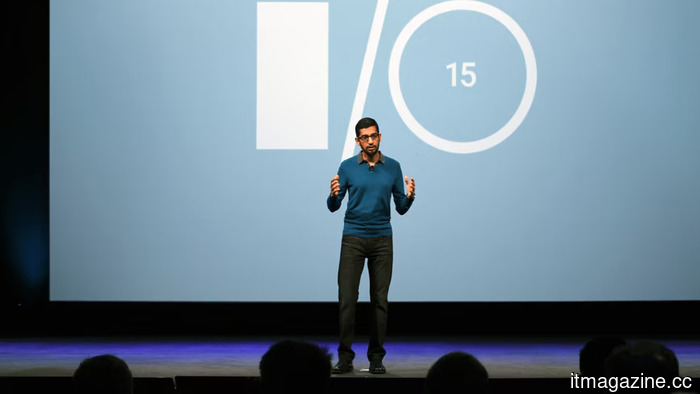 Google is following Nvidia's strategy to loosen its hold on AI chips.
Google is adopting Nvidia's strategy by employing financial assurances and circular financing to attract customers for its TPUs and to ease its control over AI chips.
Google is following Nvidia's strategy to loosen its hold on AI chips.
Google is adopting Nvidia's strategy by employing financial assurances and circular financing to attract customers for its TPUs and to ease its control over AI chips.
 The US claims that an ASML chip tool is located in China, while ASML refutes this.
Commerce Secretary Howard Lutnick indicates that one of ASML's leading chip manufacturing machines may have arrived in China. However, ASML maintains that it has never exported an EUV tool to the country.
The US claims that an ASML chip tool is located in China, while ASML refutes this.
Commerce Secretary Howard Lutnick indicates that one of ASML's leading chip manufacturing machines may have arrived in China. However, ASML maintains that it has never exported an EUV tool to the country.
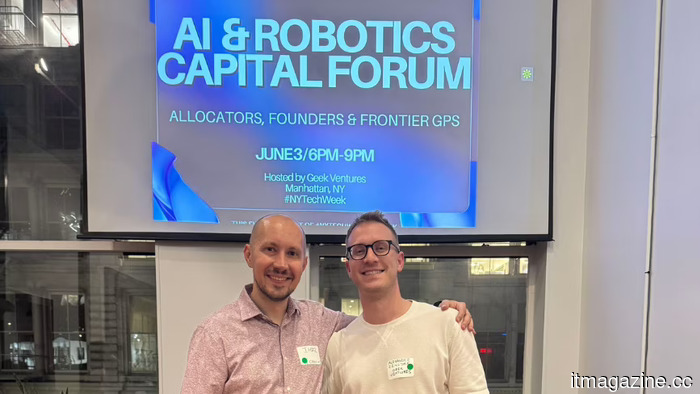 Geek Ventures, a venture capital firm focused on immigrants, is back with bigger investments.
Geek Ventures is in the process of raising a second fund of up to $40 million to provide larger pre-seed and seed investments for immigrant founders working in AI, robotics, and deep tech in the US, Europe, and Israel.
Geek Ventures, a venture capital firm focused on immigrants, is back with bigger investments.
Geek Ventures is in the process of raising a second fund of up to $40 million to provide larger pre-seed and seed investments for immigrant founders working in AI, robotics, and deep tech in the US, Europe, and Israel.
According to a book, Trump ridiculed Zuckerberg and Bezos for their subservient behavior.
A recent book by Haberman & Swan alleges that Trump privately ridiculed Zuckerberg and Bezos for seeking his approval, presenting Musk with their messages as examples of "first-class groveling."