

France increases its Tibi tech-funding framework by €13 billion.
France has secured an additional €13 billion for its technology sector, with minimal cost to the state. This funding is part of Tibi, a program that encourages French insurers and pension funds to invest in venture and growth funds rather than opting for safer, lower-yield investments. The finance ministry unveiled this third phase at the VivaTech event on Friday, aiming to reach a total of €15 billion by 2030.
How Tibi operates
The innovative aspect of Tibi is that it does not function as a government fund and does not create a new public money source. Instead, Paris motivates large institutional investors to invest their own funds, categorizing the qualifying funds accordingly. The Treasury decides which funds receive the Tibi endorsement.
This strategy has proven effective so far. The initial phase, running from 2020 to 2022, targeted €6 billion and attracted €6.4 billion. A government audit revealed that the initiative nearly tripled annual investment in French technology, incurring little expense for the budget. This funding has benefitted scale-ups like Doctolib, Exotec, and BlaBlaCar.
New investments and new investors
This phase expands the participant pool. In addition to private insurers such as AXA and Groupama, the ministry has involved state-related entities: rail operator SNCF, Paris transport group RATP, satellite company Eutelsat, and defense firms Naval Group and MBDA.
This inclusion is significant, as institutional investors have typically avoided defense technology. Their participation represents a notable shift, with half of the new funding allocated for deeptech ventures.
The pan-European approach
The main geographic change is substantial. The first two phases primarily focused on France, while phase three aims to support pan-European funds that can issue larger investments across multiple countries.
The reasoning is well-known by now: Europe excels at launching companies but often loses them when they seek substantial growth capital. Thus, Paris aims for small and mid-sized companies to scale and go public while remaining in Europe, rather than being acquired or relocating abroad. TNW has discussed why public funding continually seeks to address this gap, along with the systemic challenges involved.
Tibi versus Brussels
France is not the only nation pursuing this approach. The EU has its own solution: the European Tech Champions Initiative, managed by the European Investment Fund. The EIF has also initiated a €3.75 billion fund of funds to retain scale-ups within Europe, along with a separate Scaleup Europe Fund that directly supports companies.
The key difference lies in control. Tibi is managed by the French Treasury and relies on French capital, allowing Paris to have decision-making authority. The ETCI gathers commitments from various governments through an EU institution, which then selects the funds. France believes that a single government can act more swiftly than 27, while Brussels contends that only a supranational scheme can effectively achieve a pan-European impact.
Importance of these efforts
Both initiatives are pursuing the same goal: growth-stage European companies that need more than €50 million, the precise point at which US investors typically become involved. This overlap raises a challenging question that France has not completely addressed. Some investors or backers of Tibi may also participate in the EU’s initiative, potentially leading to competition for the same funds.
Nevertheless, the key takeaway is clear. Over the past five years, France has demonstrated that institutional capital will invest domestically if the government creates the right environment. Phase three will be a crucial test to ascertain whether that capital will also cross borders and to determine if Europe’s ambition for technological independence is a cohesive strategy or merely two similar ones operating concurrently.
Other articles
 OpenAI recruits Trump's AI architect and Google's Shazeer.
Prior to its IPO, OpenAI has brought on Dean Ball, the creator of Trump's AI Action Plan, to lead a newly formed policy team, just days after acquiring Shazeer from Google.
OpenAI recruits Trump's AI architect and Google's Shazeer.
Prior to its IPO, OpenAI has brought on Dean Ball, the creator of Trump's AI Action Plan, to lead a newly formed policy team, just days after acquiring Shazeer from Google.
 France increases its Tibi tech-funding model by €13 billion.
France has raised an additional €13 billion through its Tibi initiative, the insurer-supported model that Europe continues to examine, now focused on financing scale-ups across the continent.
France increases its Tibi tech-funding model by €13 billion.
France has raised an additional €13 billion through its Tibi initiative, the insurer-supported model that Europe continues to examine, now focused on financing scale-ups across the continent.
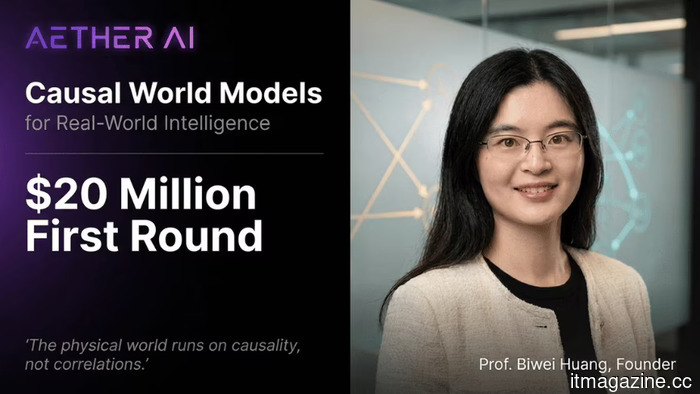 Aether AI secures $20 million to develop causal world models.
Aether AI, established by UCSD researcher Biwei Huang, has secured $20 million to develop causal world models for robots, directly challenging the conventional approach to AI scaling.
Aether AI secures $20 million to develop causal world models.
Aether AI, established by UCSD researcher Biwei Huang, has secured $20 million to develop causal world models for robots, directly challenging the conventional approach to AI scaling.
 Trust is the objective: the emerging supply-chain attacks in the AI era.
This week’s two campaigns, involving TeamPCP's 1,000 compromised open-source packages and the misuse of Claude's chat feature, demonstrate that trust has become the latest target for attacks.
Trust is the objective: the emerging supply-chain attacks in the AI era.
This week’s two campaigns, involving TeamPCP's 1,000 compromised open-source packages and the misuse of Claude's chat feature, demonstrate that trust has become the latest target for attacks.
 HyperLight secures $80 million to expand TFLN photonics for artificial intelligence.
HyperLight has secured $80 million in a Series C funding round, led by MediaTek, to expand its thin-film lithium niobate photonics for the optical interconnects necessary for AI data centers.
HyperLight secures $80 million to expand TFLN photonics for artificial intelligence.
HyperLight has secured $80 million in a Series C funding round, led by MediaTek, to expand its thin-film lithium niobate photonics for the optical interconnects necessary for AI data centers.
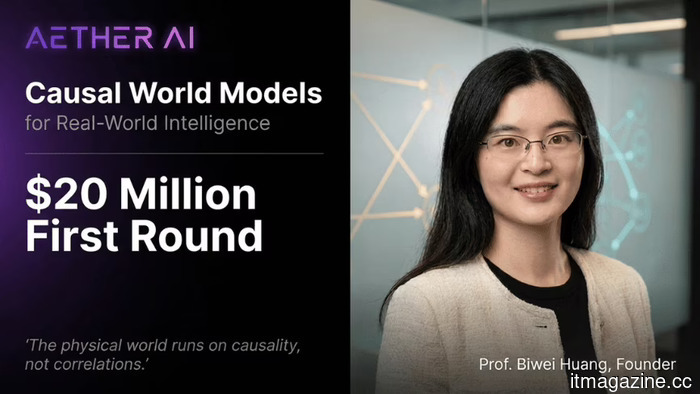 Aether AI secures $20 million to develop causal world models.
Aether AI, established by UCSD researcher Biwei Huang, has secured $20 million to develop causal world models for robots, directly opposing the prevailing scaling approach in AI.
Aether AI secures $20 million to develop causal world models.
Aether AI, established by UCSD researcher Biwei Huang, has secured $20 million to develop causal world models for robots, directly opposing the prevailing scaling approach in AI.
France increases its Tibi tech-funding framework by €13 billion.
France has raised an additional €13 billion through its Tibi initiative, which is the insurance-backed model that Europe continues to examine, now focused on financing scale-ups across the continent.