

Within the uprising at Meta's Applied AI division
It requires a specific form of dysfunction for an employee to seize control of a company-wide livestream and insist that the hosts relay a message to a senior executive, essentially labeling him as worthless. This occurred at Meta recently. According to a recording obtained by WIRED, the outburst during a call accessible to thousands of staff was not merely aimed at one executive. It represented a significant indication of how severely the situation has deteriorated within the Applied AI division, a unit of approximately 6,500 people that Mark Zuckerberg established in March to support his substantial investment in artificial intelligence.
“It's literally the gulag,” one employee told WIRED. “Suddenly, you have no sense of purpose in life.”
The $14.3 billion investment, which includes a key figure named Alexandr Wang, is noteworthy. Last summer, Meta acquired a 49% stake in Wang's data-labeling startup, Scale AI, for $14.3 billion, appointing the young founder as the chief AI officer overseeing the new Meta Superintelligence Labs. Applied AI is intended to transform his models from potentially effective to competitive with systems like Claude and ChatGPT.
The issue lies in the functionality of that machinery. Applied AI is directed by Maher Saba, a 12-year veteran at Meta and former vice president of Reality Labs, and reports to chief technology officer Andrew Bosworth. As documented by Gergely Orosz of The Pragmatic Engineer in a comprehensive account, between 30% and 50% of engineers in core product, infrastructure, and security teams were reassigned to an internal group dedicated to data labeling and reinforcement learning from human feedback— the essential, manual tasks needed to enhance AI models. Currently, around 6,500 individuals are part of this group; Orosz estimates that one in every five or six engineers at Meta may now be engaged in full-time data labeling.
Throughout most of Meta's history, engineers had the freedom to select their teams. However, according to an internal memo from the unit's leader seen by Reuters, these transfers were mandatory. Those who were reassigned against their will began referring to themselves as draftees.
All of this unfolded in a broader context. In May, Meta eliminated approximately 8,000 jobs—about a tenth of its workforce—just days after shifting thousands onto AI teams. Around the same period, employees protested against a system that monitored their keystrokes and mouse movements to collect AI training data, with no opt-out option; over 1,600 signed a petition, with one office dubbing it the “Employee Data Extraction Factory.” Following the backlash, Reuters reported on June 2 that Meta had started allowing employees to pause the tracking for up to half an hour at a time and to request exemptions.
Additionally, there were incentives. Engineers learned that token usage would factor into performance evaluations, leading them to recklessly consume tokens for status reasons, a trend the industry termed "tokenmaxxing." According to The Information, Meta staff utilized 60.2 trillion AI tokens within 30 days, which would amount to hundreds of millions of dollars at retail prices. The disturbing outcome, as Orosz points out, is that while an outage caused by poorly generated AI code might not result in termination, hand-coding could.
This culture comes with a price. On May 30, Meta experienced what Orosz labeled the most embarrassing outage in its history: numerous Instagram account takeovers, including those of notable accounts, after its support AI could allegedly be deceived into sending a password-reset code to an attacker’s email. Meta’s security teams, depleted by reassignments, were unprepared; its chief information security officer left just days later. Moreover, Meta was forced to halt some AI data work after a breach endangered training secrets.
Leadership has acknowledged the reality. CTO Andrew Bosworth informed staff that the AI reorganization was “atrocious” and noted that morale was at one of its lowest points in 20 years, reminiscent of the Cambridge Analytica scandal. Chief product officer Chris Cox described the “insanity of this company” and compared the current situation to “running a marathon in the middle of a hailstorm,” while emphasizing the importance of a reality check about technology itself, asserting that AI is “neither god, nor is it the devil.”
Now Zuckerberg is attempting to stabilize the situation. In a memo last Friday, he admitted the changes had “caused distress” and that “we’ve made mistakes and will almost certainly make more.” He guaranteed there would be no additional company-wide layoffs for the remainder of 2026, aimed at capping a manager-to-report ratio that had swelled to nearly 50-to-one in teams like Applied AI, increased budgets for team events, and proposed a company-wide AI hackathon, an idea employees openly disliked.
Whether these measures will be sufficient to retain talent remains uncertain: Orosz reports a rise in Meta engineers seeking out interview-preparation
Other articles
 Two of the most popular games in the Call of Duty franchise are set to be released on modern PlayStation consoles.
Treyarch has announced that Call of Duty: Black Ops and Black Ops 2 are being adapted for current PlayStation consoles by Iron Galaxy. These iconic shooters will feature campaign mode, multiplayer, and Zombies, providing PlayStation users the opportunity to return to two of the franchise’s most cherished titles.
Two of the most popular games in the Call of Duty franchise are set to be released on modern PlayStation consoles.
Treyarch has announced that Call of Duty: Black Ops and Black Ops 2 are being adapted for current PlayStation consoles by Iron Galaxy. These iconic shooters will feature campaign mode, multiplayer, and Zombies, providing PlayStation users the opportunity to return to two of the franchise’s most cherished titles.
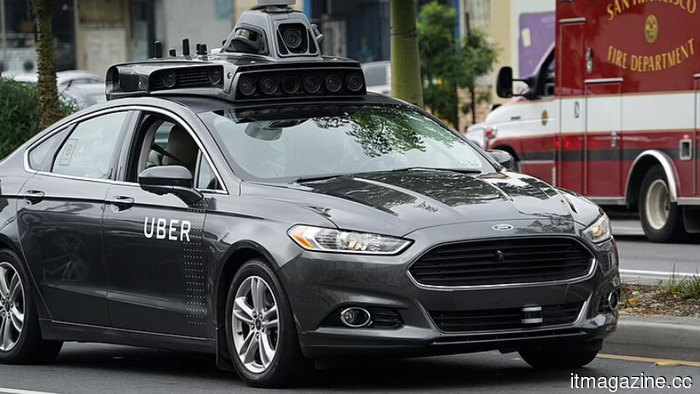 Life360 now allows parents to request Uber rides for their teenagers directly from the app.
Life360 incorporated Uber Family, enabling parents to request rides to their teen's current location. Uber teen accounts have successfully completed tens of millions of trips worldwide.
Life360 now allows parents to request Uber rides for their teenagers directly from the app.
Life360 incorporated Uber Family, enabling parents to request rides to their teen's current location. Uber teen accounts have successfully completed tens of millions of trips worldwide.
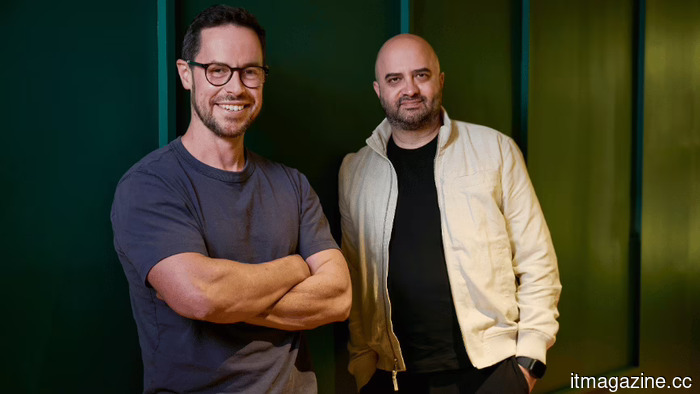 Verse, supported by Nvidia, has secured $54 million to enhance AI data center capabilities.
Verse secured $54 million in a Series B funding round led by Bessemer, with support from Nvidia, to assist AI data centers in bypassing the grid queue through the use of on-site batteries.
Verse, supported by Nvidia, has secured $54 million to enhance AI data center capabilities.
Verse secured $54 million in a Series B funding round led by Bessemer, with support from Nvidia, to assist AI data centers in bypassing the grid queue through the use of on-site batteries.
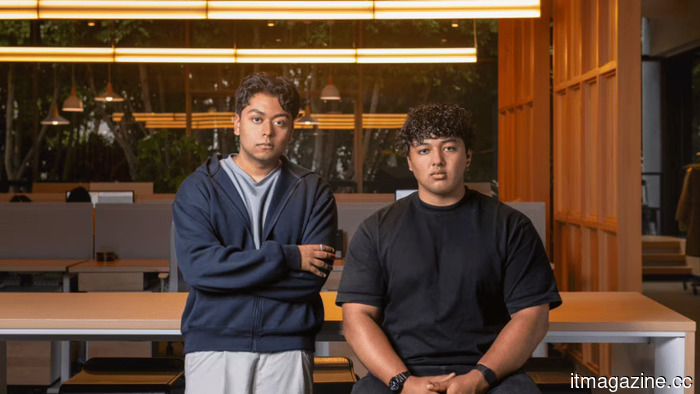 Architect Labs secures $24 million for the design of custom AI chips.
Architect Labs secured $24 million in seed funding led by Kindred Ventures to develop an AI that designs and validates custom chips, positioning itself against Broadcom and Marvell.
Architect Labs secures $24 million for the design of custom AI chips.
Architect Labs secured $24 million in seed funding led by Kindred Ventures to develop an AI that designs and validates custom chips, positioning itself against Broadcom and Marvell.
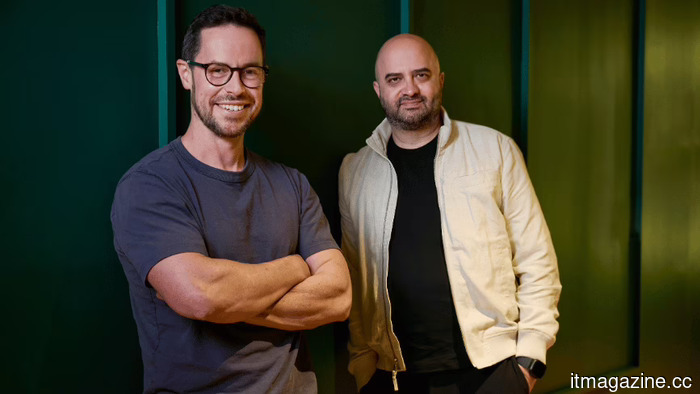 Nvidia-supported Verse secures $54 million for AI data center energy.
Verse secured $54 million in a Series B funding round led by Bessemer, with Nvidia as one of the investors, to assist AI data centers in bypassing the grid queue by utilizing on-site batteries.
Nvidia-supported Verse secures $54 million for AI data center energy.
Verse secured $54 million in a Series B funding round led by Bessemer, with Nvidia as one of the investors, to assist AI data centers in bypassing the grid queue by utilizing on-site batteries.
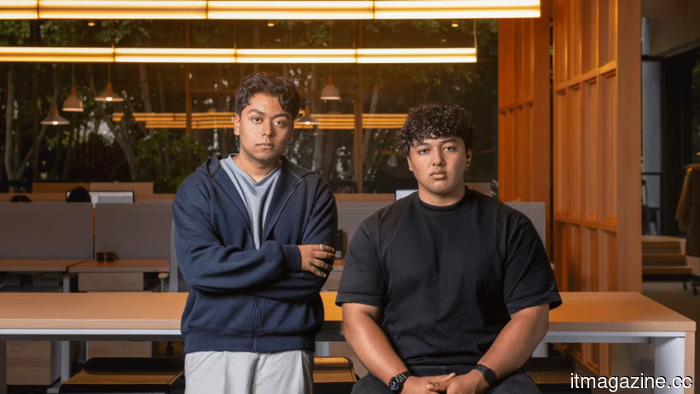 Architect Labs secures $24 million for the design of custom AI chips.
Architect Labs secured $24 million in seed funding, led by Kindred Ventures, to develop an AI that creates and verifies custom chips, aiming to compete with Broadcom and Marvell.
Architect Labs secures $24 million for the design of custom AI chips.
Architect Labs secured $24 million in seed funding, led by Kindred Ventures, to develop an AI that creates and verifies custom chips, aiming to compete with Broadcom and Marvell.
Within the uprising at Meta's Applied AI division
Meta's Applied AI division, consisting of 6,500 employees, is in outright rebellion, as top engineers are being assigned to label data, and even the CTO has labeled the reorganization as 'atrocious'.