

California had anticipated a significant tax windfall from AI IPOs, but contemporary compensation frameworks might reduce the expected gains.
California anticipated receiving billions from the IPOs of SpaceX, OpenAI, and Anthropic. However, mechanisms like single-trigger RSUs, tender offers, and loans against shares are diminishing the potential financial boost.
SpaceX is currently valued at $2.5 trillion, with OpenAI and Anthropic expected to go public later this year at nearly $1 trillion each. Given that all three companies have a significant presence in California, the state was set to experience its largest IPO tax influx ever. Nevertheless, the actual outcome may be more complex.
Facebook's 2012 IPO resulted in $1.3 billion in taxes for California based on a $104 billion valuation. Estimating the tax revenue from IPOs valued 10 to 25 times higher might imply proportionally greater returns. However, the compensation methods for tech employees have evolved, along with strategies to minimize tax liabilities.
SpaceX employs an unconventional stock-pay structure for a private company. While most startups issue dual-trigger RSUs—where shares vest upon meeting two conditions, continued employment and a liquidity event like an IPO—many SpaceX employees have single-trigger RSUs, which vest based solely on employment. As a result, these employees have been paying income taxes on their shares for years, leading to an acceleration of tax revenue that complicates projections.
According to the California Legislative Analyst’s Office, this structure makes it difficult to forecast SpaceX’s tax impact. The LAO noted that “revenue totals will depend more on financial decisions made by employees and investors who hold pre-IPO SpaceX shares and stock options,” indicating that tax revenue from SpaceX's IPO will likely be less immediate and more uncertain compared to previous IPOs.
Additionally, tender offers have reduced the available tax pool. OpenAI conducted a $6.6 billion secondary share sale at a $500 billion valuation and is planning another at $852 billion. Employees across all three companies have had numerous chances to sell pre-IPO shares, which were taxed when sold, though the revenue was received prior to the IPO rather than on the anticipated date.
The “buy, borrow, die” strategy represents a significant structural leakage. Rather than selling shares and incurring capital gains tax, shareholders take out loans against their stock. They pay interest instead of taxes, maintain their investments, and benefit from future value increases. Elon Musk has notably employed this tactic, borrowing against billions in Tesla shares instead of selling them. Now, a growing network of wealth managers, donor-advised funds, and financial advisors is making these options accessible to everyday employees in addition to founders.
As Richard Lowry of Cresset observed, “Historically, the only people who had equity in a private company and were in a position to give it away were millionaire or billionaire founders." Now, there is a burgeoning industry enabling individuals to take advantage of these strategies.
California's Franchise Tax Board is known for its rigorous auditing, as noted by tax analyst Robert Willens. The state will still gather substantial revenue from RSU vesting, but this windfall is likely to be spread out over several years instead of being concentrated in a single quarter, and more sophisticated shareholders will significantly reduce their tax liabilities. Both Anthropic and OpenAI have filed confidentially for their IPOs, and their market listings could be delayed by economic factors. For California’s budget planners, while the AI IPO windfall is substantial and real, it is also unpredictable and diffuse, contrasting sharply with the more concentrated revenue seen from Facebook's IPO.
Other articles
 The EU is set to designate AWS and Azure as gatekeepers under the Digital Markets Act.
Next week, the European Commission will present initial findings indicating that AWS and Azure satisfy the gatekeeper criteria of the DMA. This will be accompanied by measures to enhance interoperability and limit lock-in.
The EU is set to designate AWS and Azure as gatekeepers under the Digital Markets Act.
Next week, the European Commission will present initial findings indicating that AWS and Azure satisfy the gatekeeper criteria of the DMA. This will be accompanied by measures to enhance interoperability and limit lock-in.
 AVP and Earlybird introduce a €500 million fund for European defense.
AVP and Earlybird have introduced E2D, a €500 million fund aimed at European defence and dual-use startups, while the US continues to account for 85% of NATO defence technology financing.
AVP and Earlybird introduce a €500 million fund for European defense.
AVP and Earlybird have introduced E2D, a €500 million fund aimed at European defence and dual-use startups, while the US continues to account for 85% of NATO defence technology financing.
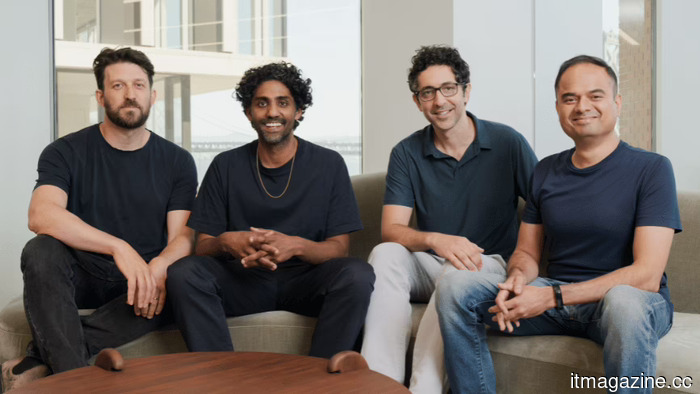 Baseten secures $1.5 billion at a valuation of up to $13 billion for AI inference.
Baseten is securing $1.5 billion in a two-tier funding round, with valuations of $11 billion and $13 billion. The company is wagering that the true value of AI lies in affordable inference as open-source models challenge OpenAI.
Baseten secures $1.5 billion at a valuation of up to $13 billion for AI inference.
Baseten is securing $1.5 billion in a two-tier funding round, with valuations of $11 billion and $13 billion. The company is wagering that the true value of AI lies in affordable inference as open-source models challenge OpenAI.
 AVP and Earlybird introduce a €500 million fund for European defense.
AVP and Earlybird have introduced E2D, a €500 million fund aimed at European defence and dual-use startups, while the US continues to dominate with 85% of NATO defence technology funding.
AVP and Earlybird introduce a €500 million fund for European defense.
AVP and Earlybird have introduced E2D, a €500 million fund aimed at European defence and dual-use startups, while the US continues to dominate with 85% of NATO defence technology funding.
 California anticipated a significant tax windfall from AI IPOs. However, contemporary compensation frameworks may diminish this gain.
SpaceX, OpenAI, and Anthropic have the potential to produce billions in tax revenue for California. However, single-trigger RSUs, tender offers, and buy-borrow-die approaches are restricting this revenue.
California anticipated a significant tax windfall from AI IPOs. However, contemporary compensation frameworks may diminish this gain.
SpaceX, OpenAI, and Anthropic have the potential to produce billions in tax revenue for California. However, single-trigger RSUs, tender offers, and buy-borrow-die approaches are restricting this revenue.
 Accenture shares fall by 20%, while the company acquires $4.18 billion in cybersecurity services.
Accenture's stock dropped a historic 20% amid concerns that AI is impacting the consulting industry, despite its agreement to acquire Dragos, runZero, and NetRise for $4.18 billion in cybersecurity.
Accenture shares fall by 20%, while the company acquires $4.18 billion in cybersecurity services.
Accenture's stock dropped a historic 20% amid concerns that AI is impacting the consulting industry, despite its agreement to acquire Dragos, runZero, and NetRise for $4.18 billion in cybersecurity.
California had anticipated a significant tax windfall from AI IPOs, but contemporary compensation frameworks might reduce the expected gains.
SpaceX, OpenAI, and Anthropic have the potential to generate billions in tax revenue for California. However, approaches like single-trigger RSUs, tender offers, and buy-borrow-die strategies are restraining the overall contribution.