

California anticipated a significant tax windfall from AI IPOs. However, contemporary compensation models might reduce the expected gains.
California anticipated a significant financial boost from upcoming IPOs of SpaceX, OpenAI, and Anthropic, potentially amounting to billions. However, strategies such as single-trigger RSUs, tender offers, and loans against shares are diminishing that potential windfall.
SpaceX is currently valued at $2.5 trillion, while OpenAI and Anthropic are expected to go public later this year with valuations nearing $1 trillion each. Given that all three companies are either headquartered or have a significant presence in California, the state seemed poised for its largest IPO tax revenue ever. However, the situation is more complex than it initially appears.
Facebook's IPO in 2012 generated $1.3 billion in taxes for California based on a valuation of $104 billion. Basic calculations suggest that IPOs valued at 10 to 25 times that amount should yield proportionally greater tax revenues. Yet, the compensation methods for tech employees have evolved, along with techniques for minimizing tax liabilities.
Unlike most startups that offer dual-trigger RSUs, where shares vest only upon continued employment and a liquidity event like an IPO—creating a substantial taxable event on IPO day—SpaceX employs a less common stock-pay structure. Many SpaceX employees have single-trigger RSUs, allowing their shares to vest solely based on employment. Consequently, they have been incurring income tax on these shares for years, leading to earlier tax payments and making future revenue less predictable.
The California Legislative Analyst’s Office (LAO) noted that this structure complicates the estimation of SpaceX's tax contributions. The LAO indicated that actual revenue will largely depend on the financial choices of employees and investors holding pre-IPO shares and stock options, positing that the tax revenues from the SpaceX IPO will likely be less immediate and more uncertain compared to previous IPOs.
Additionally, tender offers have further diminished potential earnings. OpenAI conducted a $6.6 billion secondary share sale at a $500 billion valuation and plans another at $852 billion. Employees across all three companies have had numerous opportunities to sell pre-IPO shares, with taxes applied to those gains collected prior to the IPO, rather than on the scheduled IPO date.
The prevalent “buy, borrow, die” strategy presents another major issue. Instead of selling shares and incurring capital gains tax, shareholders are borrowing against their stock. They opt to pay interest instead of taxes, maintain their investments, and benefit from future stock appreciation. Elon Musk has notably utilized this approach, borrowing against billions in Tesla shares rather than liquidating them. This strategy is now accessible to more than just founders, thanks to a burgeoning industry of wealth managers, donor-advised funds, and financial advisors.
Historically, only wealthy founders had equity in private companies and were able to gift it, observed Richard Lowry from Cresset. Now, there are resources available for a broader range of employees to utilize similar strategies.
California’s Franchise Tax Board is known for its rigorous auditing practices, according to tax analyst Robert Willens. While the state will still gain considerable revenue from the vesting of RSUs, this influx will occur over several years instead of in a single quarter. Moreover, the most astute shareholders will significantly lower their tax burdens. Both Anthropic and OpenAI have submitted confidential filings, and their IPOs may be postponed due to market conditions. For California's budget planners, the anticipated windfall from AI IPOs is substantial but unpredictable, considerable yet less concentrated, and notably more dispersed than the outcomes of Facebook's IPO may suggest.
Other articles
 Adobe's significant week of AI: Firefly, Disney, Semrush, LinkedIn
In just three days, Adobe integrated an AI agent into Photoshop, secured a deal with Disney for Firefly, introduced a tool for monitoring brands in ChatGPT, and collaborated with LinkedIn.
Adobe's significant week of AI: Firefly, Disney, Semrush, LinkedIn
In just three days, Adobe integrated an AI agent into Photoshop, secured a deal with Disney for Firefly, introduced a tool for monitoring brands in ChatGPT, and collaborated with LinkedIn.
 The EU is set to designate AWS and Azure as gatekeepers under the Digital Markets Act.
Next week, the European Commission will reveal initial findings indicating that AWS and Azure satisfy the DMA gatekeeper criteria. This will be followed by measures to enhance interoperability and reduce lock-in.
Yann LeCun describes xAI as a 'failure' and cautions about a potential AI bubble.
Yann LeCun labeled Musk's xAI as a 'failure' and cautioned that AI labs might encounter a 'significant bubble burst' if they do not increase their prices, all while securing $1 billion for his own venture.
The EU is set to designate AWS and Azure as gatekeepers under the Digital Markets Act.
Next week, the European Commission will reveal initial findings indicating that AWS and Azure satisfy the DMA gatekeeper criteria. This will be followed by measures to enhance interoperability and reduce lock-in.
Yann LeCun describes xAI as a 'failure' and cautions about a potential AI bubble.
Yann LeCun labeled Musk's xAI as a 'failure' and cautioned that AI labs might encounter a 'significant bubble burst' if they do not increase their prices, all while securing $1 billion for his own venture.
 Accenture's stock fell by 20% while the company acquired $4.18 billion worth of cybersecurity.
Accenture's stock dropped an unprecedented 20% amid concerns that AI is impacting the consulting industry, despite the company's decision to acquire Dragos, runZero, and NetRise for $4.18 billion in the cybersecurity sector.
Accenture's stock fell by 20% while the company acquired $4.18 billion worth of cybersecurity.
Accenture's stock dropped an unprecedented 20% amid concerns that AI is impacting the consulting industry, despite the company's decision to acquire Dragos, runZero, and NetRise for $4.18 billion in the cybersecurity sector.
 Accenture shares fall by 20%, while the company acquires $4.18 billion in cybersecurity services.
Accenture's stock dropped a historic 20% amid concerns that AI is impacting the consulting industry, despite its agreement to acquire Dragos, runZero, and NetRise for $4.18 billion in cybersecurity.
Accenture shares fall by 20%, while the company acquires $4.18 billion in cybersecurity services.
Accenture's stock dropped a historic 20% amid concerns that AI is impacting the consulting industry, despite its agreement to acquire Dragos, runZero, and NetRise for $4.18 billion in cybersecurity.
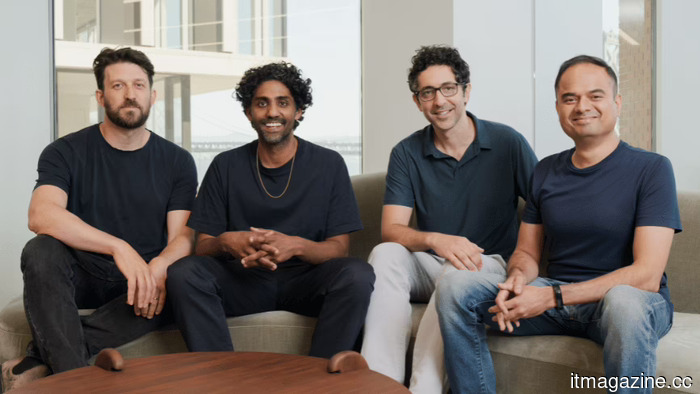 Baseten secures $1.5 billion at a valuation of up to $13 billion for AI inference.
Baseten is securing $1.5 billion in a two-tier funding round, with valuations of $11 billion and $13 billion. The company is wagering that the true value of AI lies in affordable inference as open-source models challenge OpenAI.
Baseten secures $1.5 billion at a valuation of up to $13 billion for AI inference.
Baseten is securing $1.5 billion in a two-tier funding round, with valuations of $11 billion and $13 billion. The company is wagering that the true value of AI lies in affordable inference as open-source models challenge OpenAI.
California anticipated a significant tax windfall from AI IPOs. However, contemporary compensation models might reduce the expected gains.
SpaceX, OpenAI, and Anthropic have the potential to generate billions in tax revenue for California. However, strategies such as single-trigger RSUs, tender offers, and buy-borrow-die are constraining the overall amount collected.