

AVP and Earlybird introduce a €500 million fund for European defense.
Europe is committing hundreds of billions to its defense. However, very little of the venture capital financing the associated technology comes from Europe itself. Since 2019, the United States has secured approximately 85 percent of all NATO defense-tech venture funding, as reported by the founders of a new fund launched today. In 2025, Europe contributed merely 6.2 percent of NATO-wide defense-tech venture capital, even as the continent's defense budgets soared.
AVP and Earlybird aim to reduce this disparity. The two firms have created E2D, a €500 million growth-stage fund dedicated to European defense and dual-use technology, with the clear intention of retaining startups’ capital, talent, and intellectual property within Europe. The objective is to invest around €25 million each into about 20 companies. A first closing is scheduled for June 30, with significant backing from financial institutions and corporations, and the initial investment anticipated by the summer.
The reason for the shift in funding now relates to a notable transformation in European security spending over the past generation. France has allocated €76 billion to defense, Germany €152 billion, and the EU has introduced a €800 billion plan. However, the funding to develop the technology has not kept pace with political commitments. Most institutional investors had shied away from the defense sector until recently, creating a gap between ambition and funding. Although European defense-tech financing has nearly doubled in a year, it remains at such a low level that, as reported by TNW, a single country like Germany can absorb a significant portion of it.
E2D specifically targets the growth stage, which is the point at which many European startups have historically turned to American or Asian investors for scaling. It will support what it describes as “modern operating models,” focusing on dynamic startups instead of traditional prime contractors across various domains including space, air, land, sea, and underwater.
The priority areas, which resemble a map of the emerging defense landscape, include semiconductors, high-performance computing, AI, New Space, effectors like robots and drones, and directed energy. An advisory committee composed of NATO, military, and industry experts will guide the investment decisions.
The two firms are not new entrants in the field. AVP manages more than €2.5 billion and has supported over 60 companies since 2016; Earlybird, established in 1997, also manages around €2.5 billion and boasts nine IPOs over nearly thirty years in European deep-tech investing. Both claim to have been active in defense and dual-use sectors long before most European funds were permitted to invest in them.
A more challenging issue is the scale of the initiative. E2D enters a relatively sparse landscape: it joins the NATO Innovation Fund which has €1 billion, along with a few others. Large growth-stage defense funds are still uncommon, and €500 million seems modest in light of an €800 billion spending initiative and the intellectual property retention it aims to address.
Thus, the critical figure to monitor is not the €500 million but the 85 percent. Whether a Franco-German fund can impact this figure, or if it will require the addition of ten more similar funds, will be a question that Europe's defense-tech ecosystem will contend with for the next decade.
Other articles
 California had anticipated a significant tax windfall from AI IPOs, but contemporary compensation frameworks might reduce the expected gains.
SpaceX, OpenAI, and Anthropic have the potential to generate billions in tax revenue for California. However, approaches like single-trigger RSUs, tender offers, and buy-borrow-die strategies are restraining the overall contribution.
California had anticipated a significant tax windfall from AI IPOs, but contemporary compensation frameworks might reduce the expected gains.
SpaceX, OpenAI, and Anthropic have the potential to generate billions in tax revenue for California. However, approaches like single-trigger RSUs, tender offers, and buy-borrow-die strategies are restraining the overall contribution.
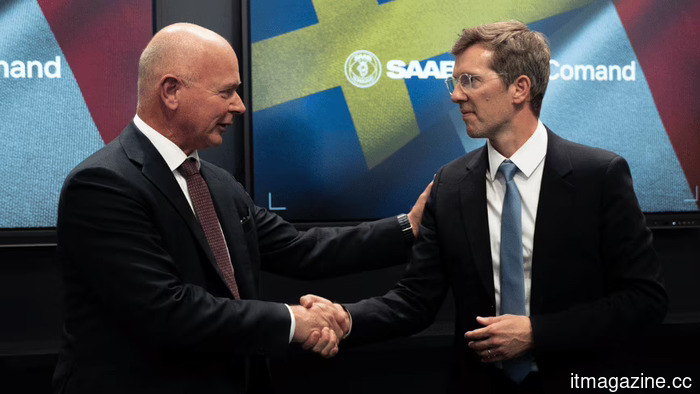 Comand AI secures €32 million for its AI military command software.
Comand AI secured a €32 million Series A funding round, spearheaded by Blossom Capital and supported by Saab, to expand its AI command platform Prevail, which is already in use with units in Ukraine.
Yann LeCun describes xAI as a 'failure' and cautions about a potential AI bubble.
Yann LeCun referred to Musk's xAI as a 'failure' and cautioned that AI laboratories could experience a significant 'bubble burst' if they do not increase their prices, while he secured $1 billion for his own investment.
Comand AI secures €32 million for its AI military command software.
Comand AI secured a €32 million Series A funding round, spearheaded by Blossom Capital and supported by Saab, to expand its AI command platform Prevail, which is already in use with units in Ukraine.
Yann LeCun describes xAI as a 'failure' and cautions about a potential AI bubble.
Yann LeCun referred to Musk's xAI as a 'failure' and cautioned that AI laboratories could experience a significant 'bubble burst' if they do not increase their prices, while he secured $1 billion for his own investment.
 California anticipated a significant tax windfall from AI IPOs. However, contemporary compensation frameworks may diminish this gain.
SpaceX, OpenAI, and Anthropic have the potential to produce billions in tax revenue for California. However, single-trigger RSUs, tender offers, and buy-borrow-die approaches are restricting this revenue.
California anticipated a significant tax windfall from AI IPOs. However, contemporary compensation frameworks may diminish this gain.
SpaceX, OpenAI, and Anthropic have the potential to produce billions in tax revenue for California. However, single-trigger RSUs, tender offers, and buy-borrow-die approaches are restricting this revenue.
 Accenture shares fall by 20%, while the company acquires $4.18 billion in cybersecurity services.
Accenture's stock dropped a historic 20% amid concerns that AI is impacting the consulting industry, despite its agreement to acquire Dragos, runZero, and NetRise for $4.18 billion in cybersecurity.
Accenture shares fall by 20%, while the company acquires $4.18 billion in cybersecurity services.
Accenture's stock dropped a historic 20% amid concerns that AI is impacting the consulting industry, despite its agreement to acquire Dragos, runZero, and NetRise for $4.18 billion in cybersecurity.
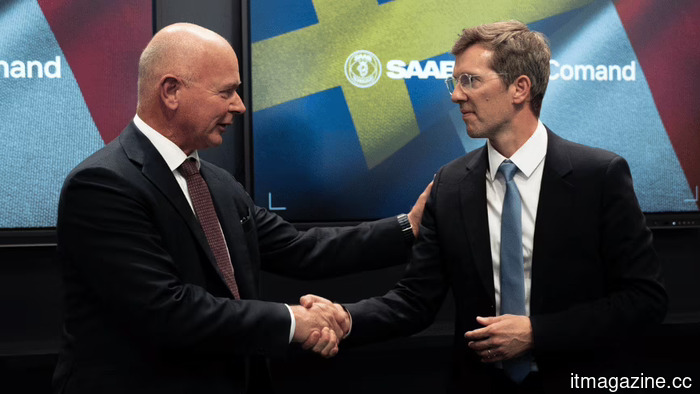 Comand AI secures €32M for its military command software powered by AI.
Comand AI secured €32 million in a Series A funding round led by Blossom Capital, with support from Saab, to expand its AI command platform, Prevail, which is already implemented with units in Ukraine.
Comand AI secures €32M for its military command software powered by AI.
Comand AI secured €32 million in a Series A funding round led by Blossom Capital, with support from Saab, to expand its AI command platform, Prevail, which is already implemented with units in Ukraine.
AVP and Earlybird introduce a €500 million fund for European defense.
AVP and Earlybird have introduced E2D, a €500 million fund aimed at European defence and dual-use startups, while the US continues to account for 85% of NATO defence technology financing.