
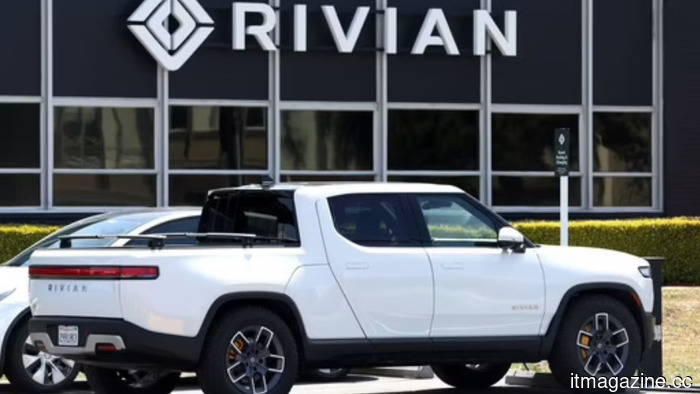
Rivian faces a lawsuit for making misleading claims about the self-driving capabilities of its first-generation R1.
Rivian is currently facing a class action lawsuit that accuses the company of making false promises regarding the autonomous driving features of its first-generation R1T truck and R1S SUV over the past five years. The lawsuit, submitted on Wednesday in the US District Court for the Central District of California, alleges that Rivian claimed its main vehicles would enable hands-free, eyes-off driving, which is categorized as Level 3 autonomy by the Society of Automobile Engineers. Rivian has chosen not to comment due to the ongoing litigation.
The lawsuit focuses on Driver+, Rivian’s driver assistance system, which the company purportedly marketed as a precursor to a fully hands-free operation across its vehicle lineup. The complaint highlights a "coordinated nationwide marketing campaign" over five years, including remarks from CEO RJ Scaringe during TechCrunch Disrupt in 2022.
The complaint states, "No software update, no matter how sophisticated, will enable its Gen 1 vehicles to perform as advertised." The three plaintiffs, represented by Coleman Law and Tycko & Zavareei, are pursuing a jury trial for claims of fraud, negligent misrepresentation, and unjust enrichment. The key accusation is that Rivian was aware its first-generation hardware could not deliver the driving features it promoted but continued to make such claims to drive sales. The first-generation R1 vehicles lack hands-free driving capability and never will, as their sensor suite and computing platform do not meet the necessary requirements.
On the other hand, Rivian's second-generation R1 vehicles, which underwent significant updates in 2024, do support hands-free driving. The enhancements introduced the Rivian Autonomy Platform, featuring 11 cameras, five radar sensors, and a computer that is ten times more powerful than the previous model. In December 2025, Rivian launched Universal Hands-Free via a software update, exclusive to second-generation vehicles, permitting drivers to remove their hands from the wheel on over 3.5 million miles of roads in the US and Canada, provided lane markings are visible.
The lawsuit argues that this capability required hardware that the first-generation vehicles did not possess, and Rivian was aware of this fact.
Rivian is not alone in facing legal challenges regarding self-driving claims. Tesla has spent years asserting that its vehicles would achieve full autonomy through its Full Self-Driving software, leading numerous owners to sue the company over its failure to provide truly unsupervised driving. In December 2025, a California administrative law judge found that Tesla’s marketing of Autopilot exemplified a “long but unlawful tradition” of using vague language to mislead consumers. Moreover, the company has been determined to have provided misleading safety data to European regulators regarding its driving systems. Following this ruling, Tesla removed the "Autopilot" name from its California advertising but has since filed a lawsuit against the DMV to contest the false advertising ruling.
Some engineers who developed Tesla’s self-driving AI have expressed that they would not use the system for rides. Additionally, Waymo, recognized as a leader in autonomous driving, has issued six recalls due to its robotaxis encountering scenarios their software could not manage.
This lawsuit is not Rivian's first costly legal issue; in October 2025, the company settled a class action shareholder lawsuit for $250 million after unexpectedly increasing prices on R1 models by nearly 20% in 2022. While this new lawsuit addresses a different promise, it raises the same fundamental question: to what extent can automakers promote capabilities that are not yet available, and are customers paying for technologies that the companies know they cannot deliver in the vehicles they are buying?
Otros artículos
 A 201-year-old mutual bank has recently established an AI Center of Excellence in collaboration with a startup partner.
Liberty Bank, the oldest mutual bank in the United States with assets amounting to $9 billion, has established an AI Center of Excellence in collaboration with enterprise AI partner Flare AI.
A 201-year-old mutual bank has recently established an AI Center of Excellence in collaboration with a startup partner.
Liberty Bank, the oldest mutual bank in the United States with assets amounting to $9 billion, has established an AI Center of Excellence in collaboration with enterprise AI partner Flare AI.
 General Intuition is securing $300 million for AI developed using gaming data.
The startup declined OpenAI's offer of $500 million for its gaming video data. It is now seeking to raise $300 million at a valuation of $2 billion to train AI agents using 2 billion video game clips annually.
General Intuition is securing $300 million for AI developed using gaming data.
The startup declined OpenAI's offer of $500 million for its gaming video data. It is now seeking to raise $300 million at a valuation of $2 billion to train AI agents using 2 billion video game clips annually.
 Apple allows rival app stores on iOS in Brazil.
Apple will permit alternative app marketplaces and third-party payments in Brazil with the release of iOS 26.5, as part of a CADE antitrust agreement. These modifications are similar to the concessions made in the EU.
Apple allows rival app stores on iOS in Brazil.
Apple will permit alternative app marketplaces and third-party payments in Brazil with the release of iOS 26.5, as part of a CADE antitrust agreement. These modifications are similar to the concessions made in the EU.
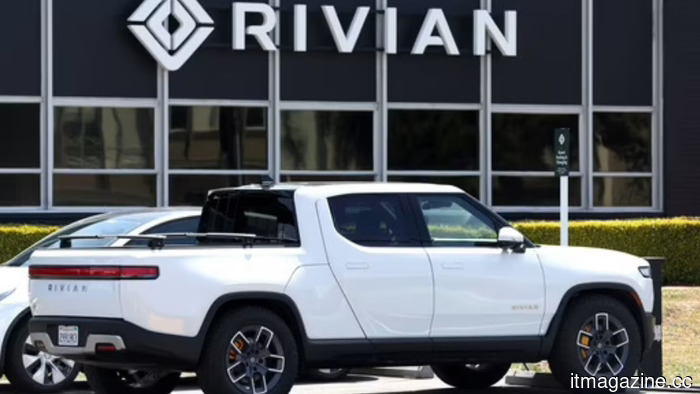 Rivian faces a lawsuit regarding misleading claims about self-driving capabilities for the Gen 1 R1.
A class action lawsuit claims that Rivian devoted five years to assuring customers of hands-free driving capabilities for its R1T and R1S vehicles, while being aware that the first-generation hardware would be incapable of supporting it.
Rivian faces a lawsuit regarding misleading claims about self-driving capabilities for the Gen 1 R1.
A class action lawsuit claims that Rivian devoted five years to assuring customers of hands-free driving capabilities for its R1T and R1S vehicles, while being aware that the first-generation hardware would be incapable of supporting it.
 General Intuition is securing $300 million for AI developed using gaming data.
The startup turned down OpenAI's $500 million offer for its gaming video data. It is now seeking to raise $300 million at a $2 billion valuation to train AI agents using 2 billion video game clips annually.
General Intuition is securing $300 million for AI developed using gaming data.
The startup turned down OpenAI's $500 million offer for its gaming video data. It is now seeking to raise $300 million at a $2 billion valuation to train AI agents using 2 billion video game clips annually.
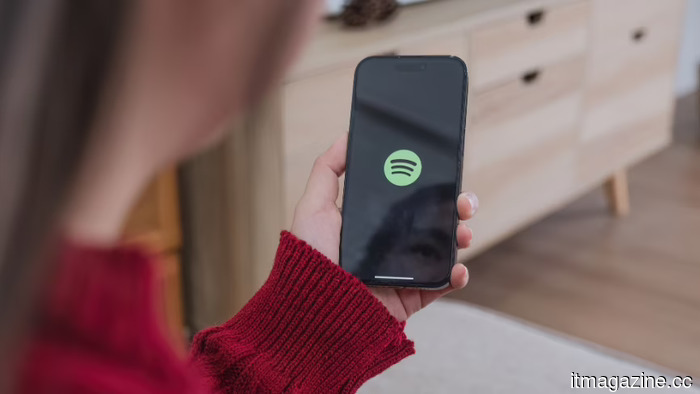 Spotify introduces Reserved ticketing for dedicated fans.
Spotify's Reserved feature retains concert tickets for Premium subscribers according to their listening habits, making its debut in the US through an exclusive multi-year partnership with Live Nation.
Spotify introduces Reserved ticketing for dedicated fans.
Spotify's Reserved feature retains concert tickets for Premium subscribers according to their listening habits, making its debut in the US through an exclusive multi-year partnership with Live Nation.
Rivian faces a lawsuit for making misleading claims about the self-driving capabilities of its first-generation R1.
A class action claims that Rivian spent five years guaranteeing hands-free driving for its R1T and R1S models, despite being aware that the first-generation hardware would never be able to support such features.