
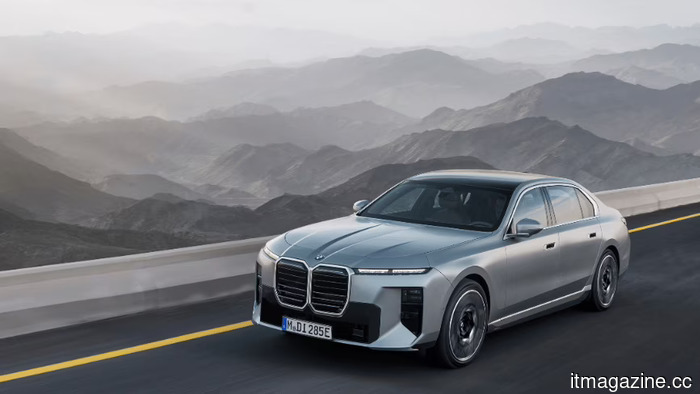
BMW cuts profit outlook as China puts pressure on Europe.
TL;DR BMW has lowered its car division's expected operating margin to 1-3 percent, down from 4-6 percent, citing a rapid decline in China and the impact of the Middle East situation. This warning underscores a dual challenge as Chinese manufacturers reduce European carmakers' profits in China while seizing nearly 10 percent market share in Europe.
On Tuesday, BMW revised its full-year profit outlook for the automotive sector, adjusting its anticipated EBIT margin to a range of 1 to 3 percent, a decrease from the previous 4 to 6 percent forecast. The company attributed this change to a significant downturn in the Chinese market and the economic repercussions of the conflict in the Middle East. As a result, BMW's stock fell to its lowest point since 2020. Its deliveries in China fell by 17.6 percent in the first five months of the year as local brands like BYD, Xiaomi, and NIO offered comparable technology at lower prices than European premium vehicles.
The diminishing profit pool in China is affecting BMW and other European automakers, who have been increasingly pushed out of the Chinese market due to the rise of cheaper, domestically produced electric vehicles that compete with the premium internal combustion cars that companies like BMW, Mercedes-Benz, and Volkswagen focus on.
Porsche, which has shifted away from its all-electric strategy after a dramatic 93 percent drop in operating profit last year, experienced a drop in China deliveries from 93,300 units in 2022 to about 41,900 in 2025. Analysts from Citigroup observed that in peak years, the Chinese market accounted for roughly half of the operating profits for both BMW and Mercedes-Benz. Volkswagen's operating profit from its Chinese joint ventures nearly halved last year to €958 million, with projections of just €200 million to €600 million from those ventures in 2026. The Chinese market is now contracting as the economy falters and subsidies are removed, resulting in domestic manufacturers having significant spare capacity for export.
In Europe, that spare capacity is being utilized, with Chinese manufacturers increasing their market share from nearly zero in 2021 to just under 10 percent, according to industry statistics, while they are also approaching 16 percent in the EV and plug-in hybrid sector. Geely has halted its new factory construction and started using Volvo's European facilities, a move that avoids EU tariffs while maintaining Chinese cost advantages. BYD has commenced trial production at a new Hungarian facility, with full-scale production anticipated this year.
While European carmakers have seen a slight rebound in sales this year, driven by new affordable models and a surge in EV sales due to oil prices exceeding $100 per barrel, Europe is not a burgeoning market. New aggressive entrants cannot expand without affecting the sales of established businesses.
S&P Global reports that the industry is currently utilizing about 70 percent of its production capacity, leading to disproportionately high fixed costs in relation to revenue, and any additional challenges, such as US tariffs or disruptions from the Middle East, severely impact margins. Some European car manufacturers are shifting toward defense contracts as EV demand fluctuates and military budgets rise, but those revenues still represent a small fraction of the overall automotive business profits.
In response, Brussels is implementing industrial policies, such as the proposed EU Industrial Accelerator Act, which would require local content for public procurement and subsidies, limiting access to vehicles assembled in the EU with at least 70 percent of non-battery components sourced from within Europe. Meanwhile, some European automakers have begun collaborating with their Chinese competitors rather than simply trying to undercut them on pricing. For instance, Stellantis and Dongfeng shared plans in May for a 51/49 European joint venture that would potentially lead to Dongfeng's electric vehicles being manufactured at Stellantis’s Rennes facility in France.
This pragmatic approach acknowledges that China has a structural manufacturing edge, not just due to subsidies, as evidenced by BYD controlling its battery supply chain, producing its own semiconductors, and operating at volumes unmatched by any European rival. BMW's profit warning underscores that Europe’s automotive sector faces challenges that tariffs alone cannot address. Chinese competition is simultaneously undermining margins in China and gaining traction in Europe, with the disparity between prices charged by European carmakers and those offered by Chinese competitors continuing to grow.
Other articles
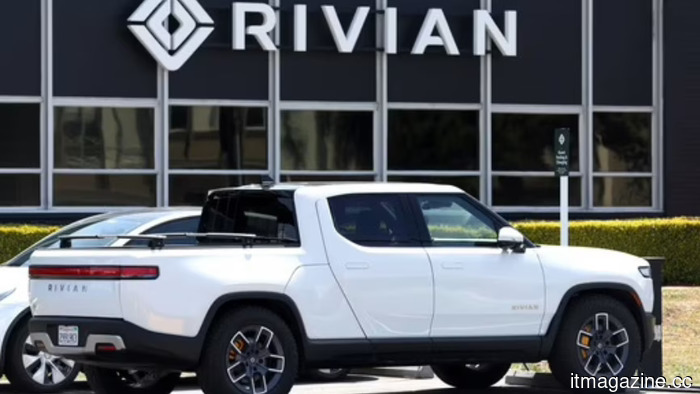 Rivian faces a lawsuit for misleading claims regarding self-driving capabilities for the first generation R1.
A class action lawsuit claims that Rivian spent five years assuring customers of hands-free driving capabilities for its R1T and R1S vehicles, despite being aware that the first-generation hardware was incapable of supporting such features.
Rivian faces a lawsuit for misleading claims regarding self-driving capabilities for the first generation R1.
A class action lawsuit claims that Rivian spent five years assuring customers of hands-free driving capabilities for its R1T and R1S vehicles, despite being aware that the first-generation hardware was incapable of supporting such features.
 Apple allows competitor app stores on iOS in Brazil.
Apple will permit alternative app marketplaces and third-party payment options in Brazil beginning with iOS 26.5, as a result of a CADE antitrust agreement. These modifications are similar to concessions made in the EU.
Apple allows competitor app stores on iOS in Brazil.
Apple will permit alternative app marketplaces and third-party payment options in Brazil beginning with iOS 26.5, as a result of a CADE antitrust agreement. These modifications are similar to concessions made in the EU.
 Spotify introduces Reserved ticketing for dedicated fans.
Spotify's Reserved feature retains concert tickets for Premium subscribers according to their listening habits, making its debut in the US through an exclusive multi-year partnership with Live Nation.
Spotify introduces Reserved ticketing for dedicated fans.
Spotify's Reserved feature retains concert tickets for Premium subscribers according to their listening habits, making its debut in the US through an exclusive multi-year partnership with Live Nation.
 Apple allows competing app stores on iOS in Brazil.
Apple will permit alternative app marketplaces and third-party payments in Brazil with the release of iOS 26.5, as a result of a CADE antitrust agreement. These modifications reflect concessions similar to those made in the EU.
Apple allows competing app stores on iOS in Brazil.
Apple will permit alternative app marketplaces and third-party payments in Brazil with the release of iOS 26.5, as a result of a CADE antitrust agreement. These modifications reflect concessions similar to those made in the EU.
 Within SURBL, the email blacklist that verifies your links rather than your IP address.
SURBL identifies the URLs within your emails instead of the sender's IP address. A single link to a flagged domain can quietly deactivate every link in a sent message, and most senders remain unaware of this occurrence.
Within SURBL, the email blacklist that verifies your links rather than your IP address.
SURBL identifies the URLs within your emails instead of the sender's IP address. A single link to a flagged domain can quietly deactivate every link in a sent message, and most senders remain unaware of this occurrence.
 Pre-orders for GTA 6 will begin on June 25 as Rockstar intensifies its launch campaign.
Rockstar Games has announced that pre-orders for GTA 6 will commence on June 25, providing fans with further assurance that the eagerly awaited game is still set for its November 2026 launch.
Pre-orders for GTA 6 will begin on June 25 as Rockstar intensifies its launch campaign.
Rockstar Games has announced that pre-orders for GTA 6 will commence on June 25, providing fans with further assurance that the eagerly awaited game is still set for its November 2026 launch.
BMW cuts profit outlook as China puts pressure on Europe.
BMW has revised its forecast for the car division's profit margin down to as low as 1%. Chinese manufacturers now account for almost 10% of the car market in Europe, while significantly reducing European profits in China.