
Apple allows competing app stores on iOS in Brazil.
TL;DR: Apple is set to allow alternative app marketplaces and third-party payment processing for iOS in Brazil after an antitrust settlement with CADE in December 2025. These changes will be implemented with iOS 26.5 and follow similar adjustments made in the EU under the Digital Markets Act.
On Wednesday, Apple announced modifications to iOS in Brazil that will enable developers to distribute applications through alternative marketplaces, manage their own app stores, and handle payment processing for digital items outside Apple's In-App Purchase system. These changes will come into effect with iOS 26.5 and are a result of a settlement with Brazil’s competition authority, CADE.
Brazil now joins the European Union, Japan, and South Korea as regions where Apple has been required to allow third-party app distribution. The pattern is becoming routine: regulators challenge Apple’s control over its ecosystem, leading the company to comply while introducing new fees and restrictions that diminish the appeal of alternative options.
What changes will take place
Developers in Brazil who are part of the Apple Developer Program can now distribute apps via alternative marketplaces, which must undergo an authorization procedure before they can operate. Any apps distributed outside the App Store will still need to pass Apple’s Notarisation review, which includes both automated checks and human scrutiny to detect malware.
Additionally, developers can implement their own payment processing for digital goods, avoiding Apple’s In-App Purchase system. Apple’s new fee structure for Brazil sets the App Store commission at 25%, or 10% for developers participating in eligible programs, plus an extra 5% fee if developers use Apple’s payment system.
Users are not allowed to sideload apps directly from the web. Apps distributed outside the App Store must still be made available through an authorized alternative marketplace, and Apple’s approach mirrors the model it adopted in the EU, where sideloading is similarly limited to approved third-party stores.
The CADE settlement
CADE approved the settlement in December 2025, granting Apple 105 days to implement the changes. The regulator had been scrutinizing Apple for anti-competitive behavior related to App Store regulations, including the mandate for developers to use Apple’s payment processing and the ban on directing users to external purchasing options.
Failure to comply may result in fines of up to $27 million. All current members of the Apple Developer Program need to consent to an updated license agreement by July 6, 2026.
A global trend
Apple's concessions in the EU under the Digital Markets Act set the precedent that Brazil’s agreement closely follows. The EU mandated Apple to allow third-party app stores and alternative payment methods, but regulators there have since discovered that Apple continues to breach the rules by restricting developers from freely directing consumers to less expensive purchasing options.
The experience in the EU suggests that permitting alternative distribution is just the initial phase. Developers remain divided on the commercial viability of these changes, as Apple’s new fee structures often make it unfeasible for smaller businesses to distribute outside the App Store.
Apple has highlighted child safety measures as part of the implementation in Brazil, including content restrictions and fraud prevention strategies. The company is also providing 30-minute online consultations for developers needing guidance on the changes.
The critical question remains whether Brazil’s regulators will enforce the settlement more rigorously than the EU has. Although the case for alternative app stores is strong in principle, Apple’s history suggests that it will exhaust all available strategies to maintain the App Store as the easiest option.
Other articles
 BMW cuts profit expectations as China puts pressure on Europe.
BMW has reduced its forecast for the car division's margin to as low as 1%. Chinese manufacturers now account for almost 10% of the car market in Europe, significantly impacting European profits in China.
BMW cuts profit expectations as China puts pressure on Europe.
BMW has reduced its forecast for the car division's margin to as low as 1%. Chinese manufacturers now account for almost 10% of the car market in Europe, significantly impacting European profits in China.
 A mutual bank that has been in operation for 201 years has recently established an AI Center of Excellence in collaboration with a startup partner.
Liberty Bank, the oldest mutual bank in the United States with $9 billion in assets, has established an AI Center of Excellence in collaboration with enterprise AI partner Flare AI.
A mutual bank that has been in operation for 201 years has recently established an AI Center of Excellence in collaboration with a startup partner.
Liberty Bank, the oldest mutual bank in the United States with $9 billion in assets, has established an AI Center of Excellence in collaboration with enterprise AI partner Flare AI.
 UPS is creating a real-time digital replica of its complete logistics network, refreshed every 10 minutes.
UPS elaborated on its AI initiatives, which include a digital twin of its worldwide network, autonomous control towers for clients, and RFID-enabled tracking for all vehicles in the United States.
UPS is creating a real-time digital replica of its complete logistics network, refreshed every 10 minutes.
UPS elaborated on its AI initiatives, which include a digital twin of its worldwide network, autonomous control towers for clients, and RFID-enabled tracking for all vehicles in the United States.
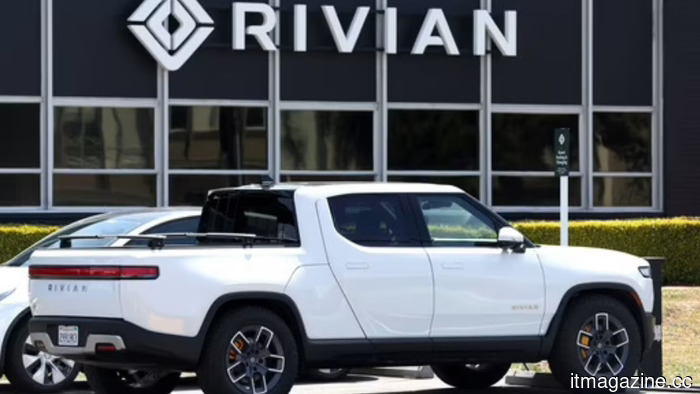 Rivian faces a lawsuit regarding misleading claims about self-driving capabilities for the Gen 1 R1.
A class action lawsuit claims that Rivian devoted five years to assuring customers of hands-free driving capabilities for its R1T and R1S vehicles, while being aware that the first-generation hardware would be incapable of supporting it.
Rivian faces a lawsuit regarding misleading claims about self-driving capabilities for the Gen 1 R1.
A class action lawsuit claims that Rivian devoted five years to assuring customers of hands-free driving capabilities for its R1T and R1S vehicles, while being aware that the first-generation hardware would be incapable of supporting it.
 Apple allows rival app stores on iOS in Brazil.
Apple will permit alternative app marketplaces and third-party payments in Brazil with the release of iOS 26.5, as part of a CADE antitrust agreement. These modifications are similar to the concessions made in the EU.
Apple allows rival app stores on iOS in Brazil.
Apple will permit alternative app marketplaces and third-party payments in Brazil with the release of iOS 26.5, as part of a CADE antitrust agreement. These modifications are similar to the concessions made in the EU.
 AI vision is becoming increasingly resource-intensive, and this approach helps to reduce its appetite.
KAIST's Upsample Anything addresses the memory challenge associated with enhanced on-device AI vision by recovering high-resolution visual details from compressed image data, enabling smartphones to avoid processing everything at full resolution initially.
AI vision is becoming increasingly resource-intensive, and this approach helps to reduce its appetite.
KAIST's Upsample Anything addresses the memory challenge associated with enhanced on-device AI vision by recovering high-resolution visual details from compressed image data, enabling smartphones to avoid processing everything at full resolution initially.
Apple allows competing app stores on iOS in Brazil.
Apple will permit alternative app marketplaces and third-party payments in Brazil with the release of iOS 26.5, as a result of a CADE antitrust agreement. These modifications reflect concessions similar to those made in the EU.