

Adobe's significant week for AI: Firefly, Disney, Semrush, LinkedIn
Adobe has dedicated the last two years to integrating AI into its software. This week, it aimed to establish itself as the AI backbone for all creative and marketing endeavors, making five announcements over three days.
The major highlight is the introduction of an agent within its applications. The week's developments indicate that Adobe is constructing a unified creative and marketing AI system that connects everything from an individual creator’s Photoshop project to a Disney theme park, a retailer’s advertising network, and a marketer’s LinkedIn profile.
1. The agent is incorporated in Photoshop and Premiere
Starting Thursday, the Firefly AI Assistant will be accessible in public beta within Photoshop, Premiere, Illustrator, InDesign, and Frame.io, with a private beta available in After Effects. Each application includes a sidebar styled as a chatbot that you can communicate with in everyday language, and each assistant is customized for its specific program. This feature was initially demonstrated in April, but at that time, users could not interact with it directly within Photoshop or Premiere. Now, that capability is available.
The focus is on delegation rather than magic. In Premiere, it organizes footage, renames clips in batches, flags interview questions, and places markers. In Photoshop, it allows users to describe desired outcomes, change backgrounds, resize for different platforms, and manage layers across the file. In Illustrator, it can create 50 versioned files from a spreadsheet or conduct pre-flight checks for missing fonts.
As noted by Engadget during a demonstration, it will not take control of your cursor or guide you through tasks; it does not function as a traditional computer assistant. Adobe also unveiled an updated Firefly creative AI studio (currently in private beta with a waitlist) aimed at addressing generative AI's persistent challenge of consistency. A new function called Elements enables users to save and reuse characters, locations, or objects by name, while Projects helps keep assets and contexts organized. New preset “skills” enhance Firefly's capabilities to rival those of Figma and Canva: creating a brand kit, converting product images into short videos, assembling a Quick Cut, or generating video from a storyboard.
2. Disney Imagineering obtains custom Firefly models
On the same week, Adobe announced a partnership with Walt Disney Imagineering’s R&D division, leveraging Adobe Firefly Foundry to create custom generative models trained specifically on Imagineering’s own design catalog rather than freely available online data.
This distinction is the core of the proposal. Adobe argues, "Models trained on aggregated internet data can lack guarantees for IP fidelity, brand consistency, or the reliability of their output," whereas a Foundry model utilizes licensed and proprietary assets. For Disney, the tools include sketch-to-image concept art, a model that generates franchise-accurate assets for properties like Mickey, Frozen, Moana, Lilo & Stitch, and Cars, along with a 3D modeling function that converts 2D designs into prototypes, expediting the transition from hand-drawn sketches to actual attractions.
This collaboration serves as a notable endorsement of Adobe’s commitment to “commercially safe” practices, a long-standing part of Firefly's strategy that differentiates it from competitors using scraped data, a controversial issue that has prompted public pushback from within the AI sector.
3. A tool to monitor brand presence in ChatGPT
On the enterprise front, Adobe introduced Brand Visibility, its first product developed from its recent acquisition of Semrush. This tool acts as a generative engine optimization (GEO) solution, a modern successor to SEO, that monitors how frequently a brand is mentioned in ChatGPT, Google AI Mode, Microsoft Copilot, and Perplexity. It draws from what Adobe claims is the largest database of its kind, comprising nearly 300 million real-world AI search prompts.
The timing is significant according to Adobe’s findings: AI-related traffic to U.S. retail sites rose by 1,324 percent from October 2024 to May 2026, with a staggering 2,215 percent increase in travel sectors. With consumers increasingly consulting chatbots before accessing websites, Adobe anticipates that brands will invest in understanding whether chatbots favor them or their competitors.
4. AI advertising creative for retail media networks
Adobe has also enhanced GenStudio, its AI “content supply chain”, with a version tailored for commerce media networks, a rapidly expanding area where retailers sell advertising space based on their own shopper data.
This release relies heavily on synthetic data: a new Brand Intelligence “Simulate” feature allows marketers to test how content will perform with AI-modeled audiences before making any financial investments, and Firefly Custom Models are now accessible in Photoshop for creating on-brand images. While it may not be glamorous, it is where the enterprise funding resides.
5. Reskilling marketers facing automation
Lastly, Adobe and LinkedIn have launched AI Essentials for Marketers, a series of complimentary, role-specific LinkedIn Learning courses available in 47 languages. This points to a recognition of sorts
Other articles
 Baseten secures $1.5 billion at a valuation of up to $13 billion for AI inference.
Baseten is securing $1.5 billion in a two-tier funding round, with valuations of $11 billion and $13 billion. The company is wagering that the true value of AI lies in affordable inference as open-source models challenge OpenAI.
Baseten secures $1.5 billion at a valuation of up to $13 billion for AI inference.
Baseten is securing $1.5 billion in a two-tier funding round, with valuations of $11 billion and $13 billion. The company is wagering that the true value of AI lies in affordable inference as open-source models challenge OpenAI.
 A US state is considering prohibiting smart glasses while driving, which may lead to a host of unforeseen issues.
Smart glasses are swiftly transitioning from specialized devices to widely adopted consumer technology. Products from firms like Meta, Google, Apple, and Snap are becoming more proficient at showing notifications, offering navigation, capturing video, and even operating AI-driven assistants right within the user’s line of sight. However, one state in the U.S. is already posing a significant question: Should […]
A US state is considering prohibiting smart glasses while driving, which may lead to a host of unforeseen issues.
Smart glasses are swiftly transitioning from specialized devices to widely adopted consumer technology. Products from firms like Meta, Google, Apple, and Snap are becoming more proficient at showing notifications, offering navigation, capturing video, and even operating AI-driven assistants right within the user’s line of sight. However, one state in the U.S. is already posing a significant question: Should […]
 AVP and Earlybird introduce a €500 million fund for European defense.
AVP and Earlybird have introduced E2D, a €500 million fund aimed at European defence and dual-use startups, while the US continues to dominate with 85% of NATO defence technology funding.
AVP and Earlybird introduce a €500 million fund for European defense.
AVP and Earlybird have introduced E2D, a €500 million fund aimed at European defence and dual-use startups, while the US continues to dominate with 85% of NATO defence technology funding.
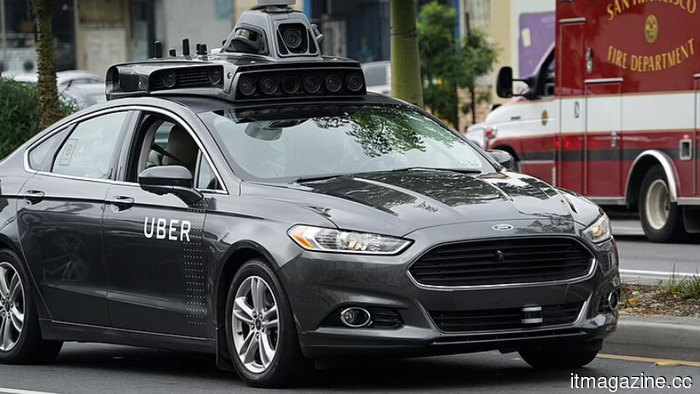 Life360 now allows parents to request Uber rides for their teenagers directly from the app.
Life360 incorporated Uber Family, enabling parents to request rides to their teen's current location. Uber teen accounts have successfully completed tens of millions of trips worldwide.
Life360 now allows parents to request Uber rides for their teenagers directly from the app.
Life360 incorporated Uber Family, enabling parents to request rides to their teen's current location. Uber teen accounts have successfully completed tens of millions of trips worldwide.
 Adobe's significant week of AI: Firefly, Disney, Semrush, LinkedIn
In just three days, Adobe integrated an AI agent into Photoshop, secured a deal with Disney for Firefly, introduced a tool for monitoring brands in ChatGPT, and collaborated with LinkedIn.
Adobe's significant week of AI: Firefly, Disney, Semrush, LinkedIn
In just three days, Adobe integrated an AI agent into Photoshop, secured a deal with Disney for Firefly, introduced a tool for monitoring brands in ChatGPT, and collaborated with LinkedIn.
 Google is enhancing Pixel Screenshots with cloud AI technology while ensuring your data remains private.
The latest update for Google’s Pixel Screenshots app introduces cloud-based AI processing, enhancing its ability to search and analyze your screenshots while ensuring that data remains in a hardware-secured environment.
Google is enhancing Pixel Screenshots with cloud AI technology while ensuring your data remains private.
The latest update for Google’s Pixel Screenshots app introduces cloud-based AI processing, enhancing its ability to search and analyze your screenshots while ensuring that data remains in a hardware-secured environment.
Adobe's significant week for AI: Firefly, Disney, Semrush, LinkedIn
Within three days, Adobe integrated an AI agent into Photoshop, finalized a deal with Disney Firefly, introduced a tool for monitoring brands in ChatGPT, and collaborated with LinkedIn.