
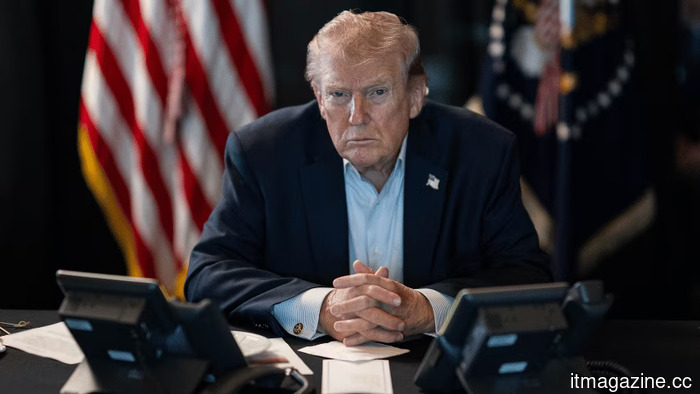
Trump turns down UK's request for an exemption from the Anthropic AI ban.
TL;DR: The UK pushed the Biden administration for an exemption from the Anthropic export ban, but officials indicated there was "zero chance" of this happening. This refusal highlights the UK's reliance on American AI and emphasizes the need for independent alternatives. Sir Keir Starmer's government spent the weekend trying to regain access to Anthropic’s leading AI models, but a source close to President Trump told The Telegraph that exemption requests were futile. The rejection comes as Starmer is set to meet Trump at the G7 summit in Évian-les-Bains, where the ban will likely be addressed. This situation serves as a harsh reminder to many British businesses of how quickly access to vital AI resources can be revoked by foreign decisions.
What occurred
On June 12, the US Commerce Department mandated Anthropic to halt foreign access to its most powerful models, Fable 5 and Mythos 5. Commerce Secretary Howard Lutnick wrote to CEO Dario Amodei, citing national security issues related to a reported jailbreak. This jailbreak was reportedly brought to the attention of high-level administration officials by Amazon CEO Andy Jassy. It involved instructing the model to examine a codebase and discover software vulnerabilities, a method Anthropic states is also featured in competing models, like OpenAI’s GPT-5.5, and is commonly utilized by cybersecurity professionals.
Due to Anthropic's inability to swiftly establish access controls based on nationality, both models were disabled globally, affecting both domestic and international users. The company remarked, “Should this standard be adopted industry-wide, we believe it would effectively freeze all new model deployments for all leading model providers.”
Why Britain is at risk
The UK lacks its own cutting-edge AI models. Hospitals, finance sectors, and governmental researchers who had incorporated Fable 5 into their operations suddenly found their tools disabled without prior notice. Kanishka Narayan, the UK’s AI minister, pointed out that the ban directly impacts defense, highlighting that the most advanced models are currently employed in drones, counter-drone systems, and cybersecurity efforts. He stated, “The essential question for our national security and defense is a matter of our AI capabilities.”
Conversely, US Secretary of War Pete Hegseth expressed a different view, noting on X, “Three months ago, the Department of War expelled Anthropic from our facilities, permanently,” asserting that “every passing day shows why this was the right decision.”
Industry response
Over 80 cybersecurity leaders from companies like Nvidia and Adobe signed an open letter calling for the ban to be lifted. They contended that the restrictions hinder efforts to identify and rectify software vulnerabilities, and that Anthropic's models are only a slight improvement over competing technologies, such as China's Kimi 2.7, which remains accessible.
On Monday, Anthropic representatives met with Commerce Department officials in Washington, alongside National Cyber Director Sean Cairncross, to discuss future options. Experts in exports informed Reuters that the legal basis for the ban is tenuous, as AI models are accessed remotely rather than physically exported, raising questions about the legality of the restrictions imposed by Commerce.
The independent AI initiative
The UK government has already launched a £500 million Sovereign AI Fund to support domestic developers, while private investment has initiated a separate £1 billion effort to build independent AI infrastructure. The Anthropic ban provides significant justification for these initiatives.
At the G7 summit, Canada’s Prime Minister Mark Carney compared the Anthropic suspension to the 2008 financial crisis, cautioning against systemic “model risk” that arises when critical infrastructure is reliant on a single provider. Insiders anticipate that Trump may eventually lift the restrictions globally rather than provide personalized exemptions to any nation.
For every British company that has integrated a foreign AI model into its products and operations, the immediate concern has shifted from hypothetical to practical. Ensuring resilience now means understanding which suppliers could potentially be cut off overnight and having a contingency plan in place for that eventuality.
Other articles
 Anthropic and Google DeepMind proposed a US-led AI coalition at the G7, and Canada agreed.
At a private G7 lunch with Trump and other world leaders, Dario Amodei and Demis Hassabis suggested a US-led coalition to establish AI regulations. However, no binding agreements were reached.
Anthropic and Google DeepMind proposed a US-led AI coalition at the G7, and Canada agreed.
At a private G7 lunch with Trump and other world leaders, Dario Amodei and Demis Hassabis suggested a US-led coalition to establish AI regulations. However, no binding agreements were reached.
 One million Dutch individuals depend solely on social media for their news.
The 2026 Digital News Report reveals that 7% of Dutch adults rely exclusively on social media for news, an increase from 2% in 2018, although trust and interest continue to decline.
One million Dutch individuals depend solely on social media for their news.
The 2026 Digital News Report reveals that 7% of Dutch adults rely exclusively on social media for news, an increase from 2% in 2018, although trust and interest continue to decline.
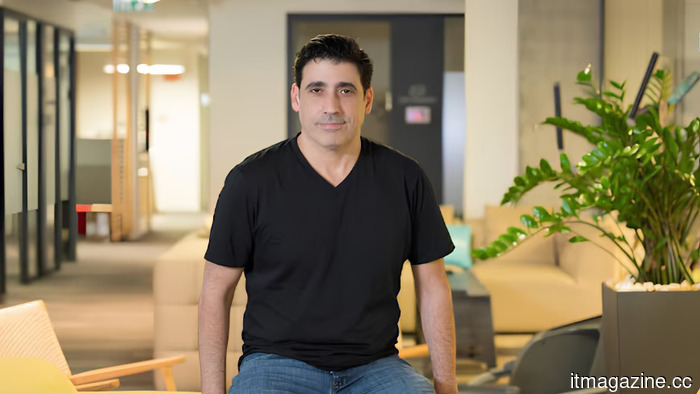 Reasons CMOs require a new framework for accountability.
Perion CEO Tal Jacobson discusses how the accountability gap faced by CMOs is an issue of infrastructure rather than measurement, and how AI-driven execution is transforming the way marketing demonstrates its impact on business.
Reasons CMOs require a new framework for accountability.
Perion CEO Tal Jacobson discusses how the accountability gap faced by CMOs is an issue of infrastructure rather than measurement, and how AI-driven execution is transforming the way marketing demonstrates its impact on business.
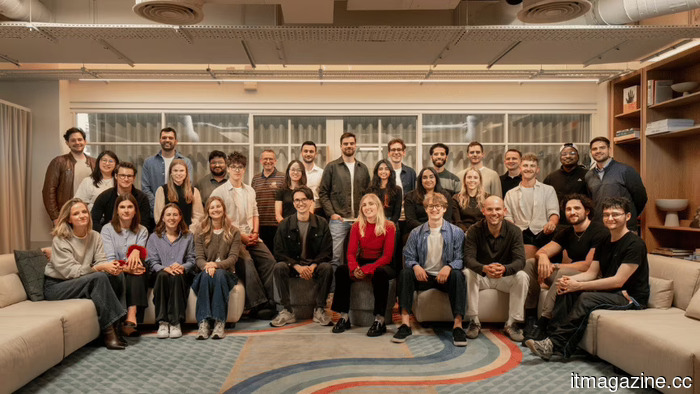 Conduct has secured $60 million in a Series A funding round from Index, ICONIQ, and SAP.
Conduct, a London-based startup established by former Palantir engineers, has secured $60 million in Series A funding from Index, ICONIQ, and SAP to address the complexities of outdated code within large corporations.
Conduct has secured $60 million in a Series A funding round from Index, ICONIQ, and SAP.
Conduct, a London-based startup established by former Palantir engineers, has secured $60 million in Series A funding from Index, ICONIQ, and SAP to address the complexities of outdated code within large corporations.
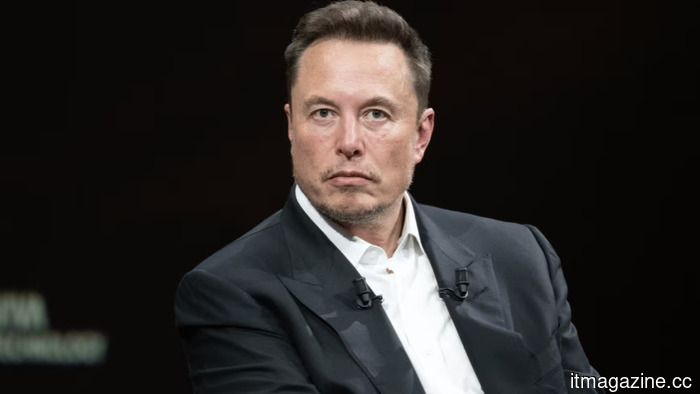 SpaceX's rising stock price makes acquisitions more affordable.
SpaceX's $60 billion all-stock Cursor agreement results in less dilution as the stock rises 50% following its IPO. Ackman describes it as a strategic asset. Anthropic and OpenAI share similar ambitions.
SpaceX's rising stock price makes acquisitions more affordable.
SpaceX's $60 billion all-stock Cursor agreement results in less dilution as the stock rises 50% following its IPO. Ackman describes it as a strategic asset. Anthropic and OpenAI share similar ambitions.
 France disrupts EDF's hydropower monopoly through new auction legislation.
The French Parliament has passed a legislation that changes EDF's hydropower concessions into permits and mandates annual auctions of 6 GW. EDF is said to be planning an investment of 4.5 billion euros in new pumped-hydro projects.
France disrupts EDF's hydropower monopoly through new auction legislation.
The French Parliament has passed a legislation that changes EDF's hydropower concessions into permits and mandates annual auctions of 6 GW. EDF is said to be planning an investment of 4.5 billion euros in new pumped-hydro projects.
Trump turns down UK's request for an exemption from the Anthropic AI ban.
Starmer's administration advocated for the UK to be excluded from the Anthropic export restrictions. Washington responded with "zero chance," revealing Britain's reliance on AI.