
The FCC has reopened the possibility for Chinese toy drones, but strictly for the smallest varieties.
The exemption is more limited than the announcement suggests. On Tuesday, the US Federal Communications Commission (FCC) stated that it will permit new models of Chinese toy drones to be imported again, six months after it completely banned new foreign-made drones. Although this development is beneficial, the criteria are so strict that the term ‘toy’ plays a significant role, meaning that many products labeled as toy drones will not meet the requirements.
To be eligible, a drone must weigh no more than 150 grams, operate only within the operator's line of sight at distances up to 100 metres, lack any connectivity or network capabilities, and not have any cameras or sensors capable of surveillance or data collection. It must also be able to fly for no longer than 10 minutes.
This is a very specific and stringent set of rules. It describes a device that can do little more than fly in a circle within the operator's view, which is exactly the point: the FCC has exempted a category of drone that cannot effectively conduct surveillance.
This decision is grounded in logic from the Pentagon. The FCC indicated it was acting on a Defense Department assessment that there is no national-security threat from what it classified as unsophisticated, low-risk toys, which lack the range, endurance, sensing, payload, connectivity, and data-collection capabilities of real drones.
In other words, the security concern is not about the airframe itself; it is related to the capabilities of a functioning drone in terms of what it can carry, observe, store, and transmit. Removing these capabilities renders the device, according to the Pentagon, harmless.
This decision occurs against the backdrop of significant trade actions in consumer electronics. In December, the FCC took steps to prevent imports of all new models of foreign-made drones and essential components, specifically targeting China's DJI and Autel due to perceived national-security risks.
The process was both bureaucratic and intentional: under the National Defense Authorization Act, a US security agency was required to complete a review of DJI by late December. Since this review was not conducted, DJI was automatically added to the FCC’s Covered List, prohibiting new products from obtaining the necessary authorization for import and sale.
As a result, DJI, which dominates the global consumer-drone market, found itself under pressure from both ends — unable to make new sales in the US while Beijing concurrently prohibited drone sales in the Chinese capital. Existing DJI drones with previous FCC approval are still legal to own and operate; it is solely new models that cannot enter the market.
The broader issue that the exemption does not address is supply. The US has decided against Chinese drones but has not created the capacity to replace them, and this dependency extends beyond the airframe.
China holds a significant share of the rare-earth magnets and drone batteries that any domestic manufacturer would require, which means banning Chinese drones does not necessarily lead to a production of American ones.
This toy-drone exemption serves as a minor recognition of how a blanket ban clashes with the realities of the lower-end market, where a novelty weighing less than 150 grams was never the threat the policy was intended to address.
The exemption also subtly acknowledges the bluntness of the initial ruling. The blanket prohibition on new foreign-made drones, automatically activated when a review deadline expired, encompassed a wide range of products, from professional camera systems to small novelties, without differentiation.
The Pentagon’s assessment effectively accepts that risks are measured by capability rather than the manufacturing location of the device. Establishing logical thresholds is more justifiable than an across-the-board ban based on country of origin, but it also highlights how much of the December decision was influenced by procedural deadline rather than a careful evaluation of which devices truly pose a risk.
Industry watchers have quickly begun to evaluate this new threshold against actual products. Reports have noted that even DJI’s smallest consumer model, the sub-150-gram Neo, may not qualify due to its camera, which is the one feature most explicitly excluded by the exemption.
If a drone marketed as a small, beginner-friendly device does not fit within the toy definition, the practical application of the exemption is limited: it may only reopen the market for simple novelties and not much more, which could be the intended outcome.
Thus, while the door is slightly ajar, the terms are so specific that some genuinely tiny consumer drones may still be excluded. The FCC has not reverted its drone policy; it has merely refined it, acknowledging that a flying toy without a camera and a 10-minute battery life does not pose a national-security issue. The more challenging questions concerning who manufactures the capable drones that America desires and the source of their components persist unchanged.
Other articles
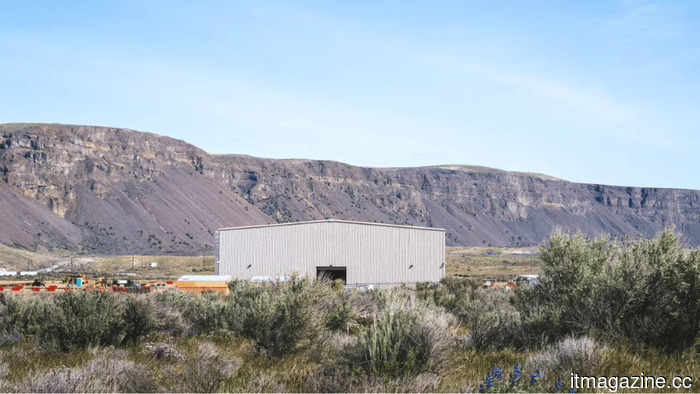 Helion fusion plant secures world-first licenses.
Helion is the inaugural company authorized to run a fusion power facility. However, the Sam Altman-supported company still needs to demonstrate that fusion can provide commercial electricity.
Helion fusion plant secures world-first licenses.
Helion is the inaugural company authorized to run a fusion power facility. However, the Sam Altman-supported company still needs to demonstrate that fusion can provide commercial electricity.
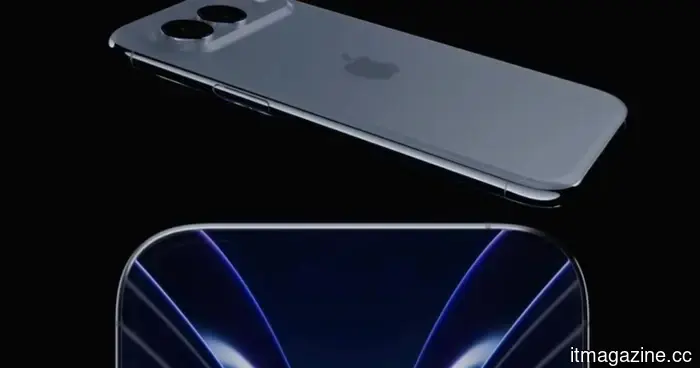 Apple is said to be launching the 20th anniversary iPhone in two different sizes.
Apple is said to be preparing to launch its 20th anniversary edition iPhone in two sizes, both equipped with edge-to-edge screens and powered by Apple's A21 chip.
Apple is said to be launching the 20th anniversary iPhone in two different sizes.
Apple is said to be preparing to launch its 20th anniversary edition iPhone in two sizes, both equipped with edge-to-edge screens and powered by Apple's A21 chip.
 The FTC's investigation into Amazon's advertising practices could result in fines amounting to billions.
According to Bloomberg, the FTC has prepared a possible lawsuit against Amazon, alleging that the company has deceived advertisers regarding concealed advertising costs, a case that could result in billions in expenses.
The FTC's investigation into Amazon's advertising practices could result in fines amounting to billions.
According to Bloomberg, the FTC has prepared a possible lawsuit against Amazon, alleging that the company has deceived advertisers regarding concealed advertising costs, a case that could result in billions in expenses.
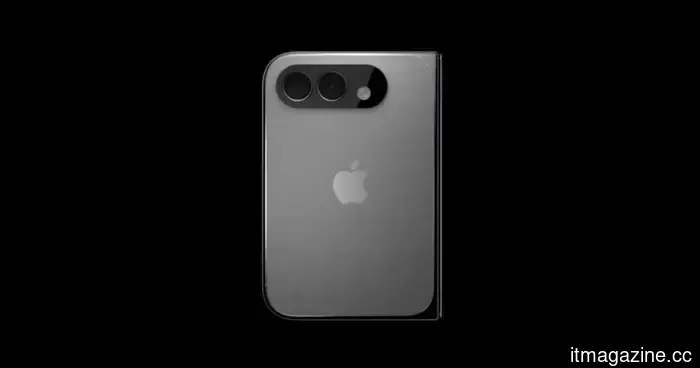 The foldable iPhone has not yet been released, but Apple is already making plans for its successor.
Apple has spent several years steering clear of foldable devices while Android companies have been experimenting with them. Now, reports suggest that the company is working on a second-generation foldable iPhone even before the release of the first model.
The foldable iPhone has not yet been released, but Apple is already making plans for its successor.
Apple has spent several years steering clear of foldable devices while Android companies have been experimenting with them. Now, reports suggest that the company is working on a second-generation foldable iPhone even before the release of the first model.
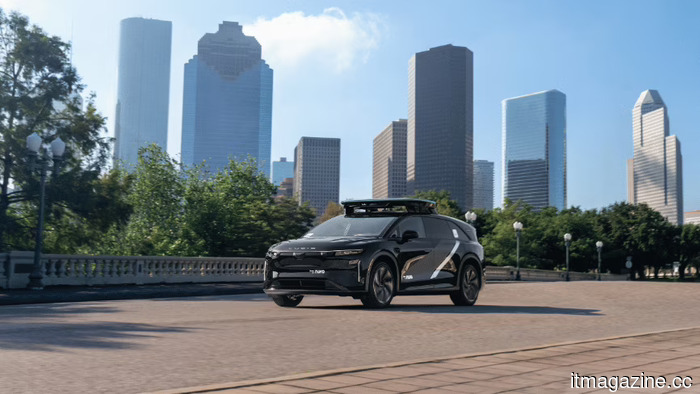 Uber's robotaxi service is set to debut in Houston in 2027.
Uber is set to introduce its Lucid-Nuro robotaxi service in Houston by mid-2027, marking its second market in the United States and presenting a new challenge to Waymo in the latter's home territory.
Uber's robotaxi service is set to debut in Houston in 2027.
Uber is set to introduce its Lucid-Nuro robotaxi service in Houston by mid-2027, marking its second market in the United States and presenting a new challenge to Waymo in the latter's home territory.
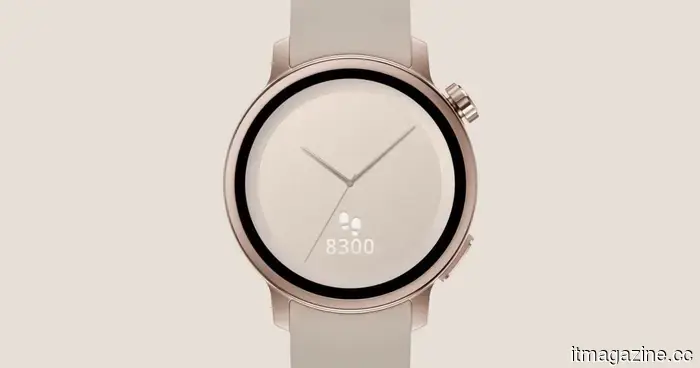 Sharp's initial smartwatch can track the calories you've consumed without the need to log any meals.
Sharp's inaugural smartwatch offers more than just calorie tracking. The Karada Mate Watch employs a bioelectrical impedance sensor to assess calorie and water consumption by analyzing changes in fluid and sugar levels within the body.
Sharp's initial smartwatch can track the calories you've consumed without the need to log any meals.
Sharp's inaugural smartwatch offers more than just calorie tracking. The Karada Mate Watch employs a bioelectrical impedance sensor to assess calorie and water consumption by analyzing changes in fluid and sugar levels within the body.
The FCC has reopened the possibility for Chinese toy drones, but strictly for the smallest varieties.
The FCC has decided to allow the importation of small Chinese toy drones once more, exempting those that weigh under 150g, lack a camera, do not have networking capabilities, and offer 10 minutes of flight time.