
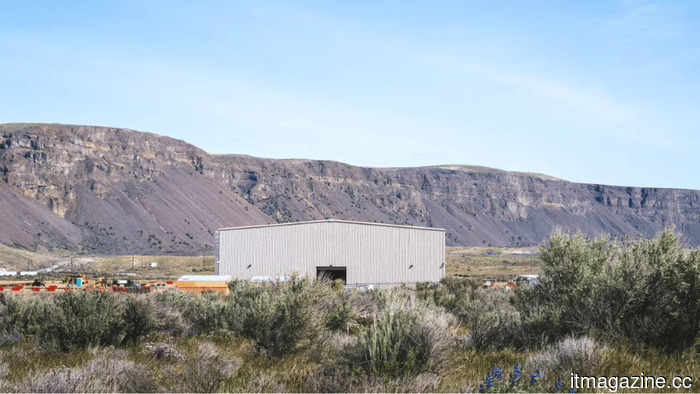
Helion fusion plant secures world-first licenses.
Helion has become the inaugural company globally to receive a license to operate a fusion power plant. On June 16, the Washington-based firm announced that it had obtained two licenses from the state's Department of Health, surpassing a regulatory hurdle that no other fusion company has achieved previously. This marks a significant milestone, albeit a regulatory one rather than a scientific one, and that distinction is essential to the entire narrative.
The two licenses address radioactive materials and radioactive air emissions, specifically for Orion, the plant Helion is constructing in Malaga, Washington. The company reports that the assembly and office buildings at the site are complete, with earthworks for the generator building having commenced this spring.
The reason behind the approval from Washington's health department instead of the US Nuclear Regulatory Commission (NRC) is noteworthy. The NRC has opted to regulate fusion under its ‘byproduct material’ framework, which is the same system used for particle accelerators and medical equipment, rather than the more stringent regulations governing fission reactors. This decision, formalized by Congress in the bipartisan ADVANCE Act of 2024, provides fusion a quicker and more streamlined path to implementation, based on the understanding that it presents a considerably different safety profile. Additionally, state laws in Washington enhanced permitting certainty.
In essence, one reason Helion reached this point first is that the regulations were designed to allow fusion to progress efficiently.
The licenses would be less significant were it not for the backing of prominent figures associated with the company. Sam Altman, who chairs Helion, has invested about $375 million of his own funds into the company, marking his largest personal investment. Moreover, Microsoft agreed in 2023 to purchase fusion power from Helion starting in 2028—the first such agreement in the world—with financial penalties imposed if Helion fails to meet its obligations. Orion is projected to generate 50 megawatts.
This contract transforms an ambitious engineering target into a commercial obligation with a specific timeline, which is uncommon in a field that has been labeled as being “30 years away” for decades.
However, it is important to note that this milestone does not change the fact that no one has yet produced net commercial electricity from fusion, and Helion’s prototype, Polaris, still needs to demonstrate its ability to generate electricity at all. The scientific challenges remain significant. Recent experiments have achieved records in fusion energy and made considerable progress towards generation, but the reactions still generally consume much more energy than they produce.
Thus, Helion now possesses something no competitor has: authorization to operate the plant. The unresolved questions remain whether the plant will function and if it can be activated by 2028—matters this license does not address.
Other articles
 Microsoft DeepSeek: a Chinese model for Copilot Cowork?
Microsoft is considering a self-hosted DeepSeek model to reduce expenses for Copilot Cowork, a move related to Chinese AI that may attract attention from the Trump administration.
Microsoft DeepSeek: a Chinese model for Copilot Cowork?
Microsoft is considering a self-hosted DeepSeek model to reduce expenses for Copilot Cowork, a move related to Chinese AI that may attract attention from the Trump administration.
 The FTC's investigation into Amazon's advertising practices could result in fines amounting to billions.
According to Bloomberg, the FTC has prepared a possible lawsuit against Amazon, alleging that the company has deceived advertisers regarding concealed advertising costs, a case that could result in billions in expenses.
The FTC's investigation into Amazon's advertising practices could result in fines amounting to billions.
According to Bloomberg, the FTC has prepared a possible lawsuit against Amazon, alleging that the company has deceived advertisers regarding concealed advertising costs, a case that could result in billions in expenses.
 The US has decided to postpone adding DeepSeek and over 100 Chinese companies to its blacklist.
An interagency panel has given the green light to include DeepSeek, CXMT, and over 100 Chinese companies on the US Entity List. The Trump administration has refrained from taking action to minimize tension with Beijing.
The US has decided to postpone adding DeepSeek and over 100 Chinese companies to its blacklist.
An interagency panel has given the green light to include DeepSeek, CXMT, and over 100 Chinese companies on the US Entity List. The Trump administration has refrained from taking action to minimize tension with Beijing.
 Microsoft DeepSeek: a Chinese model for Copilot Cowork?
Microsoft is considering a self-hosted DeepSeek model to reduce costs for Copilot Cowork, a decision that may attract scrutiny from the Trump administration due to its ties to Chinese AI.
Microsoft DeepSeek: a Chinese model for Copilot Cowork?
Microsoft is considering a self-hosted DeepSeek model to reduce costs for Copilot Cowork, a decision that may attract scrutiny from the Trump administration due to its ties to Chinese AI.
 Apple is said to be launching the 20th anniversary iPhone in two different sizes.
Apple is said to be preparing to launch its 20th anniversary edition iPhone in two sizes, both equipped with edge-to-edge screens and powered by Apple's A21 chip.
Apple is said to be launching the 20th anniversary iPhone in two different sizes.
Apple is said to be preparing to launch its 20th anniversary edition iPhone in two sizes, both equipped with edge-to-edge screens and powered by Apple's A21 chip.
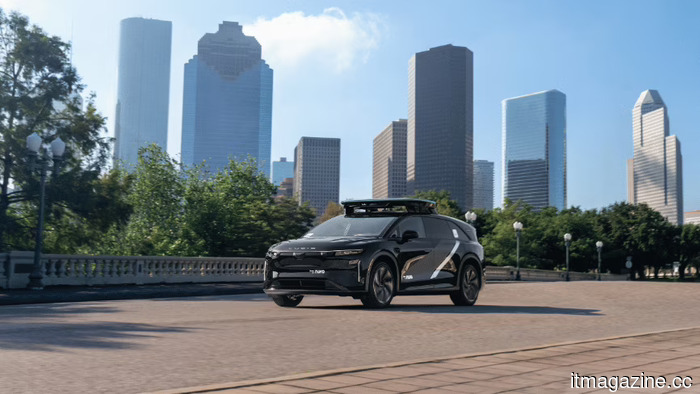 Uber's robotaxi service is set to debut in Houston in 2027.
Uber is set to introduce its Lucid-Nuro robotaxi service in Houston by mid-2027, marking its second market in the United States and presenting a new challenge to Waymo in the latter's home territory.
Uber's robotaxi service is set to debut in Houston in 2027.
Uber is set to introduce its Lucid-Nuro robotaxi service in Houston by mid-2027, marking its second market in the United States and presenting a new challenge to Waymo in the latter's home territory.
Helion fusion plant secures world-first licenses.
Helion is the inaugural company authorized to run a fusion power facility. However, the Sam Altman-supported company still needs to demonstrate that fusion can provide commercial electricity.