

Meloni states that children can easily evade social media restrictions.
Italian Prime Minister Giorgia Meloni stated on Wednesday that her administration will not initiate a social media ban for teenagers, diverging from the strategies of Britain and France. "I am not opposed to a social media ban for those under 16, but I am also not convinced that this proposal alone will address the issue, as such a ban can be easily bypassed," she informed reporters at the conclusion of the G7 summit in Évian-les-Bains.
These remarks position Italy as a notable exception among leading European nations regarding age-based restrictions, which have emerged as a standard response to increasing concerns about children’s mental well-being and online safety.
Meloni contended that such bans could "partially shift the problem to families" and that these restrictions will be ineffective unless governments exert more pressure on platforms to "fulfill their responsibilities." This perspective redirects the discussion from regulating children’s access to demanding significant changes from the companies that benefit from user engagement.
While maintaining that she is not fundamentally against a ban for those under 16, Meloni indicated that her government has opted not to introduce a decree or bill, allowing parliament members to lead the conversation. Several political parties in Italy have proposed legislation to limit minors' access to social media, but none have been approved.
The urgency for restrictions in Europe
Earlier this week, Britain announced plans to prohibit social media access for those under 16, with Prime Minister Keir Starmer aiming to legislate this before Christmas and implement it by early 2027. The proposed restrictions are set to extend beyond conventional platforms to include gaming applications and AI chatbots, representing the broadest scope yet considered by a major democracy.
France plans to enforce a ban for those under 15 later this year, with implementation starting in September. Canada is also taking steps to restrict access for those under 16, through its Digital Safety Act which encompasses social media and AI chatbots.
However, initial findings from Australia, which enacted an under-16 ban in December, suggest that enforcement is more challenging than enacting legislation. The Australian government has accused Meta, TikTok, and YouTube of non-compliance, supporting Meloni’s assertion that bans without the cooperation of platforms lack substance.
The G7 agreement
The G7 leaders, including US President Donald Trump, endorsed a declaration focused on safeguarding children online that does not reference a ban on social media access. The US had previously voiced concerns about the British ban, cautioning against blanket measures.
The declaration advocates for safety-by-design principles, age-appropriate recommendation systems, and action on AI-generated child sexual exploitation material. It is more in line with the EU’s Digital Services Act, which imposes content moderation and transparency responsibilities on platforms, than with the outright bans preferred by London and Paris.
Other articles
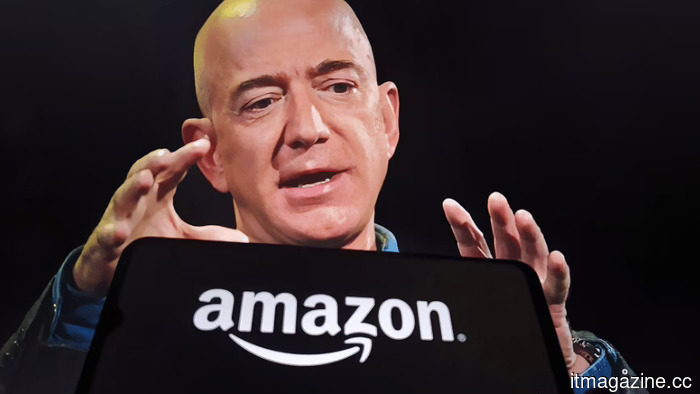 Amazon's AI leader acknowledges that their models are behind those of OpenAI and Anthropic.
Peter DeSantis states that Amazon's AI models "haven't been at the forefront" and expresses a desire to bridge the gap within a year, utilizing custom chips and proprietary data.
Amazon's AI leader acknowledges that their models are behind those of OpenAI and Anthropic.
Peter DeSantis states that Amazon's AI models "haven't been at the forefront" and expresses a desire to bridge the gap within a year, utilizing custom chips and proprietary data.
 SpaceX's rising stock price makes acquisitions more affordable.
SpaceX's $60 billion all-stock Cursor agreement results in less dilution as the stock rises 50% following its IPO. Ackman describes it as a strategic asset. Anthropic and OpenAI share similar ambitions.
SpaceX's rising stock price makes acquisitions more affordable.
SpaceX's $60 billion all-stock Cursor agreement results in less dilution as the stock rises 50% following its IPO. Ackman describes it as a strategic asset. Anthropic and OpenAI share similar ambitions.
 Meloni states that children can easily circumvent social media restrictions.
Italy's Prime Minister stated at the G7 that prohibiting children from using social media is "easily bypassed" and that it should be the platforms, rather than parents, who take on the responsibility.
Meloni states that children can easily circumvent social media restrictions.
Italy's Prime Minister stated at the G7 that prohibiting children from using social media is "easily bypassed" and that it should be the platforms, rather than parents, who take on the responsibility.
 France ends EDF's monopoly on hydropower with new auction legislation.
The French Parliament passed a legislation that changes EDF's hydropower concessions into permits and mandates annual auctions of 6 GW. Reports suggest that EDF intends to invest 4.5 billion euros in new pumped-hydro projects.
France ends EDF's monopoly on hydropower with new auction legislation.
The French Parliament passed a legislation that changes EDF's hydropower concessions into permits and mandates annual auctions of 6 GW. Reports suggest that EDF intends to invest 4.5 billion euros in new pumped-hydro projects.
 Trump turns down UK's request for an exemption from the Anthropic AI ban.
Starmer's administration advocated for the UK to be excluded from the Anthropic export restrictions. Washington responded with "zero chance," revealing Britain's reliance on AI.
Trump turns down UK's request for an exemption from the Anthropic AI ban.
Starmer's administration advocated for the UK to be excluded from the Anthropic export restrictions. Washington responded with "zero chance," revealing Britain's reliance on AI.
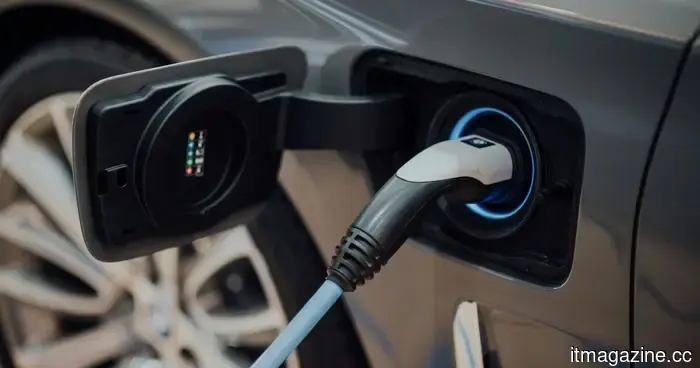 China has established new safety regulations for electric vehicles. The United States should take similar action.
China's updated safety regulations for electric vehicles implement stricter battery fire testing and require physical power shutoff mechanisms, setting a higher standard as the U.S. considers ways to enhance the safety of electric cars.
China has established new safety regulations for electric vehicles. The United States should take similar action.
China's updated safety regulations for electric vehicles implement stricter battery fire testing and require physical power shutoff mechanisms, setting a higher standard as the U.S. considers ways to enhance the safety of electric cars.
Meloni states that children can easily evade social media restrictions.
Italy's Prime Minister stated at the G7 that prohibiting children from using social media is "easily bypassed" and that the responsibility should lie with the platforms, rather than parents.