
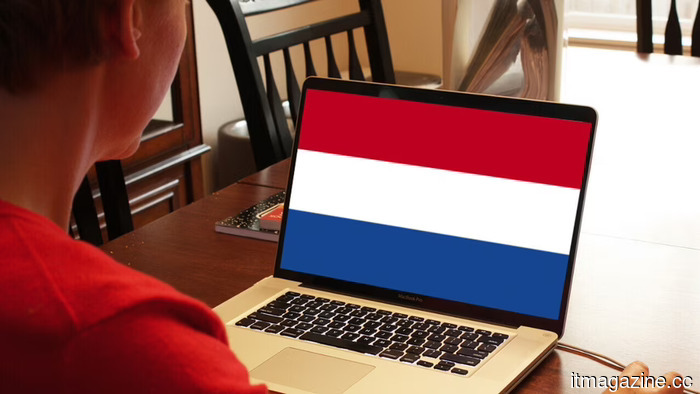
One million Dutch people depend solely on social media for their news.
TL;DR: Over one million Dutch adults exclusively receive news from social media, but only 12% find it trustworthy. The 2026 Digital News Report indicates a decline in news interest and trust in the Netherlands, particularly among younger users who increasingly turn to influencers and AI chatbots.
According to the 2026 Digital News Report published on Tuesday, more than one million individuals in the Netherlands now depend solely on social media for their news, without accessing any news websites, television, or radio. Only 12% express confidence in the information they encounter on these platforms.
This group accounts for 7% of Dutch adults, a rise from 2% in 2018. The annual report, created by the Dutch media regulator Commissariaat voor de Media in collaboration with the Reuters Institute for the Study of Journalism, highlights a paradox: the platforms people trust the least are the ones that an increasing number rely on entirely.
A wider disengagement
The change extends beyond just the sources of news. It also reflects an overall decrease in people's desire for news. In 2018, 61% of Dutch respondents reported a strong interest in news, a number that has now dropped to 45%, while those expressing no interest has increased from 4% to 14%.
This trend is seen globally. In the 48 markets surveyed by the Reuters Institute, news interest has decreased by 13 percentage points in the past five years, with social and video platforms now surpassing television and news websites as the primary means by which people first encounter news.
The influencer effect
The change is most pronounced among younger individuals. Currently, 33% of 18- to 34-year-olds in the Netherlands use social media as their main news source, compared to 20% in 2018.
Half of the 18- to 24-year-olds follow news influencers, accounts that either comment on or repackage news reporting, which young audiences are increasingly starting to view as credible. The most popular among these in the Netherlands is Cestmocro, an anonymous Instagram account boasting 1.2 million followers and an undisclosed owner.
Platforms like Facebook have notably deprioritized news publishers in favor of personal content, leading users towards algorithm-driven feeds and influencer accounts for updates on current affairs. A smaller yet expanding demographic is venturing beyond social feeds completely, with about 7% of Dutch adults now utilizing AI chatbots for news, increasing to 13% among younger users.
The advancements in Google’s AI-powered search and the emergence of tools like ChatGPT and Perplexity are propelling this trend forward. The Reuters Institute observed that the use of chatbots for news increased from 7% to 10% across surveyed regions in just one year.
Trusted names, crumbling foundation
Despite the changes, established media outlets retain a level of trust. NOS continues to be the most trusted news brand in the Netherlands, followed by press agency ANP and RTL Nieuws.
However, the landscape is changing. The percentage of Dutch respondents who outright distrust news has approximately doubled since 2018, from 11% to 21%. This reflects a global trend where misinformation has undermined public confidence in media across various countries.
Worldwide, trust in news has reached a historic low. Only 25% of individuals across all surveyed markets report trusting the news most of the time, marking the lowest figure since the report's initiation in 2015.
What the Netherlands risks losing
The EU’s Digital Services Act mandates transparency and content moderation requirements for large platforms, and the Netherlands is one of the countries implementing it. Nevertheless, the behavioral changes noted in the report, with a million individuals relying solely on social media for news, are not issues that platform regulations alone can address.
CvdM chair Amma Asante stated that trust in Dutch news remains relatively high by global standards. “Thus, we have something valuable to protect,” she remarked.
Currently, half of the Dutch population expresses concern about the news circulating on social platforms. The irony is that this concern has not curbed the trend away from traditional news sources.
Other articles
 Reasons CMOs require a new accountability operating system.
Perion's CEO, Tal Jacobson, discusses why the accountability gap for Chief Marketing Officers is an issue related to infrastructure rather than measurement. He also highlights how AI-driven execution is transforming the way marketing demonstrates its impact on business.
Reasons CMOs require a new accountability operating system.
Perion's CEO, Tal Jacobson, discusses why the accountability gap for Chief Marketing Officers is an issue related to infrastructure rather than measurement. He also highlights how AI-driven execution is transforming the way marketing demonstrates its impact on business.
 One million Dutch individuals depend solely on social media for their news.
The 2026 Digital News Report reveals that 7% of Dutch adults rely exclusively on social media for news, an increase from 2% in 2018, although trust and interest continue to decline.
One million Dutch individuals depend solely on social media for their news.
The 2026 Digital News Report reveals that 7% of Dutch adults rely exclusively on social media for news, an increase from 2% in 2018, although trust and interest continue to decline.
 Meloni states that children can easily circumvent social media restrictions.
Italy's Prime Minister stated at the G7 that prohibiting children from using social media is "easily bypassed" and that it should be the platforms, rather than parents, who take on the responsibility.
Meloni states that children can easily circumvent social media restrictions.
Italy's Prime Minister stated at the G7 that prohibiting children from using social media is "easily bypassed" and that it should be the platforms, rather than parents, who take on the responsibility.
 Fifty percent of Americans currently utilize AI chatbots, yet 40% believe that AI will have a negative impact on society, and two-thirds lack confidence in the government's ability to regulate it.
A survey conducted by Pew Research involving 5,119 adults in the US revealed that 49% utilize AI chatbots, while 40% anticipate that AI will have a negative impact on society, and 67% express low confidence in the government's ability to provide oversight.
Fifty percent of Americans currently utilize AI chatbots, yet 40% believe that AI will have a negative impact on society, and two-thirds lack confidence in the government's ability to regulate it.
A survey conducted by Pew Research involving 5,119 adults in the US revealed that 49% utilize AI chatbots, while 40% anticipate that AI will have a negative impact on society, and 67% express low confidence in the government's ability to provide oversight.
 SpaceX’s rising stock value makes it less expensive to pursue acquisitions.
SpaceX's all-stock Cursor deal, valued at $60 billion, results in reduced dilution as the stock rises by 50% after its IPO. Ackman refers to it as a strategic asset, a view shared by Anthropic and OpenAI.
SpaceX’s rising stock value makes it less expensive to pursue acquisitions.
SpaceX's all-stock Cursor deal, valued at $60 billion, results in reduced dilution as the stock rises by 50% after its IPO. Ackman refers to it as a strategic asset, a view shared by Anthropic and OpenAI.
 The head of Amazon's AI division acknowledges that their models are behind those of OpenAI and Anthropic.
Peter DeSantis mentions that Amazon's AI models "haven't been at the forefront" and expresses his hope to narrow the gap within a year, utilizing custom chips and exclusive data.
The head of Amazon's AI division acknowledges that their models are behind those of OpenAI and Anthropic.
Peter DeSantis mentions that Amazon's AI models "haven't been at the forefront" and expresses his hope to narrow the gap within a year, utilizing custom chips and exclusive data.
One million Dutch people depend solely on social media for their news.
The 2026 Digital News Report reveals that 7% of Dutch adults rely exclusively on social media for news, an increase from 2% in 2018, although trust and interest are still declining.