
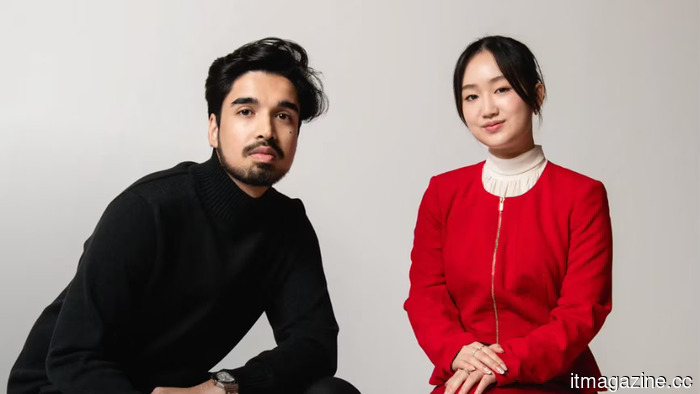
A 21-year-old Stanford graduate has successfully secured $11.6 million to develop a wearable hormone monitor that eliminates the need for blood samples.
Clair Health secured $11.6 million in funding from Khosla Ventures for its noninvasive wearable hormone monitor, set to be shipped in November, although it has yet to present peer-reviewed findings. Based in San Francisco and established by two Stanford graduates, Clair Health aims to create what it describes as the first continuous, noninvasive hormone monitor for women. The funding round was led by Khosla Ventures, with participation from a16z speedrun, Brydge Club, Treehub, Cartan Capital, AGI House, Insiders VC, and Anne Wojcicki, co-founder of 23andMe. The company plans to offer the wristband as a wellness product this November, with FDA approval to follow in the future.
Co-founder Jenny Duan, who graduated from Stanford with a degree in symbolic systems at the same time as finalizing the funding round, launched the company with Abhinav Agarwal after they connected at Stanford in spring 2025. Agarwal had earlier worked on a noninvasive continuous glucose monitor at KOS AI.
The device utilizes ten biosensors, including unique biomagnetic sensors, to detect physiological signals such as skin temperature, heart rate variability, and electrodermal activity. AI models then analyze these signals to determine where a woman is in her hormonal cycle, monitoring estrogen, progesterone, LH, and FSH through over 130 proprietary biomarkers. The company has provisional patents for its sensor configuration.
Duan mentioned, “To measure hormones now, you either need to have a lab blood test or use a home urine test, which doesn’t directly measure hormones but rather how your body processes them.” Clair claims a 94% accuracy rate in identifying menstrual cycle phases, with this figure benchmarked against daily urine samples, similar to at-home ovulation tests, rather than clinical blood tests. An independent study is ongoing through the Stanford Gladstone BeeHive programme, and the company intends to publish peer-reviewed results, although none are currently available. This distinction is significant because the inference of hormone levels from surface biosignals, rather than direct measurement, is a substantial claim that has not been scientifically validated.
Additionally, Clair asserts that it has developed AI capable of analyzing voice-based biomarkers to ascertain cycle phases following a short conversation. The wearable technology sector is quickly advancing, with rivals integrating women's health features into existing products. For instance, WHOOP introduced women's hormonal insights in 2025 and launched a blood testing panel specific to women in spring 2026, while Oura unveiled a proprietary AI model focused on women's health in February 2026.
However, none of these competitors were designed explicitly for hormone monitoring. “Most wearable technology being developed is geared towards tech-bros,” remarked Alex Morgan, a partner at Khosla Ventures. WHOOP recently raised $575 million at a valuation of $10.1 billion and is moving towards an IPO, while Oura has confidentially filed for its own public offering, indicating a serious investor interest in health wearables.
According to Grand View Research, the global femtech market is expected to grow from $39 billion in 2024 to $97 billion by 2030. Historically, femtech has faced challenges attracting proportional venture capital, with investment peaking at around $2 billion in 2021 before dwindling as AI took a larger share of funding. Clair's recent funding round indicates that some investment is returning to this sector.
Early tests identified nine distinct sub-phases within the female hormone cycle, as reported by Tech Funding News, challenging the traditional four-phase model in women's health. Clair already has a 25,000-person waitlist, has sold out its presale, and has received over 100 letters of intent from fertility clinics. Future plans include monitoring for perimenopause, calibration for hormone replacement therapy, and diagnostics for conditions like PCOS and endometriosis.
Privacy is a key aspect of the company's proposition. Clair states that all data is processed on the user's phone, rather than in the cloud, utilizing zero-knowledge encryption to alleviate increasing consumer concerns about health data security. Duan has highlighted the lack of female representation in US clinical trials until 1993 as a motivating factor for the company's mission.
While TechCrunch reported the device’s pricing to be $369 with a $9.99 monthly subscription, this has not been independently verified. Clair is positioning the product as a wellness item rather than a medical device, meaning it can ship without FDA clearance but cannot make diagnostic claims. The company plans to seek regulatory approval later on.
The critical question that Clair must address with published data is whether a wristband can accurately deduce hormone levels from surface biosignals. With the necessary funding, a growing waitlist, and a strong investor base, Clair still lacks the peer-reviewed evidence needed to substantiate its claims and distinguish itself from other health wearable startups that have made unfulfilled promises.
Other articles
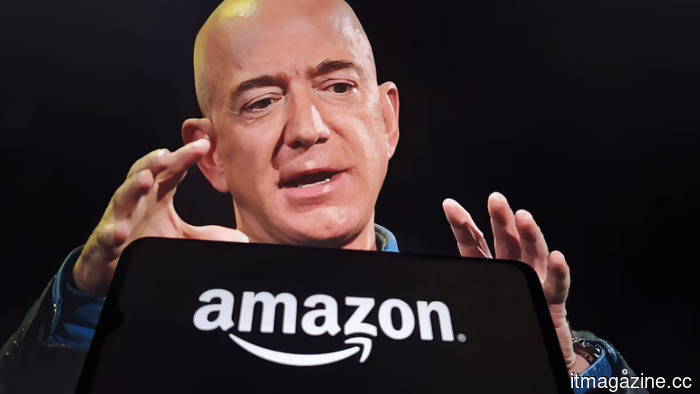 The head of Amazon's AI division acknowledges that their models are behind those of OpenAI and Anthropic.
Peter DeSantis mentions that Amazon's AI models "haven't been at the forefront" and expresses his hope to narrow the gap within a year, utilizing custom chips and exclusive data.
The head of Amazon's AI division acknowledges that their models are behind those of OpenAI and Anthropic.
Peter DeSantis mentions that Amazon's AI models "haven't been at the forefront" and expresses his hope to narrow the gap within a year, utilizing custom chips and exclusive data.
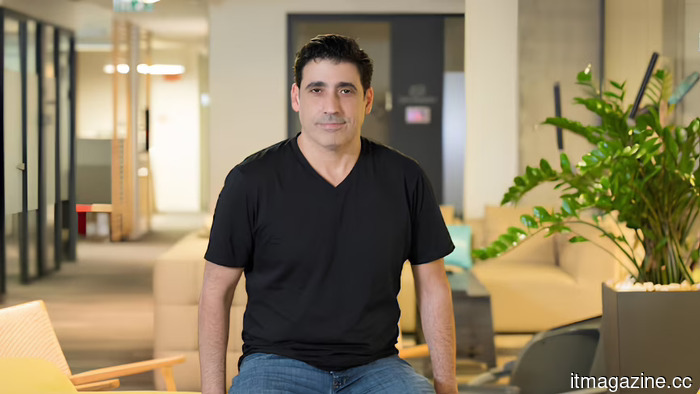 Reasons CMOs require a new accountability operating system.
Perion's CEO, Tal Jacobson, discusses why the accountability gap for Chief Marketing Officers is an issue related to infrastructure rather than measurement. He also highlights how AI-driven execution is transforming the way marketing demonstrates its impact on business.
Reasons CMOs require a new accountability operating system.
Perion's CEO, Tal Jacobson, discusses why the accountability gap for Chief Marketing Officers is an issue related to infrastructure rather than measurement. He also highlights how AI-driven execution is transforming the way marketing demonstrates its impact on business.
 Arcade.dev has secured $60 million to enhance its enterprise AI agents.
Arcade.dev secured a $60M Series A funding round led by SYN Ventures to regulate the actions AI agents can perform within company systems, effectively containing the agents within pilot programs.
Arcade.dev has secured $60 million to enhance its enterprise AI agents.
Arcade.dev secured a $60M Series A funding round led by SYN Ventures to regulate the actions AI agents can perform within company systems, effectively containing the agents within pilot programs.
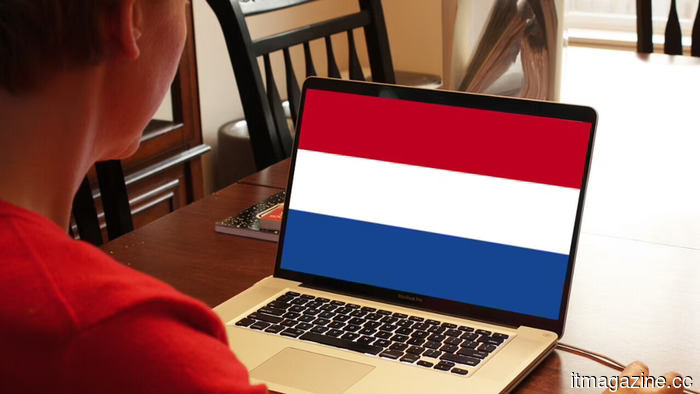 One million Dutch individuals depend solely on social media for their news.
The 2026 Digital News Report reveals that 7% of Dutch adults rely exclusively on social media for news, an increase from 2% in 2018, although trust and interest continue to decline.
One million Dutch individuals depend solely on social media for their news.
The 2026 Digital News Report reveals that 7% of Dutch adults rely exclusively on social media for news, an increase from 2% in 2018, although trust and interest continue to decline.
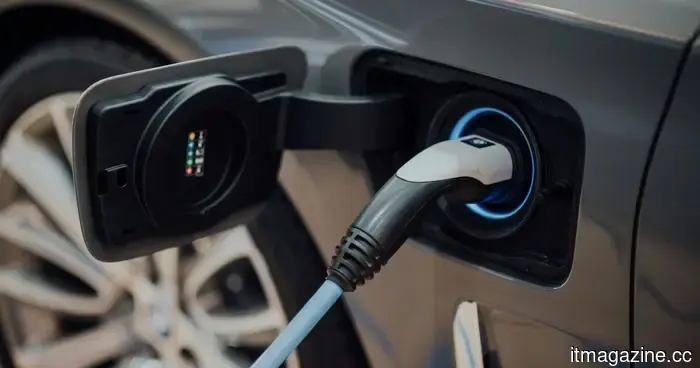 China has established new safety regulations for electric vehicles. The United States should take similar action.
China's updated safety regulations for electric vehicles implement stricter battery fire testing and require physical power shutoff mechanisms, setting a higher standard as the U.S. considers ways to enhance the safety of electric cars.
China has established new safety regulations for electric vehicles. The United States should take similar action.
China's updated safety regulations for electric vehicles implement stricter battery fire testing and require physical power shutoff mechanisms, setting a higher standard as the U.S. considers ways to enhance the safety of electric cars.
 The head of Amazon AI acknowledges that their models fall behind those of OpenAI and Anthropic.
Peter DeSantis states that Amazon's AI models "haven't been at the forefront" and expresses optimism about bridging the gap within a year, using custom chips and exclusive data.
The head of Amazon AI acknowledges that their models fall behind those of OpenAI and Anthropic.
Peter DeSantis states that Amazon's AI models "haven't been at the forefront" and expresses optimism about bridging the gap within a year, using custom chips and exclusive data.
A 21-year-old Stanford graduate has successfully secured $11.6 million to develop a wearable hormone monitor that eliminates the need for blood samples.
Clair Health secured $11.6 million in seed funding, led by Khosla Ventures, for a wrist-worn device that monitors estrogen and progesterone without the need for needles. The product is set to be shipped in November.