
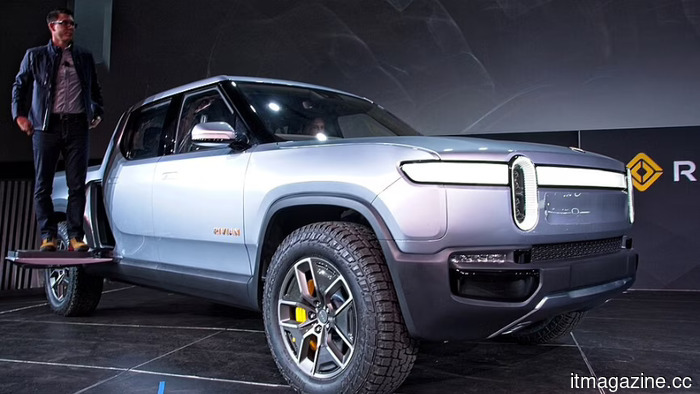
The CEO of Rivian has stated that supervised point-to-point self-driving technology will be available this year, making a direct comparison to Tesla's FSD.
TL;DR RIVIAN's CEO RJ Scaringe announced that supervised point-to-point self-driving will be available this year for Gen 2 and R2 vehicles, with fully hands-free driving expected in 2027. During the Masters of Scale event in Anaheim, Scaringe shared a three-phased plan: supervised point-to-point driving in 2026, unsupervised driving in 2027, and a commercial robotaxi service with Uber starting in 2028.
This marks a substantial advancement over Rivian's current driver-assistance system, Universal Hands-Free, which was introduced in late 2025 and only manages steering and speed on about 3.5 million miles of designated roads in the US and Canada, lacking the ability to handle turns, traffic signals, roundabouts, or parking.
The planned point-to-point driving would allow complete navigation from start to finish, similar to Tesla's Full Self-Driving Supervised. However, transitioning from highway driving to urban navigation is a major challenge in self-driving technology, and no company has tackled it without significant limitations.
“This year, we’ll have full supervised point-to-point, similar to Tesla’s FSD,” Scaringe stated, without providing a specific timeline for deployment. Rivian has not publicly showcased the system in uncontrolled situations.
While the comparison to Tesla is intentional, it overlooks critical architectural differences: Tesla’s FSD depends solely on cameras, whereas Rivian’s system combines 10 external cameras, five radar units, 12 ultrasonic sensors, and an accurate GPS receiver. Rivian has begun delivering R2 SUVs and will incorporate a roof-mounted LiDAR sensor and its custom RAP1 processor in future models, boasting 1,600 trillion operations per second.
In terms of pricing, Rivian's Autonomy+ package is available for $2,500 as a one-time payment or $49.99 monthly, wesentlich lower than Tesla's FSD, priced at $8,000 or $99 monthly. The implications of these pricing differences versus technology capabilities are yet to be clarified, as Rivian's point-to-point system is not currently a deployed product.
Rivian’s autonomous software is developed around its Large Driving Model, an end-to-end AI designed through reinforcement learning. This model directly correlates raw sensor inputs to driving paths by assessing multiple options and selecting the best one via Group-Relative Policy Optimization. This methodology is similar to Tesla's end-to-end neural network concept utilized in FSD v12, although Rivian’s multi-sensor approach allows for a broader input range.
The potential for eyes-off driving in 2027 represents a significant commercial opportunity. Supervised driving still necessitates human oversight. Tesla has faced repeated delays in achieving unsupervised FSD, with its earliest expectation now set for Q4 2026. Scaringe mentioned Rivian aims for Level 3 autonomy by 2028 and Level 4 by 2030, timelines that have proven elusive for many autonomous technology companies.
A critical aspect of Rivian's roadmap is the $1.25 billion partnership with Uber established in March, where Uber's initial $300 million investment is contingent on autonomous performance targets through 2031. The deal includes plans for Uber or its partners to buy 10,000 fully autonomous R2 robotaxis, with an option for up to 40,000 more starting in 2030. The commercial rollout is slated for San Francisco and Miami in 2028, with expansion to 25 cities by 2031.
These objectives hinge on Rivian's ability to create a vehicle capable of autonomous operation without human control, something the company has yet to prove. The Gen 3 autonomy platform required for the robotaxi initiative is still in validation, and the initial R2 production series was launched without this hardware, indicating that robotaxi models need one more generation of hardware before they are ready for production.
Scaringe emphasized that the push for self-driving technology is crucial for Rivian's long-term financial success. The company reported a net loss of $3.63 billion in 2025, despite achieving its first full-year positive gross profit of $144 million. Successfully implementing autonomy could shift the business model from vehicle sales to operating a transportation service. However, history shows that transforming roadmap announcements into reliable autonomous systems is a challenging endeavor for many in the industry.
Other articles
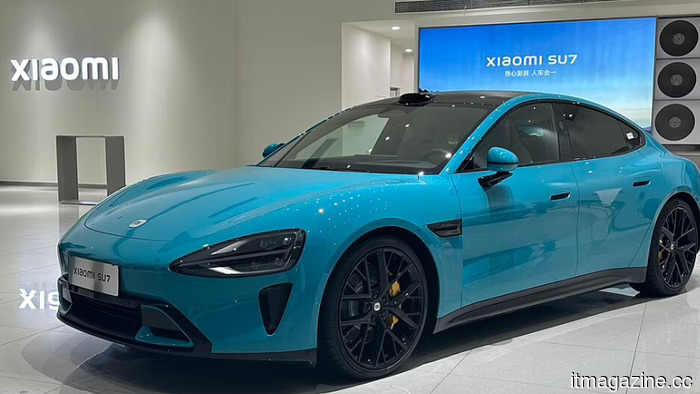 Xiaomi has developed a robotic arm that connects to your electric vehicle at home, fulfilling a commitment that Tesla made in 2014 but never followed through on.
Xiaomi introduced a robotic charging arm for its electric vehicles that autonomously plugs in and unplugs without requiring any input from the owner. The retail release is aimed for the fourth quarter of 2026 in China.
Xiaomi has developed a robotic arm that connects to your electric vehicle at home, fulfilling a commitment that Tesla made in 2014 but never followed through on.
Xiaomi introduced a robotic charging arm for its electric vehicles that autonomously plugs in and unplugs without requiring any input from the owner. The retail release is aimed for the fourth quarter of 2026 in China.
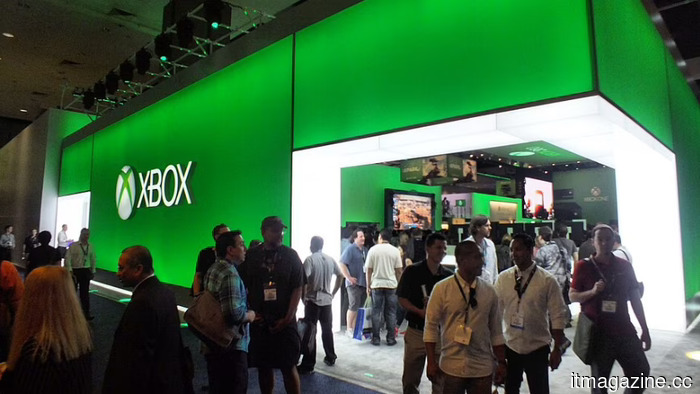 Xbox is in discussions to separate Compulsion Games, Double Fine, and Ninja Theory rather than closing them down.
Three Xbox studios are in negotiations to reclaim their independence as CEO Asha Sharma's restructuring aims to address a $500 million decrease in annual revenue.
Xbox is in discussions to separate Compulsion Games, Double Fine, and Ninja Theory rather than closing them down.
Three Xbox studios are in negotiations to reclaim their independence as CEO Asha Sharma's restructuring aims to address a $500 million decrease in annual revenue.
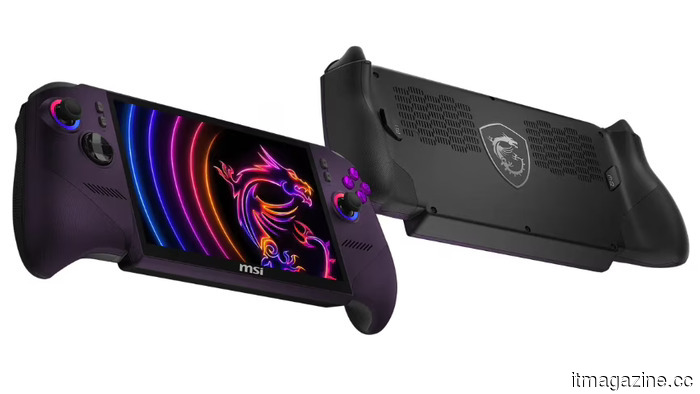 The MSI Claw 8 EX AI+ is priced at $1,699, which is quite a sum for a handheld device typically associated with gaming laptop expenses.
MSI's Claw 8 EX AI+ is set to launch on June 23, featuring Intel's Arc G3 Extreme, 32GB of RAM, and an 80Wh battery, but its $1,699 price tag surpasses that of all competing handheld devices.
The MSI Claw 8 EX AI+ is priced at $1,699, which is quite a sum for a handheld device typically associated with gaming laptop expenses.
MSI's Claw 8 EX AI+ is set to launch on June 23, featuring Intel's Arc G3 Extreme, 32GB of RAM, and an 80Wh battery, but its $1,699 price tag surpasses that of all competing handheld devices.
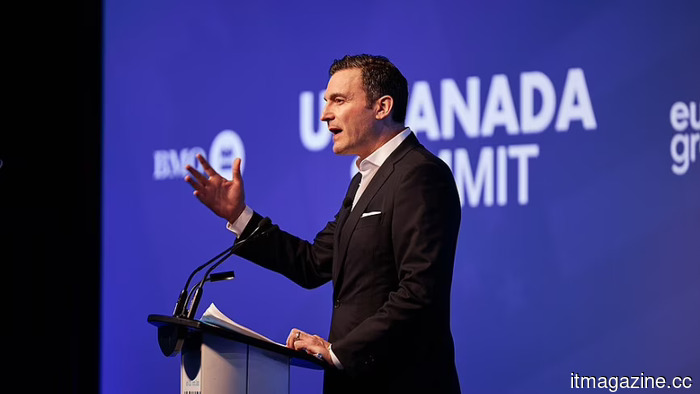 Canada suggests a revamp of privacy regulations that would limit surveillance costs and grant consumers the ability to erase their data.
Canada's Bill C-36 aims to replace PIPEDA, impose limits on surveillance pricing, classify children's data as sensitive, and establish a regulator with the authority to levy fines of up to C$25 million.
Canada suggests a revamp of privacy regulations that would limit surveillance costs and grant consumers the ability to erase their data.
Canada's Bill C-36 aims to replace PIPEDA, impose limits on surveillance pricing, classify children's data as sensitive, and establish a regulator with the authority to levy fines of up to C$25 million.
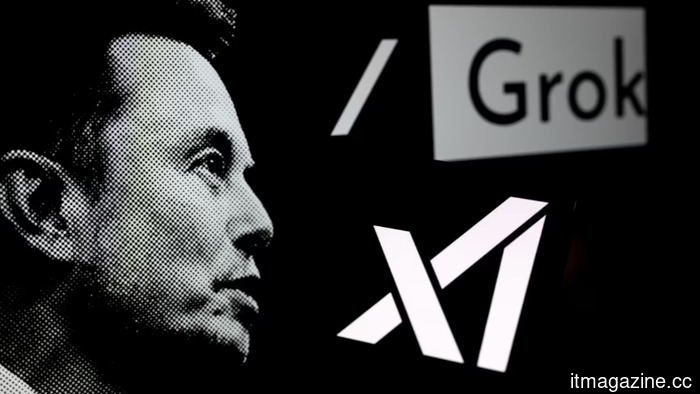 Judge dismisses xAI's trade secret lawsuit against OpenAI.
US District Judge Rita Lin dismissed xAI's trade secret lawsuit with prejudice, marking the second occasion in four weeks that a court has ruled in favor of OpenAI against Elon Musk.
Discussions regarding the ban on Fable 5 are underway between Anthropics and the Commerce Department.
On Monday, Anthropic is scheduled to meet with Commerce officials to discuss the suspension of Fable 5 and Mythos 5, following allegations of "recklessness" and over 100 cybersecurity experts calling for a reversal.
Judge dismisses xAI's trade secret lawsuit against OpenAI.
US District Judge Rita Lin dismissed xAI's trade secret lawsuit with prejudice, marking the second occasion in four weeks that a court has ruled in favor of OpenAI against Elon Musk.
Discussions regarding the ban on Fable 5 are underway between Anthropics and the Commerce Department.
On Monday, Anthropic is scheduled to meet with Commerce officials to discuss the suspension of Fable 5 and Mythos 5, following allegations of "recklessness" and over 100 cybersecurity experts calling for a reversal.
The CEO of Rivian has stated that supervised point-to-point self-driving technology will be available this year, making a direct comparison to Tesla's FSD.
RJ Scaringe has announced that Rivian plans to deliver supervised point-to-point driving for all Gen 2 vehicles and R2 models this year, with fully autonomous driving expected to be available in 2027.