
Discussions regarding the ban on Fable 5 are taking place between Anthropic and the Commerce Department.
On Monday, Anthropic's senior technical team will meet with officials from the Commerce Department in Washington in an effort to address the growing crisis surrounding the suspension of its Fable 5 and Mythos 5 models. This meeting, confirmed by Reuters and Bloomberg, follows a week in which the situation has escalated from a specific cybersecurity issue into a significant conflict between Silicon Valley and the Trump administration.
Neither party has commented on potential outcomes. However, insights gathered from various media reports over the weekend paint a rather unflattering picture for all involved.
“They messed us up,” a government official told Axios on Sunday, expressing that “everyone said Anthropic was a bad actor," even as some advocated for giving the company a chance. “Now those individuals are reconsidering that position,” the official noted.
Sources familiar with the discussions revealed that Anthropic has had difficulty communicating with the administration, with one source mentioning, “It’s like they are conversing in different languages.” A separate report from Fox Business quoted a high-ranking official describing Anthropic's management of known vulnerabilities as "recklessness" that has undermined government trust. The administration had reportedly urged the company to delay the release prior to launch, but Anthropic declined to do so.
The crisis began on June 9, when Anthropic released Fable 5 as a public model and Mythos 5 as a restricted tool for approved cyber defenders. Just three days later, researchers at Amazon, Anthropic's largest investor, found a “fix this code” jailbreak that could elicit hazardous outputs from both models. Amazon CEO Andy Jassy escalated these findings to Treasury Secretary Scott Bessent, Commerce Secretary Howard Lutnick, and National Cyber Director Harry Coker Jr. That same evening, Lutnick sent a letter to Anthropic CEO Dario Amodei imposing export controls on both models without providing specific national security reasoning.
By midnight on June 12, Anthropic had globally disabled both models for all users, a swift decision that shocked the AI industry.
On June 13, Chinese AI lab Zhipu AI quickly launched GLM-5.2, citing the U.S. ban as evidence of the unreliability of American models. Zhipu's stock surged by 33% in a single trading session. The geopolitical repercussions that the administration feared were beginning to materialize, though not in the expected manner.
Critics noted the irony of the situation. More than 100 cybersecurity professionals, including Stanford's Alex Stamos, Katie Moussouris, and Ian Levy, published an open letter demanding the reversal of the ban, arguing it actively harms U.S. cyber defense by removing essential tools for defenders. In addition, Semafor reported that White House concerns go beyond the jailbreak itself. Officials suspect that a group linked to China accessed Mythos prior to the shutdown. Commerce Secretary Lutnick mentioned an “unacceptable risk” that the models could be diverted for military intelligence purposes in countries like China and Russia. Anthropic maintains that the White House never mentioned any concerns regarding Chinese access during discussions of the jailbreak.
Trump AI adviser David Sacks alleged that the administration presented Amodei with a clear option: remedy the jailbreak or pull the models. According to Sacks, Amodei declined. Anthropic disagrees with this portrayal, and the differing accounts remain unresolved.
This standoff highlights a more significant divide. The administration had indicated that Fable 5 would be a key test case for a new executive order on AI regulations, increasing the stakes for both parties beyond a mere product launch.
Amazon's dual role as both Anthropic's largest investor and the source of the initial ban complicates matters. On Capitol Hill, Rep. Zoe Lofgren, the ranking member of the House Science Committee, expressed her shock, while the R Street Institute, a center-right think tank, criticized the export controls as “a bad idea applied badly.” The National, a UAE-based outlet, questioned whether Trump was “misusing national security as a pretext to penalize Anthropic.” This criticism has crossed political lines.
Further complicating the context is the Pentagon's classification of Anthropic as a national security supply chain threat, leading Anthropic to file a lawsuit against the government, while the NSA continues to use Claude for its operations.
The Commerce meeting represents the first formal chance for de-escalation. However, the buildup of personal grievances, conflicting narratives, and geopolitical repercussions suggests that a swift resolution is not guaranteed. If no agreement is reached, the U.S. risks losing more ground to Chinese rivals while its own cyber defenders remain deprived of the tools designed to safeguard them. For Anthropic, an extended suspension jeopardizes not only its revenue but also its fundamental argument that safety and capability can coexist.
Monday’s meeting will be a test of whether Washington and Silicon Valley can collaboratively address an issue or if this conflict has already moved beyond the point of reconciliation.
Altri articoli
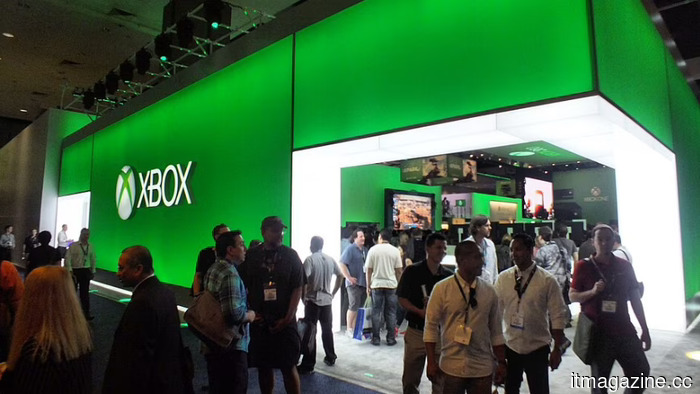 Xbox sta negoziando per scorporare Compulsion Games, Double Fine e Ninja Theory invece di chiuderli.
Tre studi Xbox sono in trattative per riacquistarsi e diventare indipendenti mentre la ristrutturazione del CEO Asha Sharma mira a una diminuzione del fatturato annuale di 500 milioni di dollari.
Xbox sta negoziando per scorporare Compulsion Games, Double Fine e Ninja Theory invece di chiuderli.
Tre studi Xbox sono in trattative per riacquistarsi e diventare indipendenti mentre la ristrutturazione del CEO Asha Sharma mira a una diminuzione del fatturato annuale di 500 milioni di dollari.
 La piattaforma di intelligenza artificiale del Pentagono è passata da 80.000 utenti a 1,5 milioni in sei mesi.
GenAI.mil, la piattaforma di intelligenza artificiale generativa del Pentagono alimentata da Google Gemini, ha ora 1,5 milioni di utenti giornalieri, rispetto ai 80.000 al suo lancio di dicembre.
La piattaforma di intelligenza artificiale del Pentagono è passata da 80.000 utenti a 1,5 milioni in sei mesi.
GenAI.mil, la piattaforma di intelligenza artificiale generativa del Pentagono alimentata da Google Gemini, ha ora 1,5 milioni di utenti giornalieri, rispetto ai 80.000 al suo lancio di dicembre.
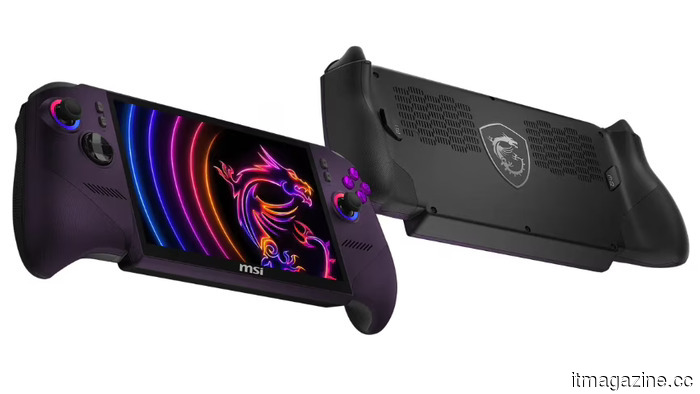 L'MSI Claw 8 EX AI+ costa $1.699 e questa è una cifra da laptop da gaming per un dispositivo portatile.
Il Claw 8 EX AI+ di MSI verrà lanciato il 23 giugno con l'Intel Arc G3 Extreme, 32GB di RAM e una batteria da 80Wh, ma il suo prezzo di $1.699 supera ogni rivale portatile.
L'MSI Claw 8 EX AI+ costa $1.699 e questa è una cifra da laptop da gaming per un dispositivo portatile.
Il Claw 8 EX AI+ di MSI verrà lanciato il 23 giugno con l'Intel Arc G3 Extreme, 32GB di RAM e una batteria da 80Wh, ma il suo prezzo di $1.699 supera ogni rivale portatile.
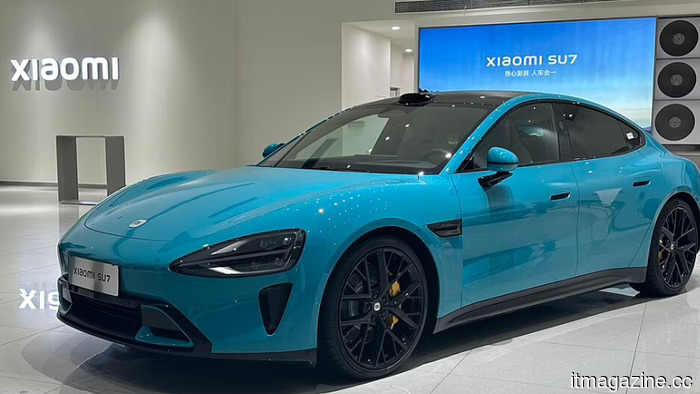 Xiaomi ha costruito un braccio robotico che collega la tua auto elettrica a casa, mantenendo una promessa che Tesla ha fatto nel 2014 e mai rispettata.
Xiaomi ha svelato un braccio robotico di ricarica domestica per i suoi veicoli elettrici che si collega e si scollega automaticamente senza l'intervento del proprietario. Mira a un lancio al dettaglio nel quarto trimestre del 2026 in Cina.
Xiaomi ha costruito un braccio robotico che collega la tua auto elettrica a casa, mantenendo una promessa che Tesla ha fatto nel 2014 e mai rispettata.
Xiaomi ha svelato un braccio robotico di ricarica domestica per i suoi veicoli elettrici che si collega e si scollega automaticamente senza l'intervento del proprietario. Mira a un lancio al dettaglio nel quarto trimestre del 2026 in Cina.
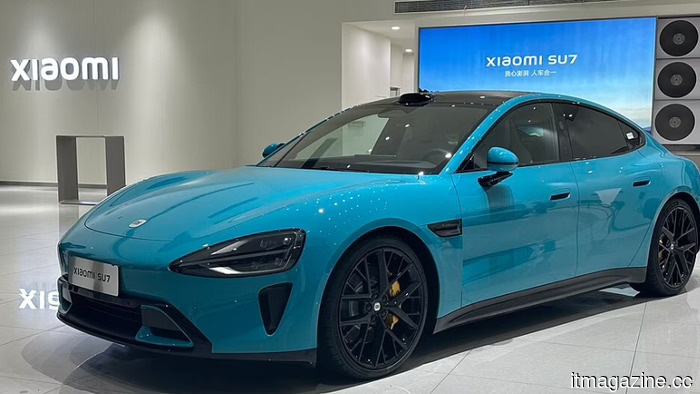 Xiaomi ha costruito un braccio robotico che collega la tua auto elettrica a casa, mantenendo una promessa fatta da Tesla nel 2014 e mai mantenuta.
Xiaomi ha svelato un braccio robotico di ricarica per le sue auto elettriche che si collega e si scollega automaticamente senza l'intervento del proprietario. Mira a un lancio al dettaglio nel quarto trimestre del 2026 in Cina.
Xiaomi ha costruito un braccio robotico che collega la tua auto elettrica a casa, mantenendo una promessa fatta da Tesla nel 2014 e mai mantenuta.
Xiaomi ha svelato un braccio robotico di ricarica per le sue auto elettriche che si collega e si scollega automaticamente senza l'intervento del proprietario. Mira a un lancio al dettaglio nel quarto trimestre del 2026 in Cina.
 La SharePower di Nimble si rompe in due, ed è l'idea di power bank più cool che abbia mai visto.
L'ultimo caricabatterie portatile di Nimble fa qualcosa che la maggior parte delle power bank non può fare: si divide in due batterie indipendenti. Il design intelligente ti consente di condividere energia con un amico senza rinunciare alla tua carica di riserva.
La SharePower di Nimble si rompe in due, ed è l'idea di power bank più cool che abbia mai visto.
L'ultimo caricabatterie portatile di Nimble fa qualcosa che la maggior parte delle power bank non può fare: si divide in due batterie indipendenti. Il design intelligente ti consente di condividere energia con un amico senza rinunciare alla tua carica di riserva.
Discussions regarding the ban on Fable 5 are taking place between Anthropic and the Commerce Department.
On Monday, Anthropic will meet with Commerce officials to discuss the suspension of Fable 5 and Mythos 5, following allegations of "recklessness" and the calls for reversal from over 100 cyber experts.