

Japan's largest taxi application secured $553 million in the country's biggest initial public offering this year.
**TL;DR:** Go Inc. begins trading on the Tokyo Stock Exchange after securing ¥88.6 billion ($553 million) in Japan's largest IPO this year.
Go Inc., the leading taxi-hailing app in Japan, commenced trading on the Tokyo Stock Exchange on Tuesday, having raised ¥88.6 billion ($553 million) through the country's largest initial public offering this year. The offering was oversubscribed by more than 25 times, with investors valuing the firm at ¥186 billion.
The shares were priced at ¥2,400 each, which was at the higher end of the predicted range of ¥2,350 to ¥2,400. International investors were allocated 70% of the offering, while local retail and domestic institutional investors received 25% and 5%, respectively. Over 180 entities showed interest in the international portion alone, making it around 20 times oversubscribed.
According to the company's English prospectus, BlackRock, Wellington Management, and M&G Investment Management have all committed to purchasing shares. Goldman Sachs, which invested ¥10 billion in Go in 2023 at a ¥135 billion valuation, serves as one of the offering’s joint global coordinators along with Nomura Holdings and Bank of America.
Go operates Japan's leading taxi booking service, competing with Uber, Didi Global from China, and domestic rival S.Ride, which has backing from Sony Group. The company projects a revenue of ¥40.8 billion for the fiscal year ending May 31, representing a 30% increase from the previous year, with expected operating profit more than doubling to ¥7 billion from ¥2.7 billion.
This debut arrives at a challenging time for Japan’s IPO market, which has seen only 17 offerings this year, the lowest since 2011, as reported by Bloomberg. The total proceeds from these listings stand at just ¥144 billion, marking the lowest first-half total since 2022.
Investors are attracted to Go’s market position, which still has significant growth potential. Japan's taxi industry remains largely fragmented, with many bookings done via phone or street hail rather than through an app. People familiar with investor discussions indicate that Go’s commission model positions it for improved margins as digital usage increases.
The ¥2,400 share price suggests a price-to-earnings ratio of approximately 29 times, which some analysts consider excessive. Shifara Samsudeen, an analyst at LightStream Research, noted in a report on SmartKarma, “We would wait for a post-IPO pullback to enter.” The risks mentioned by investors include rising competition and regulatory changes.
Go’s IPO presents a rare positive development for the Tokyo Stock Exchange, which has been focused on an AI rally that briefly made SoftBank more valuable than Toyota. The exchange's reform initiatives have made it more difficult for smaller firms to go public, contributing to a decline in new offerings. Go represents the type of listing that the TSE has aimed to attract: a technology platform demonstrating strong revenue growth and capturing international investor interest.
The global interest in Go also highlights a shifting trend, as Japanese retail investors recently invested $2.2 billion in SpaceX’s $75 billion Nasdaq listing, while Go’s offering drew international capital into Tokyo. This cross-border capital flow suggests that investor enthusiasm for tech IPOs remains robust on both sides of the Pacific, despite a decline in new listings within Japan, reaching a 15-year low.
A strong first day of trading could indicate that the Tokyo market is still capable of attracting substantial and well-structured offerings, even amid the ongoing IPO slowdown. Conversely, a weak trading day would reinforce the perception that Japan's capital markets are being marginalized due to an AI-driven focus on a select few large-cap stocks. While Go’s IPO won't answer this dilemma, it will set the stage for upcoming developments.
Other articles
 Canada is suggesting a revamp of its privacy laws that would limit surveillance costs and grant consumers the ability to remove their data.
Canada's Bill C-36 aims to replace PIPEDA, limit surveillance-based pricing, classify children's data as sensitive, and establish a regulator with authority to impose fines of up to C$25 million.
Discussions regarding the ban on Fable 5 are underway between Anthropics and the Commerce Department.
On Monday, Anthropic is scheduled to meet with Commerce officials to discuss the suspension of Fable 5 and Mythos 5, following allegations of "recklessness" and over 100 cybersecurity experts calling for a reversal.
Canada is suggesting a revamp of its privacy laws that would limit surveillance costs and grant consumers the ability to remove their data.
Canada's Bill C-36 aims to replace PIPEDA, limit surveillance-based pricing, classify children's data as sensitive, and establish a regulator with authority to impose fines of up to C$25 million.
Discussions regarding the ban on Fable 5 are underway between Anthropics and the Commerce Department.
On Monday, Anthropic is scheduled to meet with Commerce officials to discuss the suspension of Fable 5 and Mythos 5, following allegations of "recklessness" and over 100 cybersecurity experts calling for a reversal.
 According to reports, Meta is experimenting with facial recognition technology for smart glasses, which is also utilized by law enforcement and military agencies.
An investigative report has uncovered that Meta obtained face recognition technology from Rank One, a contractor for the Pentagon, and integrated a system named NameTag into an app on 50 million devices before removing it.
According to reports, Meta is experimenting with facial recognition technology for smart glasses, which is also utilized by law enforcement and military agencies.
An investigative report has uncovered that Meta obtained face recognition technology from Rank One, a contractor for the Pentagon, and integrated a system named NameTag into an app on 50 million devices before removing it.
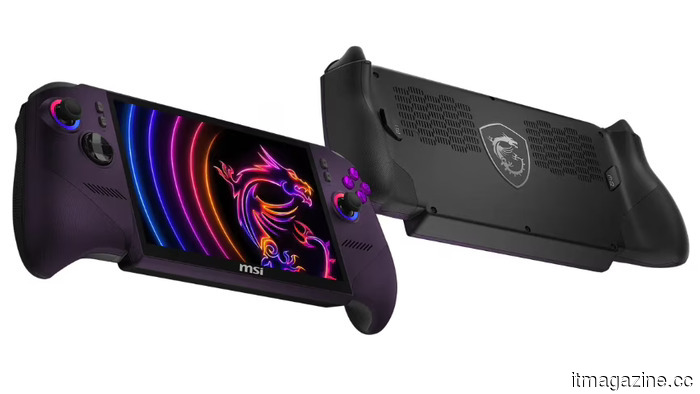 The MSI Claw 8 EX AI+ is priced at $1,699, which is quite a sum for a handheld device typically associated with gaming laptop expenses.
MSI's Claw 8 EX AI+ is set to launch on June 23, featuring Intel's Arc G3 Extreme, 32GB of RAM, and an 80Wh battery, but its $1,699 price tag surpasses that of all competing handheld devices.
The MSI Claw 8 EX AI+ is priced at $1,699, which is quite a sum for a handheld device typically associated with gaming laptop expenses.
MSI's Claw 8 EX AI+ is set to launch on June 23, featuring Intel's Arc G3 Extreme, 32GB of RAM, and an 80Wh battery, but its $1,699 price tag surpasses that of all competing handheld devices.
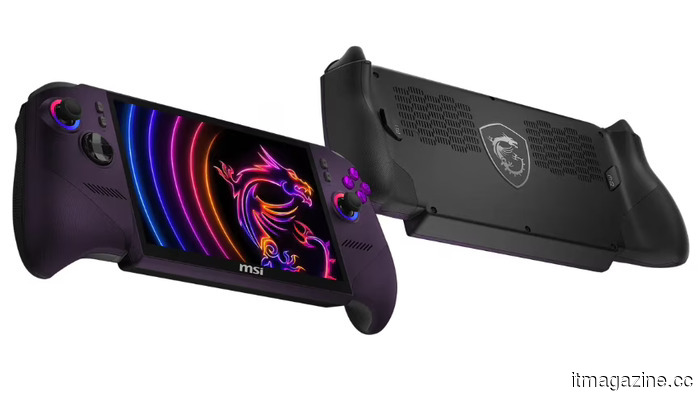 The MSI Claw 8 EX AI+ is priced at $1,699, which is quite a significant amount for a handheld device, comparable to the cost of a gaming laptop.
The MSI Claw 8 EX AI+ is set to launch on June 23, featuring Intel's Arc G3 Extreme, 32GB of RAM, and an 80Wh battery; however, its price of $1,699 exceeds that of all competing handhelds.
The MSI Claw 8 EX AI+ is priced at $1,699, which is quite a significant amount for a handheld device, comparable to the cost of a gaming laptop.
The MSI Claw 8 EX AI+ is set to launch on June 23, featuring Intel's Arc G3 Extreme, 32GB of RAM, and an 80Wh battery; however, its price of $1,699 exceeds that of all competing handhelds.
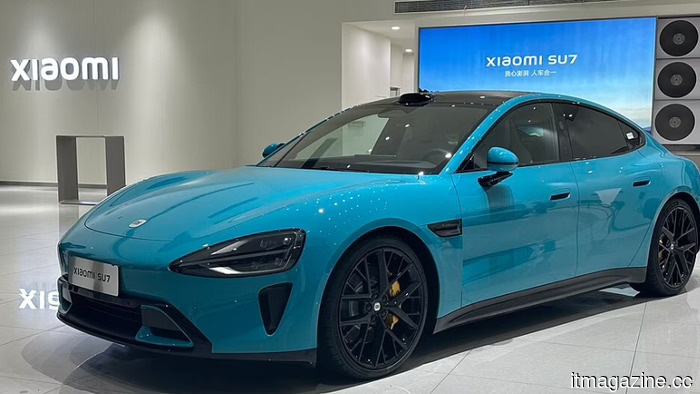 Xiaomi has developed a robotic arm that connects to your electric vehicle at home, fulfilling a commitment that Tesla made in 2014 but never followed through on.
Xiaomi has introduced a robotic charging arm for its electric vehicles that automatically connects and disconnects without any input from the owner. The retail release is aimed for the fourth quarter of 2026 in China.
Xiaomi has developed a robotic arm that connects to your electric vehicle at home, fulfilling a commitment that Tesla made in 2014 but never followed through on.
Xiaomi has introduced a robotic charging arm for its electric vehicles that automatically connects and disconnects without any input from the owner. The retail release is aimed for the fourth quarter of 2026 in China.
Japan's largest taxi application secured $553 million in the country's biggest initial public offering this year.
Go Inc. begins trading on the Tokyo Stock Exchange after securing ¥88.6 billion in Japan's largest IPO of 2026, supported by Goldman Sachs and BlackRock.