
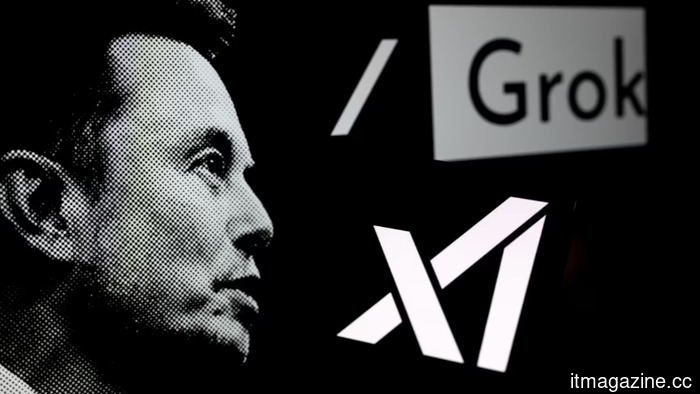
Judge dismisses xAI's trade secret lawsuit against OpenAI.
A federal judge has dismissed xAI’s trade secret lawsuit against OpenAI with prejudice, determining that further proceedings would be “futile.” This marks Musk’s second loss in court against OpenAI within four weeks, following a May jury verdict that rejected his $150 billion claim based on statute of limitations issues.
US District Judge Rita Lin permanently dismissed xAI’s accusations that OpenAI misappropriated trade secrets concerning the Grok chatbot, meaning xAI cannot file similar claims in the future. Lin concluded that xAI did not demonstrate that OpenAI encouraged former xAI senior engineer Xuechen Li to share confidential information nor that OpenAI engineers were aware that Li might have disclosed anything. She noted that allowing further amendments to the case would be “futile.”
The issue arose from a presentation given by Li during OpenAI’s recruitment process. xAI contended that OpenAI sought confidential information related to the anticipated July 2025 launch of Grok 4, asserting that its ChatGPT update “could not compete” on complex reasoning and was “lagging” in reinforcement learning techniques that Li understood.
However, Lin was not convinced, stating that it is standard for employers to ask candidates about their past work. She remarked, “To hold otherwise would potentially expose employers to liability any time they inquire about a candidate’s past work.”
OpenAI has argued that Li was never an employee and that it did not gain any trade secrets from xAI. In its motion to dismiss, OpenAI's legal team stated, “OpenAI does not need or want anyone’s trade secrets, especially not from xAI, which is failing in the marketplace and hemorrhaging talent.” This statement is backed by the fact that all of xAI's original 11 co-founders have departed the company, which was merged into SpaceX as part of a $1.25 trillion deal in February. Musk has acknowledged that xAI “was not built right the first time around” and requires a complete overhaul.
Monday’s ruling represents Musk’s second legal setback against OpenAI since mid-May. On May 18, a jury in Oakland unanimously dismissed his $150 billion lawsuit alleging that Sam Altman had undermined OpenAI's initial charitable mission. The 11-day trial concluded quickly, with the jury taking less than two hours to determine that Musk had filed his claims too late. His legal team has indicated plans to appeal.
The implications of Lin’s reasoning extend beyond this specific case. AI firms frequently hire employees from one another, and job candidates often share details about their previous work during interviews. This ruling confirms that such discussions do not, on their own, amount to the misappropriation of trade secrets.
Li is facing a separate lawsuit from xAI and has denied any wrongdoing. That case remains ongoing. As it stands, Musk's record in court against OpenAI is 0-2. The internal documents revealed during the May trial, including co-founder Greg Brockman’s notes labeling the nonprofit mission as “a lie,” could still pose challenges for OpenAI’s IPO prospects. However, Musk's legal strategy aimed at dismantling his former company has yielded only setbacks.
Other articles
 According to reports, Meta is experimenting with facial recognition technology for smart glasses, which is also utilized by law enforcement and military agencies.
An investigative report has uncovered that Meta obtained face recognition technology from Rank One, a contractor for the Pentagon, and integrated a system named NameTag into an app on 50 million devices before removing it.
According to reports, Meta is experimenting with facial recognition technology for smart glasses, which is also utilized by law enforcement and military agencies.
An investigative report has uncovered that Meta obtained face recognition technology from Rank One, a contractor for the Pentagon, and integrated a system named NameTag into an app on 50 million devices before removing it.
 The AI platform at the Pentagon increased its user base from 80,000 to 1.5 million in just six months.
GenAI.mil, the Pentagon's generative AI platform fueled by Google Gemini, has reached 1.5 million daily users, a significant increase from 80,000 at its launch in December.
The AI platform at the Pentagon increased its user base from 80,000 to 1.5 million in just six months.
GenAI.mil, the Pentagon's generative AI platform fueled by Google Gemini, has reached 1.5 million daily users, a significant increase from 80,000 at its launch in December.
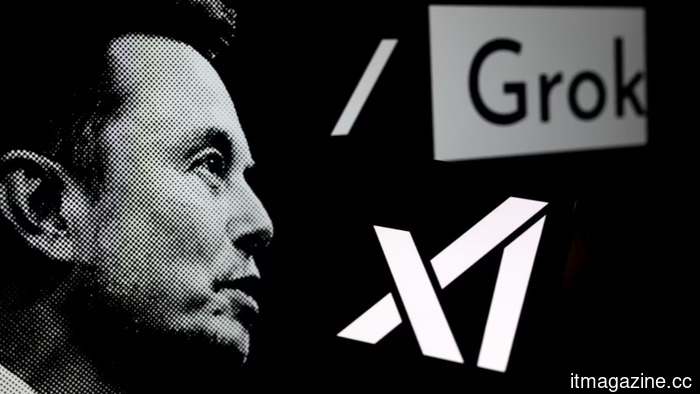 Judge dismisses xAI's trade secret lawsuit against OpenAI.
US District Judge Rita Lin dismissed xAI's trade secret lawsuit with prejudice, marking the second occasion in four weeks that a court has ruled in favor of OpenAI against Elon Musk.
Judge dismisses xAI's trade secret lawsuit against OpenAI.
US District Judge Rita Lin dismissed xAI's trade secret lawsuit with prejudice, marking the second occasion in four weeks that a court has ruled in favor of OpenAI against Elon Musk.
 The MSI Claw 8 EX AI+ is priced at $1,699, which is quite a significant amount for a handheld device, comparable to the cost of a gaming laptop.
The MSI Claw 8 EX AI+ is set to launch on June 23, featuring Intel's Arc G3 Extreme, 32GB of RAM, and an 80Wh battery; however, its price of $1,699 exceeds that of all competing handhelds.
The MSI Claw 8 EX AI+ is priced at $1,699, which is quite a significant amount for a handheld device, comparable to the cost of a gaming laptop.
The MSI Claw 8 EX AI+ is set to launch on June 23, featuring Intel's Arc G3 Extreme, 32GB of RAM, and an 80Wh battery; however, its price of $1,699 exceeds that of all competing handhelds.
 A built-in feature of Google Workspace has emerged as a preferred exfiltration tool for a Chinese espionage group.
A group connected to China compromised REDCap servers at medical and military research institutions in the US and Canada, subsequently utilizing Google Workspace to extract emails.
A built-in feature of Google Workspace has emerged as a preferred exfiltration tool for a Chinese espionage group.
A group connected to China compromised REDCap servers at medical and military research institutions in the US and Canada, subsequently utilizing Google Workspace to extract emails.
 Canada is suggesting a revamp of its privacy laws that would limit surveillance costs and grant consumers the ability to remove their data.
Canada's Bill C-36 aims to replace PIPEDA, limit surveillance-based pricing, classify children's data as sensitive, and establish a regulator with authority to impose fines of up to C$25 million.
Canada is suggesting a revamp of its privacy laws that would limit surveillance costs and grant consumers the ability to remove their data.
Canada's Bill C-36 aims to replace PIPEDA, limit surveillance-based pricing, classify children's data as sensitive, and establish a regulator with authority to impose fines of up to C$25 million.
Judge dismisses xAI's trade secret lawsuit against OpenAI.
US District Judge Rita Lin dismissed xAI's trade secret lawsuit with prejudice, marking the second occasion in four weeks that a court has ruled in favor of OpenAI against Elon Musk.