
Enflame IPO: the final one of China's four AI chip giants.
The Enflame IPO is underway. According to Bloomberg, Shanghai Enflame Technology, an AI-chip startup supported by Tencent, has received approval from the listing committee to raise approximately 6 billion yuan ($888 million) on the STAR board of the Shanghai Stock Exchange. It is the last of China's "four little dragons," a group of domestic AI chip manufacturers that Beijing hopes will reduce its dependency on Nvidia.
Enflame intends to offer 10 to 15 percent of its shares and invest the proceeds into its next two generations of AI cloud chips and the associated software. Founded in Shanghai in 2018 by former AMD engineer Zhao Lidong, the company was valued at around $2.8 billion before the IPO, based on the Hurun index.
The Tencent dilemma
Enflame's greatest advantage also poses its greatest risk: Tencent. The tech giant holds roughly 20 percent of the company and, according to Bloomberg, accounted for about 84 percent of its revenue in 2025, a rise from around 38 percent the previous year. Tencent serves as both an investor and a customer.
This dual role has its benefits. Tencent pre-funds Enflame's development by placing orders, which allows a startup with less than 1 percent of China's market to deliver advanced silicon. The company claims that Tencent’s demand has "far exceeded" its supply capabilities.
However, depending heavily on a single client for most of its revenues poses a risk if that client alters its priorities, and this relationship is already impacting Enflame’s pricing. The company is also significantly in debt, with cumulative losses totaling approximately 4.29 billion yuan (about $600 million) over three years, although the annual loss is decreasing.
Reasons for optimism in China
Investors are focusing on the broader narrative. With US export controls limiting access to Nvidia’s top chips, Beijing is keen on finding domestic alternatives. Last year, it relaxed the STAR-board regulations to allow loss-making hardware firms to go public. Consequently, there has been a surge in AI-chip IPOs, paralleling China’s $295 billion initiative to establish data centers that effectively exclude Nvidia.
Enflame’s three counterparts, Moore Threads, Biren, and MetaX, have already been listed on the STAR board and are trading well above their offer prices, with Moore Threads rising 425 percent since its December debut. This favorable environment is a key reason Enflame can raise nearly $900 million despite still incurring losses.
The same motivations are driving companies like ByteDance towards domestic chip solutions and exploring alternatives such as photonic computing.
What the IPO will truly evaluate
Enflame has tangible products rather than just concepts: its newest chip features 144GB of on-chip memory, and a previous model sold tens of thousands of units. However, it still lags behind Huawei and a profitable Cambricon within China, all while depending on a single key client and utilizing Nvidia chips that continue to find their way into China.
Thus, this IPO will serve as a referendum. The pricing and demand will reveal how much faith Chinese institutions have in the nation’s aspirations for AI chip independence and whether this belief can withstand scrutiny of a balance sheet showing $600 million in losses and effectively a single customer.
China needs a reliable public leader to advance its chip ambitions. Enflame is among the strongest contenders, yet remains the most reliant.
Other articles
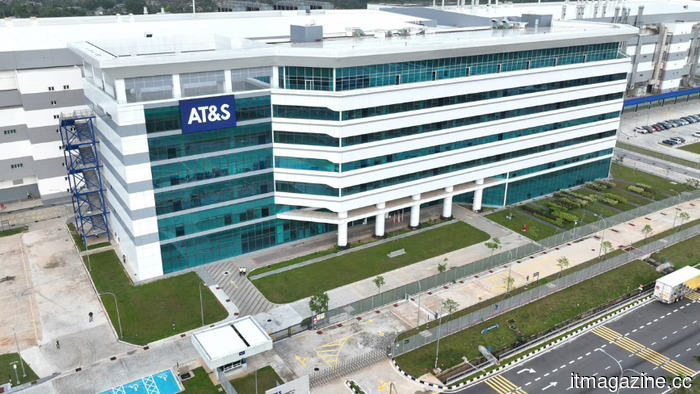 AT&S invests as much as €2 billion in Malaysia and China to capitalize on the AI chip surge.
Austria's AT&S plans to invest as much as €2 billion to increase its IC-substrate production capacity in Malaysia and China to support AI and high-performance computing, a move that is supported by a partnership with AMD.
AT&S invests as much as €2 billion in Malaysia and China to capitalize on the AI chip surge.
Austria's AT&S plans to invest as much as €2 billion to increase its IC-substrate production capacity in Malaysia and China to support AI and high-performance computing, a move that is supported by a partnership with AMD.
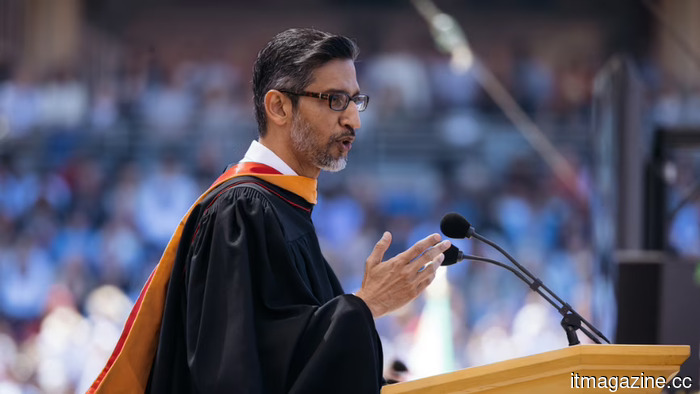 Sundar Pichai from Google opted for a positive outlook on AI at Stanford, yet graduates still chose to walk out.
Sundar Pichai from Google delivered the commencement address for Stanford's class of 2026, avoiding discussions on AI while students exited due to issues related to the Project Nimbus contract.
Sundar Pichai from Google opted for a positive outlook on AI at Stanford, yet graduates still chose to walk out.
Sundar Pichai from Google delivered the commencement address for Stanford's class of 2026, avoiding discussions on AI while students exited due to issues related to the Project Nimbus contract.
 UK regulations for social media users under 16 will extend to gaming and AI chatbots.
Keir Starmer is anticipated to outline limitations on social media usage for those under 16, with restrictions extending to AI chatbots and interactions with strangers in gaming applications.
UK regulations for social media users under 16 will extend to gaming and AI chatbots.
Keir Starmer is anticipated to outline limitations on social media usage for those under 16, with restrictions extending to AI chatbots and interactions with strangers in gaming applications.
 American Express purchases TheFork in a cash transaction worth $700 million.
American Express is acquiring TheFork, the European restaurant booking service, from Tripadvisor for $700 million, expanding its dining network to 75,000 locations.
American Express purchases TheFork in a cash transaction worth $700 million.
American Express is acquiring TheFork, the European restaurant booking service, from Tripadvisor for $700 million, expanding its dining network to 75,000 locations.
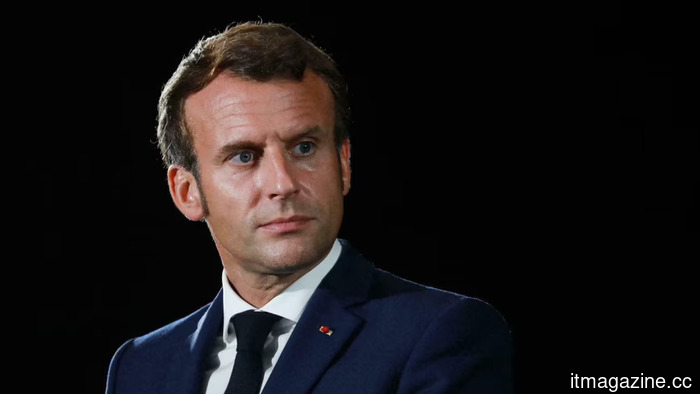 France is organizing the G7, promoting an AI initiative that relies on the wealth of others.
While France hosts the G7, Macron is looking to AI to shape his legacy, supported by SoftBank’s plan for data centers worth up to €75 billion and a €93 billion investment from Choose France.
France is organizing the G7, promoting an AI initiative that relies on the wealth of others.
While France hosts the G7, Macron is looking to AI to shape his legacy, supported by SoftBank’s plan for data centers worth up to €75 billion and a €93 billion investment from Choose France.
Enflame IPO: the final one of China's four AI chip giants.
Enflame, supported by Tencent, received approval to raise approximately 6 billion yuan ($888 million) on the STAR board in Shanghai, becoming the final one among China's four major AI chipmakers to go public.