

Pleo's layoffs occurred just one day after the launch of its finance AI agent.
On June 11, Pleo informed finance teams that AI agents would soon alleviate their administrative tasks. The following day, Pleo announced layoffs, affecting around 50 employees, primarily in engineering and data, at the Danish spend-management fintech.
The product launch took precedence. Pleo introduced a range of “agentic” AI software agents designed to independently manage expense-policy checks, invoices, treasury monitoring, and bookkeeping, escalating only those cases requiring human intervention. “Agentic AI provides finance leaders a clear pathway to liberate themselves from administrative responsibilities,” stated chief executive and co-founder Jeppe Rindom. A beta version is expected in July.
The layoffs were revealed a day later. According to tech.eu, these reductions impacted Pleo's “Offering” teams, encompassing product, technology, design, and data, which previously employed around 300 individuals. Employees in Denmark, the UK, and Germany were affected, including some at senior positions.
Pleo did not associate the two incidents. However, its rationale for the layoffs suggested a similar direction. The changes were implemented to “enhance focus, simplify decision-making, and speed up product delivery for customers,” according to a spokesperson, “while acknowledging the growing significance of new technologies in the operations of product and technology teams.”
What the Pleo layoffs indicate about AI and employment
The agents being offered by Pleo are aimed at its clients' finance staff, rather than its own engineers, indicating that the launch did not directly replace those who were laid off. The reference to “new technologies” likely pertains to AI coding tools that are now a standard part of software development teams.
Still, the optics are telling: a company promoting automation as a means of freedom simultaneously downsizing the teams that develop that automation within the same week.
This trend has become familiar in 2026, often more pronounced. GitLab reorganized for the “agentic era,” and companies like Meta, Oracle, and Atlassian have linked layoffs to AI enhancements. A skeptical interpretation suggests that “new technologies” might simply be a neat way to describe a reduced budget. As Mark Zuckerberg noted to Meta employees, layoffs framed as AI advancements often relate more to cost management.
A leaner Pleo amidst a challenging market
The financial pressures are evident. Pleo was valued at $4.7 billion in late 2021, following a $200 million fundraising during the peak of the fintech boom; however, last year its investor Kinnevik wrote down the stake to an estimated $1.62 billion, roughly a third of its earlier valuation. This marks Pleo’s third round of layoffs since 2022, with the focus shifting inward.
Last autumn, around 100 job cuts affected commercial and go-to-market teams; this round impacts the core engineering and data teams. A 2022 layoff had already reduced the workforce by about 15%.
Nevertheless, the company has not contracted across all metrics. Established in Copenhagen in 2015 by Rindom and Niccolo Perra, Pleo still has over 800 employees, claims that more than 40,000 businesses utilize its services, and reported a 37% revenue growth in 2024. The company is reducing its staff while still growing, which aligns with the efficiency-and-automation approach.
Competition is also intensifying: US spend-management leader Ramp acquired Stockholm’s Billhop this year to establish a direct presence in Europe. The broader trend of layoffs in 2026 has been justified by AI-driven productivity that has not always been realized. Pleo is betting that its agents will provide value to clients, and that a smaller number of engineers, combined with enhanced tools, can still result in quicker product releases.
The first test will be whether the July beta is launched on schedule, and if the forthcoming financial reports continue to reflect growth.
Other articles
 Comments on Reddit are now receiving video responses, and this feature may be more beneficial than it appears.
Reddit's implementation of video comments might enhance the usefulness of replies in communities focused on DIY, cooking, makeup, fitness, and tutorials, as demonstrating a step visually can often be clearer than describing it in words.
Comments on Reddit are now receiving video responses, and this feature may be more beneficial than it appears.
Reddit's implementation of video comments might enhance the usefulness of replies in communities focused on DIY, cooking, makeup, fitness, and tutorials, as demonstrating a step visually can often be clearer than describing it in words.
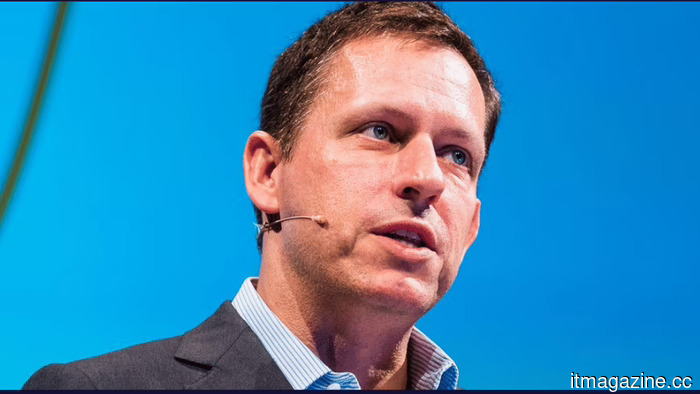 Founders Fund's investment in SpaceX is now valued at more than $50 billion.
Founders Fund has invested approximately $600 million in SpaceX over the course of nearly two decades. At the valuation associated with the IPO, the value of Founders Fund's stake in SpaceX is over $50 billion, theoretically.
Founders Fund's investment in SpaceX is now valued at more than $50 billion.
Founders Fund has invested approximately $600 million in SpaceX over the course of nearly two decades. At the valuation associated with the IPO, the value of Founders Fund's stake in SpaceX is over $50 billion, theoretically.
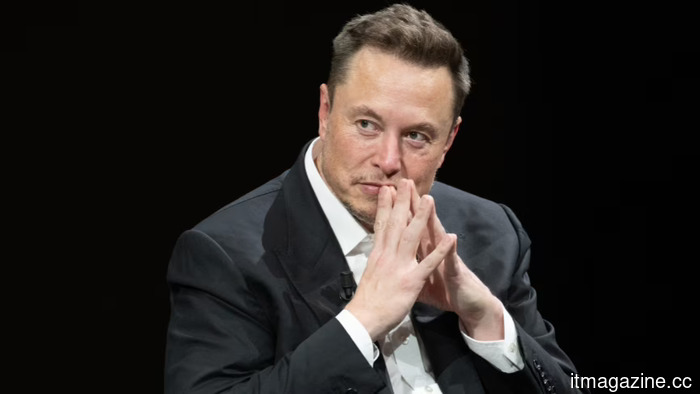 SpaceX's IPO turns Musk into a trillionaire at the expense of retirees.
SpaceX's unprecedented $75 billion IPO propelled Elon Musk beyond the $1 trillion mark. The Nasdaq's expedited index regulations now require retirement funds to acquire shares in a company that is currently operating at a loss.
SpaceX's IPO turns Musk into a trillionaire at the expense of retirees.
SpaceX's unprecedented $75 billion IPO propelled Elon Musk beyond the $1 trillion mark. The Nasdaq's expedited index regulations now require retirement funds to acquire shares in a company that is currently operating at a loss.
 SpaceX's IPO pushes Musk to trillionaire status at the cost of retirees.
SpaceX's unprecedented $75 billion IPO propelled Elon Musk's wealth beyond $1 trillion. The Nasdaq's expedited index regulations now require retirement funds to invest in shares of a company that is not currently profitable.
SpaceX's IPO pushes Musk to trillionaire status at the cost of retirees.
SpaceX's unprecedented $75 billion IPO propelled Elon Musk's wealth beyond $1 trillion. The Nasdaq's expedited index regulations now require retirement funds to invest in shares of a company that is not currently profitable.
 This jacket extracts drinking water directly from the atmosphere.
Engineers at UT Austin have created a jacket made from hydrogel fibers derived from biomass that extracts moisture from the air, producing up to 900 ml of potable water daily.
This jacket extracts drinking water directly from the atmosphere.
Engineers at UT Austin have created a jacket made from hydrogel fibers derived from biomass that extracts moisture from the air, producing up to 900 ml of potable water daily.
 The current Series E valuation places the neobank below its peak level reached in 2021.
The latest Series E funding values the US neobank at $1.5 billion, which is one-third lower than its peak in 2021, despite a 70% increase in revenue for the third consecutive year. The aim is to go public.
The current Series E valuation places the neobank below its peak level reached in 2021.
The latest Series E funding values the US neobank at $1.5 billion, which is one-third lower than its peak in 2021, despite a 70% increase in revenue for the third consecutive year. The aim is to go public.
Pleo's layoffs occurred just one day after the launch of its finance AI agent.
The day after Pleo introduced AI agents for finance teams, reports emerged about new layoffs at Pleo: 50 employees, primarily from engineering and data departments, as its valuation declined.