
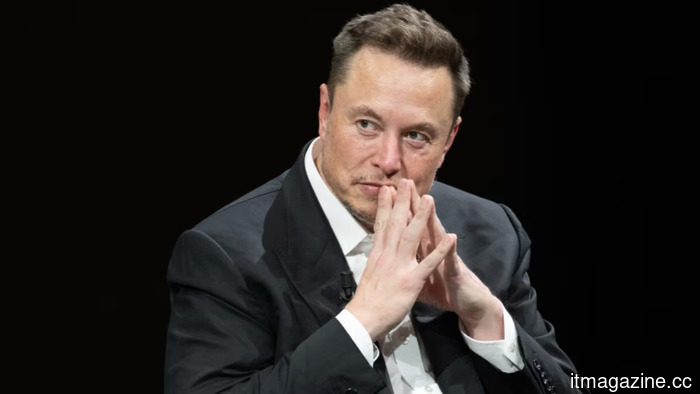
SpaceX's IPO pushes Musk to trillionaire status at the cost of retirees.
**TL;DR** SpaceX's $75 billion IPO has made Elon Musk the first trillionaire in the world, with his net worth exceeding $1.1 trillion. However, the rapid inclusion of the company in Nasdaq's index compels retirement fund holders in passive investments to buy shares of a company that incurred a $4.94 billion loss last year, prompting a failed SEC intervention from Senator Elizabeth Warren.
Elon Musk's wealth has surpassed $1 trillion. The SpaceX IPO, which marketed 555.6 million shares at $135 each on June 12, valued the company at approximately $1.77 trillion, marking a new milestone for individual wealth.
According to the updated IPO prospectus, Musk’s stake in SpaceX alone is estimated at $866.5 billion. When combined with his Tesla shares and other assets, outlets like Forbes and Reuters have assessed his overall fortune to be over $1.1 trillion.
**A trillionaire in theory**
This milestone comes with a notable caveat. Musk's assets are primarily derived from shares in SpaceX and Tesla rather than liquid cash. Liquidating a significant portion of his holdings could cause a market influx that would lower the share price, indicating that his “trillionaire” status is more of a theoretical achievement than a practical one. The Washington Post aptly illustrated this with the phrase “on paper.”
**Nasdaq alters its rules**
What distinguishes this IPO from past major listings is the speed of its inclusion in index funds. Starting May 1, 2026, Nasdaq has updated its criteria, allowing newly listed companies among the top 40 by market cap to join the Nasdaq-100 after just 15 trading days. The previous waiting period was significantly longer, and the minimum float requirement has been completely removed. SpaceX, listed under the ticker SPCX, is highly likely to qualify within weeks of its launch.
In contrast, the S&P 500 rejected a similar move on June 4. SpaceX cannot be included in that index until at least mid-2027, contingent upon achieving four consecutive quarters of positive GAAP earnings. Considering its current financial situation, this timeline is deemed optimistic.
**The retirement fund challenge**
While index inclusion might seem like a mere administrative detail, it has significant implications. When SpaceX joins the Nasdaq-100, all funds tracking that index, including the popular QQQ ETF, will be required to purchase shares, regardless of the fund managers' opinions on the company’s viability. Analysts project that automatic buying will channel between $22 billion to $27 billion into SpaceX from funds following the Nasdaq-100 and Russell indices. Almost half of all index fund assets are sourced from retirement plans like 401(k)s, IRAs, and pensions.
Fortune noted that this setup essentially compels millions of passive investors to invest in a company that has yet to report a yearly profit. Critics argue this represents a significant “wealth transfer” from retirement savers to existing shareholders of SpaceX, which includes Musk.
**Warren’s attempts to intervene**
On June 10, Senator Elizabeth Warren wrote to SEC Chairman Paul Atkins, asking for a postponement of the listing. In her letter, she expressed concerns regarding the company’s valuation, governance, and the possibility that index regulations were being “rigged” to direct passive capital to a non-profitable firm. Musk owns around 42% of SpaceX’s equity but wields 82.4% of voting power through a dual-class share structure where Class B shares have ten votes each. A Danish pension fund has completely divorced itself from SpaceX, citing governance issues as “catastrophic.” Warren referred to Musk as “virtually unimpeachable.”
The SEC ultimately did not act on her request, and the IPO moved forward as planned.
**A company reliant on one profitable sector**
SpaceX reported a net loss of $4.94 billion in 2025 with revenues of $18.67 billion. In the first quarter of 2026, the company experienced an additional loss of $4.28 billion. Starlink, the satellite broadband division, was the only segment producing steady profits, generating $11.4 billion in revenue and $4.42 billion in operating profit last year. That 39% operating margin resembles that of a software business rather than a hardware one, and subscriber growth has been strong, increasing from 2.3 million in 2023 to 10.3 million in Q1 2026.
The losses stemmed notably from xAI, Musk’s artificial intelligence division, which merged with SpaceX in February 2026. This segment logged a $6.36 billion operating loss in 2025, significantly offsetting Starlink’s profits. Previous reports indicated that the AI division has experienced a talent drain, and geopolitical tensions have added to operational risks.
**What a trillion dollars means**
Musk’s wealth now compares to the combined fortunes
Other articles
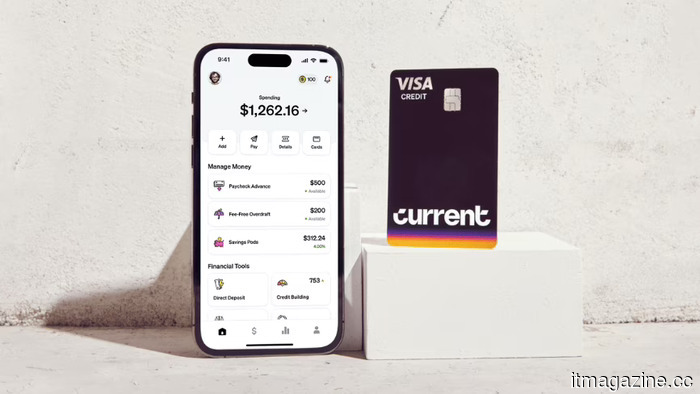 The current Series E valuation places the neobank below its peak level reached in 2021.
The latest Series E funding values the US neobank at $1.5 billion, which is one-third lower than its peak in 2021, despite a 70% increase in revenue for the third consecutive year. The aim is to go public.
The current Series E valuation places the neobank below its peak level reached in 2021.
The latest Series E funding values the US neobank at $1.5 billion, which is one-third lower than its peak in 2021, despite a 70% increase in revenue for the third consecutive year. The aim is to go public.
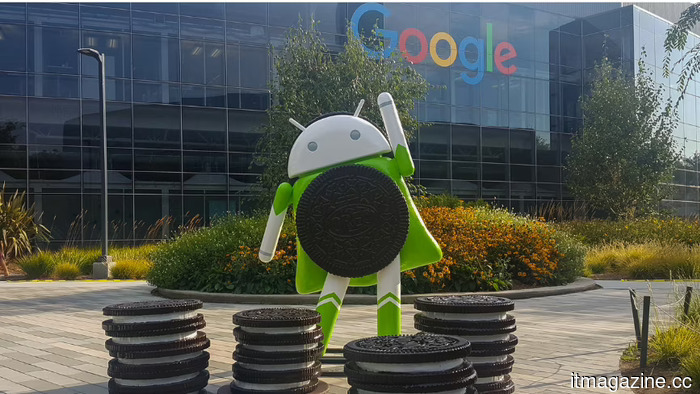 Google takes legal action against a scam operation that utilized Gemini AI to create fraudulent websites.
Google has filed a lawsuit against the Outsider Enterprise, an alleged Chinese cybercrime operation accused of utilizing Gemini AI to dispatch 2.5 million scam messages to Android users.
Google takes legal action against a scam operation that utilized Gemini AI to create fraudulent websites.
Google has filed a lawsuit against the Outsider Enterprise, an alleged Chinese cybercrime operation accused of utilizing Gemini AI to dispatch 2.5 million scam messages to Android users.
 Claude Fable 5 restrictions: targeted at China, affected AI researchers.
Anthropic created Claude Fable 5 restrictions to prevent access for China's AI laboratories. The strongest opposition originated from Western researchers, and the company has responded by reconsidering its stance.
Claude Fable 5 restrictions: targeted at China, affected AI researchers.
Anthropic created Claude Fable 5 restrictions to prevent access for China's AI laboratories. The strongest opposition originated from Western researchers, and the company has responded by reconsidering its stance.
 SpaceX's IPO turns Musk into a trillionaire at the expense of retirees.
SpaceX's unprecedented $75 billion IPO propelled Elon Musk beyond the $1 trillion mark. The Nasdaq's expedited index regulations now require retirement funds to acquire shares in a company that is currently operating at a loss.
SpaceX's IPO turns Musk into a trillionaire at the expense of retirees.
SpaceX's unprecedented $75 billion IPO propelled Elon Musk beyond the $1 trillion mark. The Nasdaq's expedited index regulations now require retirement funds to acquire shares in a company that is currently operating at a loss.
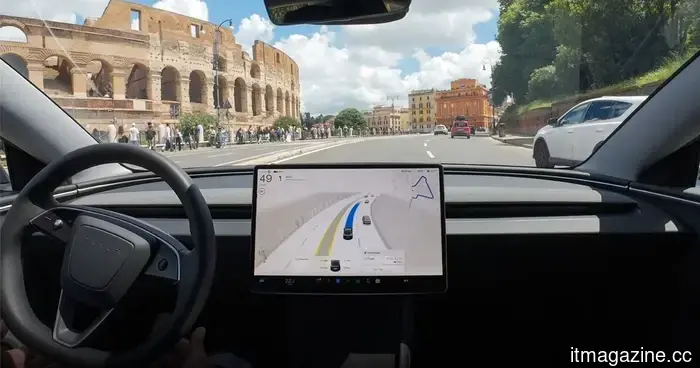 The latest Tesla FSD update includes a new feature that showcases a preview of your vehicle's parking strategy.
The update to Tesla's FSD 14.3.4 introduces a new on-screen message that displays as the vehicle nears its destination, outlining how it intends to park.
The latest Tesla FSD update includes a new feature that showcases a preview of your vehicle's parking strategy.
The update to Tesla's FSD 14.3.4 introduces a new on-screen message that displays as the vehicle nears its destination, outlining how it intends to park.
 Discussions about a SpaceX-Tesla merger become more substantial following the IPO.
On its debut day as a public entity, SpaceX suggested the possibility of merging with Tesla, and a former director deemed it likely. Here’s why the discussion about a SpaceX-Tesla merger is significant.
Discussions about a SpaceX-Tesla merger become more substantial following the IPO.
On its debut day as a public entity, SpaceX suggested the possibility of merging with Tesla, and a former director deemed it likely. Here’s why the discussion about a SpaceX-Tesla merger is significant.
SpaceX's IPO pushes Musk to trillionaire status at the cost of retirees.
SpaceX's unprecedented $75 billion IPO propelled Elon Musk's wealth beyond $1 trillion. The Nasdaq's expedited index regulations now require retirement funds to invest in shares of a company that is not currently profitable.