
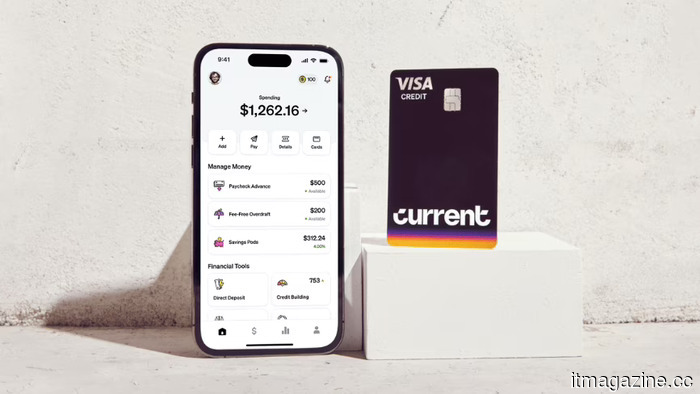
The current Series E valuation places the neobank below its peak level reached in 2021.
The Current Series E has been completed, with the New York neobank raising $80 million, led by Springcoast Partners, at a valuation of $1.5 billion. However, that headline conceals the deeper narrative. In 2021, Andreessen Horowitz valued Current at $2.2 billion, making this new funding round nearly a third lower than that peak, indicating a down round. Nonetheless, the company claims this demonstrates strength, as revenue grew over 70% last year for the third consecutive year, and Current anticipates reaching profitability by 2026.
The discrepancy between growth and valuation encapsulates the post-2021 fintech landscape. In 2021, funding was abundant, leading valuations to surge ahead of revenue figures. When interest rates increased, the market adjusted, and Current grew into its previous valuation rather than exceeding it—revenues continued to rise, but it took time to justify the $2.2 billion label.
The statistics chart the trend: a Series C round led by Tiger Global valued Current at $750 million in 2020, and the Series D tripled that value within five months. This latest funding round represents a more measured approach to fintech financing.
Current provides banking services to Americans living paycheck to paycheck through an app that integrates spending, saving, investing, and early wage access. It offers a secured "Build" card designed to help users improve their credit scores. Technically, Current is not a bank; it is a fintech that partners with institutions like Cross River Bank and Choice Financial Group to manage customer deposits.
Founded in 2015 by Stuart Sopp, a former Morgan Stanley trader, Current experienced rapid growth during the pandemic, benefiting from the early arrival of stimulus payments. In December 2024, it raised additional debt and equity following record growth, according to Axios.
The new funding will support ongoing initiatives, enhanced with an AI component. Current plans to broaden its offerings in banking, payments, liquidity, and credit, and it has strengthened partnerships with Cross River and General Catalyst’s Customer Value Fund to increase lending capabilities. Sopp and chief technology officer Trevor Marshall refer to their AI strategy as “return on tokens,” emphasizing the importance of measuring the returns on AI investments instead of blindly investing in computing power.
This funding round appears to be a preparatory move for an IPO. Springcoast will gain a board seat, and the list of backers—including a16z, Tiger Global, Wellington, Sapphire, and QED—represents investors looking for an exit.
Sopp has clearly stated the goal, asserting that the funds reflect confidence in their business's strength, progress towards public market readiness, and the value being created for millions of members.
Current enters a competitive landscape where competitors like Klarna are adding savings features to their U.S. app in hopes of becoming a bank, while Monzo has exited the U.S. to pursue a listing in London. The U.S. IPO pipeline is increasingly active, and pressure mounts across the sector as investors now seek sustainable profits from neobanks rather than mere growth.
The optimistic scenario suggests a neobank growing at 70% annually, achieving profitability, and generating genuine lending revenue could perform well in the public market. Conversely, the down round presents a counterargument, as public investors are likely to evaluate Current based on actual earnings rather than future potential, unlike private investors from 2021.
Other articles
 UK under-16 social media prohibition: what Starmer is set to implement.
Keir Starmer is expected to reveal a ban on social media for individuals under 16 in the UK within a few days. The child-safety organizations that advocated for this measure warn that an all-encompassing ban might have negative consequences.
UK under-16 social media prohibition: what Starmer is set to implement.
Keir Starmer is expected to reveal a ban on social media for individuals under 16 in the UK within a few days. The child-safety organizations that advocated for this measure warn that an all-encompassing ban might have negative consequences.
 Claude Fable 5 restrictions: targeted at China, affected AI researchers.
Anthropic created Claude Fable 5 restrictions to prevent access for China's AI laboratories. The strongest opposition originated from Western researchers, and the company has responded by reconsidering its stance.
Claude Fable 5 restrictions: targeted at China, affected AI researchers.
Anthropic created Claude Fable 5 restrictions to prevent access for China's AI laboratories. The strongest opposition originated from Western researchers, and the company has responded by reconsidering its stance.
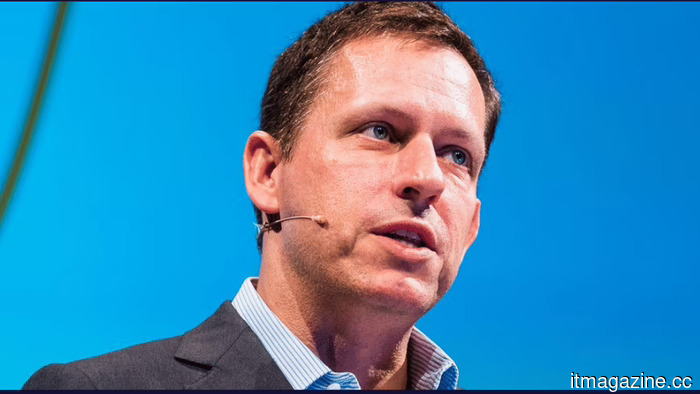 Founders Fund's investment in SpaceX is now valued at more than $50 billion.
Founders Fund has invested approximately $600 million in SpaceX over the course of nearly two decades. At the valuation associated with the IPO, the value of Founders Fund's stake in SpaceX is over $50 billion, theoretically.
Founders Fund's investment in SpaceX is now valued at more than $50 billion.
Founders Fund has invested approximately $600 million in SpaceX over the course of nearly two decades. At the valuation associated with the IPO, the value of Founders Fund's stake in SpaceX is over $50 billion, theoretically.
 Boox's compact e-reader, designed for comfortable handling, will delight book lovers with its stylus and charming appearance.
The Boox Go 6 Gen II has been introduced as a compact 6-inch e-reader that supports stylus use, allowing users to annotate books, take brief notes, and conveniently carry it as a lightweight travel companion.
Boox's compact e-reader, designed for comfortable handling, will delight book lovers with its stylus and charming appearance.
The Boox Go 6 Gen II has been introduced as a compact 6-inch e-reader that supports stylus use, allowing users to annotate books, take brief notes, and conveniently carry it as a lightweight travel companion.
 UK under-16 social media prohibition: what Starmer is preparing to implement
Keir Starmer is expected to declare a ban on social media for those under 16 in the UK within the coming days. The child-safety organizations that advocated for this measure warn that an outright ban might have unintended consequences.
UK under-16 social media prohibition: what Starmer is preparing to implement
Keir Starmer is expected to declare a ban on social media for those under 16 in the UK within the coming days. The child-safety organizations that advocated for this measure warn that an outright ban might have unintended consequences.
 Google takes legal action against a scam operation that utilized Gemini AI to create fraudulent websites.
Google has filed a lawsuit against the Outsider Enterprise, an alleged Chinese cybercrime operation accused of utilizing Gemini AI to dispatch 2.5 million scam messages to Android users.
Google takes legal action against a scam operation that utilized Gemini AI to create fraudulent websites.
Google has filed a lawsuit against the Outsider Enterprise, an alleged Chinese cybercrime operation accused of utilizing Gemini AI to dispatch 2.5 million scam messages to Android users.
The current Series E valuation places the neobank below its peak level reached in 2021.
The latest Series E funding values the US neobank at $1.5 billion, which is one-third lower than its peak in 2021, despite a 70% increase in revenue for the third consecutive year. The aim is to go public.