

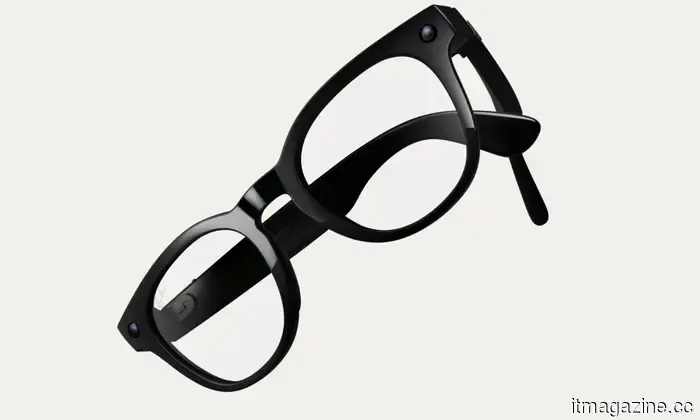
Meta's unsettling smart glasses have just discovered their most effective application to date.
Meta
For several months, the discussion surrounding Meta’s Ray-Ban smart glasses has fluctuated between intrigue and skepticism. Are they the future of wearable tech, or merely another device that raises serious privacy concerns? This week, the glasses were at the heart of a different narrative.
The most significant enhancement yet for Meta’s smart glasses
Meta has teamed up with the Blinded Veterans Association (BVA) and the nonprofit tech organization TechSoup to provide Ray-Ban Meta smart glasses to over 130,000 legally blind veterans across the United States. These glasses are being marketed as an accessibility tool that can assist users in navigating daily life with increased independence.
Veterans who qualify can apply through the BVA to obtain a pair of glasses, while veteran organizations can collaborate with TechSoup to facilitate wider distribution. This initiative transcends simply distributing hardware. Veterans receiving the glasses will also gain access to training resources tailored for blind and low-vision users. These resources include monthly webinars, in-person support events, and a specialized training guide that teaches users how to activate voice commands, recognize objects, read documents, answer calls, and carry out everyday tasks using the glasses. This approach feels refreshingly practical amidst a landscape where AI products often seem to struggle for a purpose.
A timely reminder of AI’s positive aspects
Additionally, we recently examined how Meta’s smart glasses are beginning to identify valuable uses beyond social media and content creation. For individuals with vision impairments, the integrated camera and AI assistant can effectively function as a digital companion, describing surroundings, reading text aloud, and assisting with routine activities that many take for granted. The timing is significant as well.
Just days ago, Meta’s aspirations for smart glasses were in the spotlight for a completely different reason. A WIRED investigation disclosed that Meta had installed dormant facial-recognition code, referred to internally as “NameTag,” in its smart-glasses ecosystem, which was later removed after facing public backlash. This revelation reignited fears regarding surveillance and privacy in wearable technology.
That controversy is likely to persist. However, stories like this serve as a reminder that the same technology that raises privacy anxieties can also provide genuine advantages when addressing real-world challenges. For thousands of blind veterans, the most crucial function of these AI glasses is not to capture their surroundings but to aid them in navigating that world with enhanced autonomy.
Shimul is a contributor at Digital Trends, boasting over five years of experience in the technology field.
Telegram quietly reintroduces itself to Wear OS smartwatches with a sleek new interface
Telegram is making its return to smartwatches.
Telegram has launched its app on Wear OS, marking a notable comeback for Android smartwatch users. The latest update brings a completely new smartwatch app for both Apple Watch and Android Wear OS, allowing users to access Telegram directly from their wrists. This enables seamless browsing of chats, reading longer messages, viewing media, and sharing and listening to voice notes, among other features. While this may seem like standard smartwatch functionality, Telegram had been absent from Wear OS since 2021, leaving Android watch users reliant on notifications or third-party solutions if they wished to avoid using their phones.
This jacket extracts drinking water straight from the air
Engineers from the University of Texas at Austin have designed a jacket that collects drinkable water directly from the atmosphere, providing a potential solution for hikers, military personnel, agricultural workers, and emergency responders in areas lacking reliable water supply.
How the jacket gathers water
The 90’s necklace doesn’t force AI upon you; it simply monitors UV exposure to protect your skin.
This pendant-style wearable tracks your daily sun exposure.
While many wearables are eager to integrate AI into everything, a company named The90 is dedicated to the singular task of helping individuals monitor their exposure to UVA and UVB rays throughout the day. They have created a pendant-style necklace with an embedded UV sensor called The90 Gem, which works in conjunction with a mobile app to track real-time sun exposure for your skin.
Why UV tracking is important






Other articles
 Spotify is introducing editor-hosted videos to New Music Friday, allowing you to connect with the individuals behind the playlist.
Spotify's New Music Friday will now include short-form videos from its editorial team highlighting selections and artist narratives. This feature is being launched for both free and premium users in the US.
Spotify is introducing editor-hosted videos to New Music Friday, allowing you to connect with the individuals behind the playlist.
Spotify's New Music Friday will now include short-form videos from its editorial team highlighting selections and artist narratives. This feature is being launched for both free and premium users in the US.
 Facebook and Messenger outage causes login anxiety as Meta services falter.
A short outage at Meta resulted in users being logged out of Facebook and Messenger, led to a spike in complaints on Downdetector, and also impacted Instagram, while there were fewer definitive reports regarding Threads.
Facebook and Messenger outage causes login anxiety as Meta services falter.
A short outage at Meta resulted in users being logged out of Facebook and Messenger, led to a spike in complaints on Downdetector, and also impacted Instagram, while there were fewer definitive reports regarding Threads.
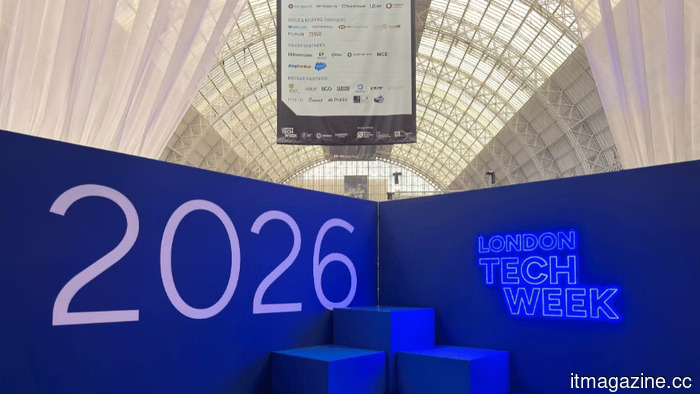 London Tech Week 2026: the AI billions and a royal milestone
London Tech Week 2026 summary: a £1.1 billion hardware initiative for the UK, AMD's £2 billion investment, Nebius's £1.7 billion project, expansion of US giants, and Prince William's inaugural Homewards panel.
London Tech Week 2026: the AI billions and a royal milestone
London Tech Week 2026 summary: a £1.1 billion hardware initiative for the UK, AMD's £2 billion investment, Nebius's £1.7 billion project, expansion of US giants, and Prince William's inaugural Homewards panel.
 China establishes a photonic computing laboratory to circumvent US chip restrictions.
A laboratory in Shanghai, supported by Jiao Tong University and the startup Lightelligence, is working on developing light-based AI chips as Beijing looks for alternatives to restricted US semiconductor products.
China establishes a photonic computing laboratory to circumvent US chip restrictions.
A laboratory in Shanghai, supported by Jiao Tong University and the startup Lightelligence, is working on developing light-based AI chips as Beijing looks for alternatives to restricted US semiconductor products.
 Five cloud security errors that originate at the architectural level.
Nodir Safarov, Cloud Architect at SOTI Inc., highlights five architectural shortcomings that contribute to prevalent security gaps in enterprise cloud environments, ranging from post-deployment patching to configuration drift, along with the design principles that help avoid these issues.
Five cloud security errors that originate at the architectural level.
Nodir Safarov, Cloud Architect at SOTI Inc., highlights five architectural shortcomings that contribute to prevalent security gaps in enterprise cloud environments, ranging from post-deployment patching to configuration drift, along with the design principles that help avoid these issues.
 SpaceX leased Colossus 1 to Anthropic because it was unable to get the data center operational for Grok.
Bloomberg: SpaceX experienced latency problems and chip incompatibilities while connecting Colossus 1 to its other data centers. It leased the facility to Anthropic for $1.25 billion per month.
SpaceX leased Colossus 1 to Anthropic because it was unable to get the data center operational for Grok.
Bloomberg: SpaceX experienced latency problems and chip incompatibilities while connecting Colossus 1 to its other data centers. It leased the facility to Anthropic for $1.25 billion per month.
Meta's unsettling smart glasses have just discovered their most effective application to date.
The device that has frequently faced criticism for being overly observant is set to assist thousands of blind veterans in perceiving the world in a new way.