
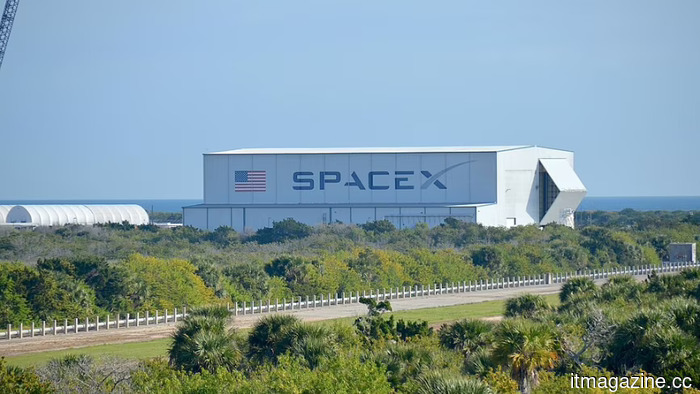
SpaceX leased Colossus 1 to Anthropic because it was unable to get the data center operational for Grok.
TL;DR: SpaceX leased its Colossus 1 to Anthropic due to latency and chip compatibility problems, hindering its use for Grok. The newer facilities feature uniform Blackwell chips.
SpaceX rented out its Colossus 1 data center to Anthropic not due to excess capacity, but rather because it was unable to effectively utilize the facility for its AI models. Bloomberg reported on Friday that SpaceX faced latency challenges when trying to connect the Memphis site with two other data center campuses situated over 10 miles apart, exacerbated by outdated network infrastructure.
The company had aimed to train its most advanced Grok models using a network of three facilities working in unison. Training large AI models demands ultra-fast connections between locations. If the connections are older or of lower bandwidth, they cause delays that can hinder the entire cluster. Ultimately, SpaceX concluded that the facility would generate more revenue than remain underutilized.
The hardware mismatch further complicated matters. Colossus 1 is equipped with a blend of Nvidia chip generations, incorporating both Hopper and Blackwell systems along with older accelerators. In contrast, Colossus 2 and 3 are more uniformly constructed around Nvidia’s Blackwell chips. In a distributed training cluster, workloads are shared across machines that must remain synchronized. Older chips can create bottlenecks, forcing quicker accelerators to wait, which results in the cluster performing closer to its slowest components rather than its fastest.
As a result, Anthropic is now paying $1.25 billion per month to utilize a facility that SpaceX's engineers could not completely optimize. Coupled with the $920 million monthly partnership with Google, SpaceX is generating approximately $2.17 billion per month in computing revenue from infrastructure initially intended for its own use.
This information complicates the narrative SpaceX shared during its IPO roadshow. Musk’s firm highlighted that Colossus 1 was constructed in just 122 days, surpassing industry standards. The speed of construction was a key selling point. However, Bloomberg’s findings imply that this rapid development may have compromised the facility's uniformity, impacting its suitability as part of a larger training cluster.
SpaceX CFO Bret Johnsen mentioned that the company has not abandoned its internal AI operations, including Grok. Musk characterized the arrangement with Anthropic as a 180-day lease with a 90-day mutual cancellation option, allowing for the possibility of reclaiming the facility. “If compute gets super tight, I said we might need it back at some point,” he noted.
However, Grok's performance trajectory makes reclaiming the resources less pressing. Downloads dropped from 20 million in January to 8.3 million in April, with paid conversions being only a fifth of ChatGPT’s. Adoption on a federal level has stalled, and the product that was expected to validate the data center investment is falling short. Meanwhile, the rental income from Anthropic and Google has become a significant $26 billion annual revenue stream. SpaceX constructed a data center for AI training but inadvertently transitioned into an AI landlord role.
Other articles
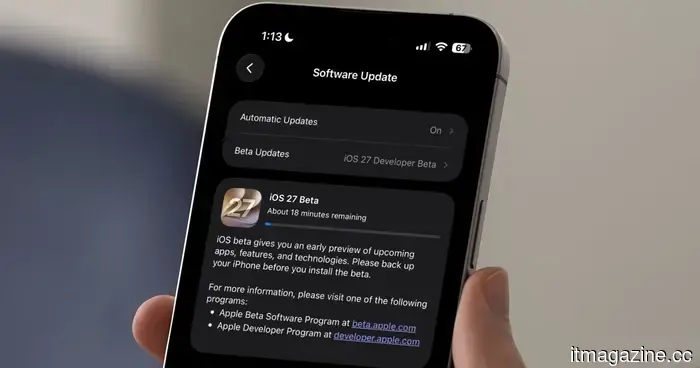 iOS 27 hands-on: the iPhone upgrade I've been anticipating.
After spending two days with the iOS 27 beta, I believe Apple has finally addressed the issues that made iOS 26 quite frustrating. Here’s what caught my attention.
iOS 27 hands-on: the iPhone upgrade I've been anticipating.
After spending two days with the iOS 27 beta, I believe Apple has finally addressed the issues that made iOS 26 quite frustrating. Here’s what caught my attention.
 India's Avataar AI has introduced a video model that is priced at $0.005 per second, making it 27 times more affordable than competitors.
Avataar AI has introduced Varya, an open-weight video model tailored for India, priced at $0.005 per second. It depicts Indian attire, cuisine, and festivals that are often overlooked by Western models.
India's Avataar AI has introduced a video model that is priced at $0.005 per second, making it 27 times more affordable than competitors.
Avataar AI has introduced Varya, an open-weight video model tailored for India, priced at $0.005 per second. It depicts Indian attire, cuisine, and festivals that are often overlooked by Western models.
 Spotify is introducing editor-hosted videos for New Music Friday, allowing you to get to know the individuals responsible for the playlist.
Spotify's New Music Friday will now include short-form videos from its editorial team that highlight song selections and artist narratives. This will be available to both free and premium users in the US.
Spotify is introducing editor-hosted videos for New Music Friday, allowing you to get to know the individuals responsible for the playlist.
Spotify's New Music Friday will now include short-form videos from its editorial team that highlight song selections and artist narratives. This will be available to both free and premium users in the US.
 Five cloud security errors that originate at the architectural level.
Nodir Safarov, a Cloud Architect at SOTI Inc., highlights the five architectural shortcomings that contribute to the prevalent security vulnerabilities in enterprise cloud systems, ranging from the issues of post-deployment patching to configuration drift, along with the design principles that can avert these problems.
Five cloud security errors that originate at the architectural level.
Nodir Safarov, a Cloud Architect at SOTI Inc., highlights the five architectural shortcomings that contribute to the prevalent security vulnerabilities in enterprise cloud systems, ranging from the issues of post-deployment patching to configuration drift, along with the design principles that can avert these problems.
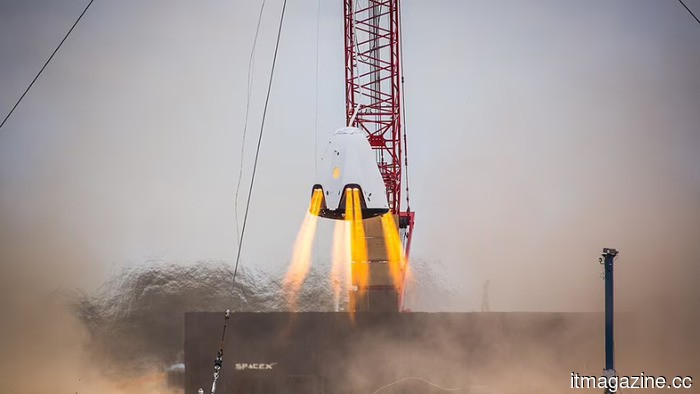 Eighty residents of Texas are filing a lawsuit against SpaceX, claiming that the rocket launches are actually damaging their homes.
A class-action lawsuit claims that the launches of SpaceX's Starship resulted in foundation cracks, broken pipes, and distorted floors in residences near Starbase. Housing prices have increased twofold.
Eighty residents of Texas are filing a lawsuit against SpaceX, claiming that the rocket launches are actually damaging their homes.
A class-action lawsuit claims that the launches of SpaceX's Starship resulted in foundation cracks, broken pipes, and distorted floors in residences near Starbase. Housing prices have increased twofold.
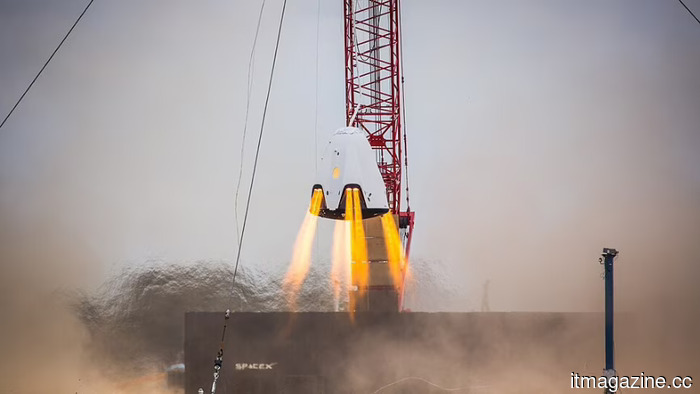 Eighty residents of Texas are suing SpaceX, claiming that the rocket launches are physically damaging their homes.
A class-action lawsuit claims that the launches of SpaceX's Starship resulted in foundation cracks, burst pipes, and warped floors in residences close to Starbase. Housing prices have doubled.
Eighty residents of Texas are suing SpaceX, claiming that the rocket launches are physically damaging their homes.
A class-action lawsuit claims that the launches of SpaceX's Starship resulted in foundation cracks, burst pipes, and warped floors in residences close to Starbase. Housing prices have doubled.
SpaceX leased Colossus 1 to Anthropic because it was unable to get the data center operational for Grok.
Bloomberg: SpaceX experienced latency problems and chip incompatibilities while connecting Colossus 1 to its other data centers. It leased the facility to Anthropic for $1.25 billion per month.