

India's Avataar AI has introduced a video model that is priced at $0.005 per second, making it 27 times more affordable than competitors.
Avataar AI has introduced Varya, an open-weight video model priced at $0.005 per second, making it 27 times more affordable than competitors. Developed under India’s AI Mission, it accurately represents Indian culture.
Based in Bangalore, Avataar AI has launched Varya, among India’s first indigenous video AI models. It produces videos at approximately $0.005 per second, equivalent to 0.48 rupees. According to founder Sravanth Aluru, a former Deutsche Bank investment banker and an alum of Microsoft and IIT Mumbai, this cost is significantly lower than similar open-source video models.
The cost efficiency is achieved through a process of distillation. Avataar started with Alibaba’s Wan 2.2, a publicly accessible video generation model, and streamlined it into a more efficient version that operates in four steps instead of the original fifty. This results in video generation that is ten times faster at a significantly lower price. Competing models like Veo, Kling, Luma, and Runway usually charge $0.10 or more per second.
Varya does not aim to match the quality of advanced US and Chinese models. Products like ByteDance’s Seedance, Kuaishou’s Kling, and Alibaba’s Wan have taken motion realism and audio generation beyond what Varya provides. Instead, Varya focuses on scale and accessibility in a market of 1.4 billion people, where affordability is more critical than top performance.
What sets Varya apart is its cultural specificity. Rather than adapting a model trained in the West, Avataar utilized curated data to train Varya, ensuring it accurately depicts Indian clothing, food, architecture, festivals, and daily life spaces. Global models that predominantly learn from Western datasets often produce outputs that misrepresent Indian culture, limiting their effectiveness for Indian businesses, education, and public services.
The model will be open-weight and released on India’s AIKosh portal, the government’s centralized repository for AI models and datasets. Avataar is among twelve startups chosen for the IndiaAI Mission, a $1.2 billion initiative that provides selected companies with subsidized GPU computing in exchange for making their models publicly available.
Avataar has secured $55 million in funding from Peak XV Partners and Tiger Global, originally focusing on developing video tools for e-commerce. Varya represents its first foundational model, aligning with a trend of Indian startups creating indigenous AI rather than relying on Western infrastructure. Earlier this year, Sarvam and BharatGen also launched their foundational models under the same program.
India’s AI strategy differs from those of Europe and China. Instead of aiming to build the largest models, it seeks to develop models that effectively serve its population at a price point that the market can accept. Priced at $0.005 per second, Varya is exploring whether a video model designed for cost-effectiveness and cultural relevance can achieve faster adoption than a technologically superior yet pricier Western counterpart. In a nation where AI startups are already catering to local demands, the answer could very well be affirmative.
Other articles
 Five architectural-level cloud security errors.
Nodir Safarov, Cloud Architect at SOTI Inc., points out five architectural shortcomings that contribute to prevalent cloud security vulnerabilities in enterprises, ranging from patching after deployment to configuration drift, along with the design principles that can help avert them.
Five architectural-level cloud security errors.
Nodir Safarov, Cloud Architect at SOTI Inc., points out five architectural shortcomings that contribute to prevalent cloud security vulnerabilities in enterprises, ranging from patching after deployment to configuration drift, along with the design principles that can help avert them.
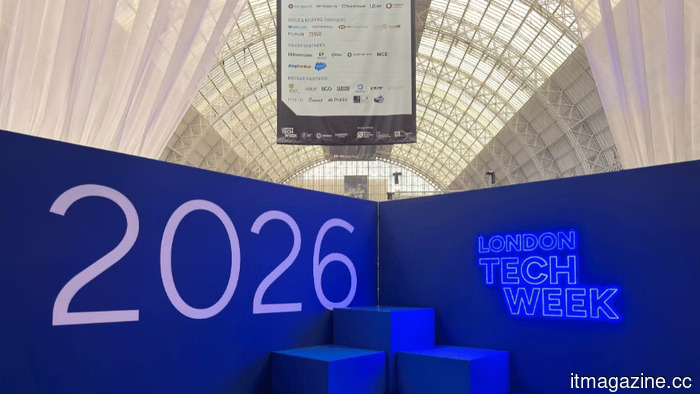 London Tech Week 2026: the AI billions and a royal milestone
London Tech Week 2026 summary: a £1.1 billion hardware initiative for the UK, AMD's £2 billion investment, Nebius's £1.7 billion project, expansion of US giants, and Prince William's inaugural Homewards panel.
London Tech Week 2026: the AI billions and a royal milestone
London Tech Week 2026 summary: a £1.1 billion hardware initiative for the UK, AMD's £2 billion investment, Nebius's £1.7 billion project, expansion of US giants, and Prince William's inaugural Homewards panel.
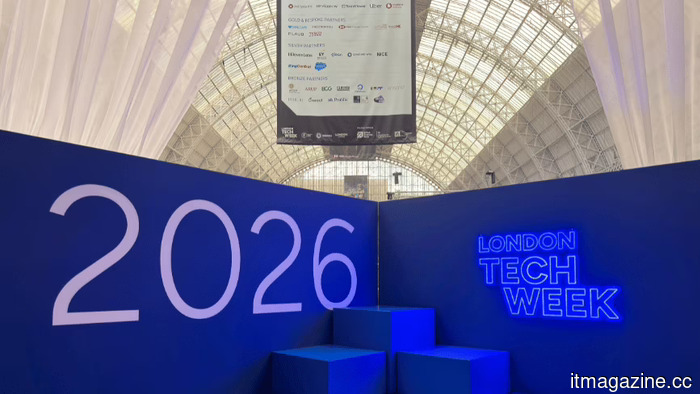 London Tech Week 2026: The AI Billions and a Royal Milestone
London Tech Week 2026 summary: a £1.1 billion hardware initiative in the UK, AMD's £2 billion investment, Nebius's £1.7 billion project, expansion of American tech giants, and Prince William's inaugural Homewards panel.
London Tech Week 2026: The AI Billions and a Royal Milestone
London Tech Week 2026 summary: a £1.1 billion hardware initiative in the UK, AMD's £2 billion investment, Nebius's £1.7 billion project, expansion of American tech giants, and Prince William's inaugural Homewards panel.
 SpaceX leased Colossus 1 to Anthropic because it was unable to get the data center operational for Grok.
Bloomberg: SpaceX experienced latency problems and chip incompatibilities while connecting Colossus 1 to its other data centers. It leased the facility to Anthropic for $1.25 billion per month.
SpaceX leased Colossus 1 to Anthropic because it was unable to get the data center operational for Grok.
Bloomberg: SpaceX experienced latency problems and chip incompatibilities while connecting Colossus 1 to its other data centers. It leased the facility to Anthropic for $1.25 billion per month.
 I attempted to blur a face on iOS 27, but my iPhone ended up providing a new one instead.
Apple enhanced the Clean Up tool in iOS 27, but in doing so, it caused the hide faces feature to malfunction, resulting in behavior that is both amusing and somewhat concerning.
I attempted to blur a face on iOS 27, but my iPhone ended up providing a new one instead.
Apple enhanced the Clean Up tool in iOS 27, but in doing so, it caused the hide faces feature to malfunction, resulting in behavior that is both amusing and somewhat concerning.
 Meta's unsettling smart glasses have just discovered their most effective application to date.
The device that has frequently faced criticism for being overly observant is set to assist thousands of blind veterans in perceiving the world in a new way.
Meta's unsettling smart glasses have just discovered their most effective application to date.
The device that has frequently faced criticism for being overly observant is set to assist thousands of blind veterans in perceiving the world in a new way.
India's Avataar AI has introduced a video model that is priced at $0.005 per second, making it 27 times more affordable than competitors.
Avataar AI has introduced Varya, an open-weight video model tailored for India, priced at $0.005 per second. It depicts Indian attire, cuisine, and festivals that are often overlooked by Western models.